
Reviewed · BANGKOK TEMPLE TOURS
Bangkok: City Highlights Temple and Market Walking Tour
Bangkok’s royal and religious heart comes into focus on this compact tour. You pass the amulet market, enter the Grand Palace and Emerald Buddha Temple, then continue through old riverside neighborhoods toward Wat Pho and Wat Arun. The guide supplies the historical thread, which matters when every wall, roof and mythical figure seems to carry a story.
I like the small group limit of 10 and the use of local transport, including river travel and, on some outings, tuk-tuks. I also like the practical care built into the day: guides such as Mina, Kiwi, Johnny, Pete and Air have helped with water breaks, shade, onward boats and directions after the tour.
The main drawback is pace. You may spend much of the visit walking and standing in intense heat, while the exact route and transport can vary. Wat Pho and Wat Arun are optional in some booking choices, so check your selected version carefully before paying.
Key points at a glance
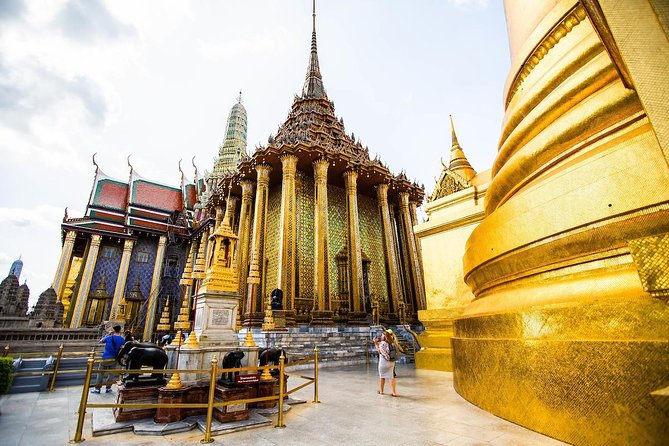
- Royal Bangkok in one morning: See the Grand Palace and Thailand’s most sacred Buddhist temple, Wat Phra Kaew.
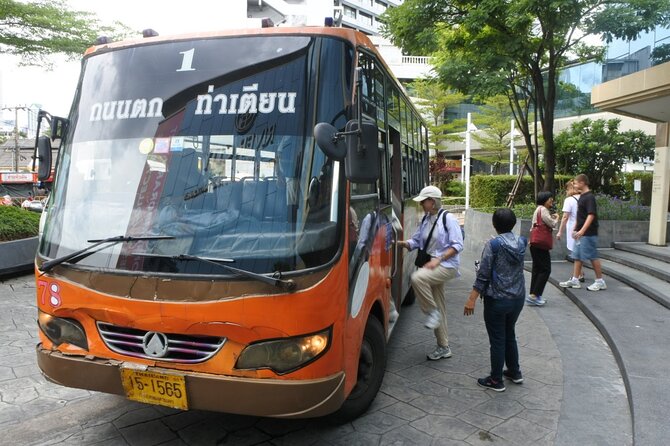
- A real local-transport outing: Travel between sights by public transport, with river boats and tuk-tuks included on some departures.
- Small groups matter: A maximum of 10 people makes it easier to hear the guide and move through busy temple grounds.
- Markets add local texture: Pass the historic amulet market and Tha Thien Market, known for dried seafood and wholesale goods.
- Wat Pho offers more than a giant statue: Learn about Thai massage, medical education and King Rama I’s temple complex.
- Dress and heat require planning: Cover shoulders and knees, remove shoes in temple buildings, and bring patience for Bangkok’s sun.
Why this temple tour works well for a first Bangkok visit
At $42 per person, this is priced as an efficient introduction to Bangkok’s old center rather than a slow, private exploration. Your fee includes admission to the Grand Palace and Emerald Buddha Temple, a licensed guide, and drinking water. Wat Pho and Wat Arun admission depend on the option you choose.
I see the value in having the complicated pieces handled together. Bangkok’s historic sights sit close on a map, but roads, ferries, temple entrances and crowds can make the route less obvious on foot. A guide can point you toward the right transport, explain what you are looking at, and help you keep moving without losing the thread.
The tour lasts 2 to 4 hours, with the exact length depending on the selected program. That makes it a useful fit for a first morning in the city, a short stop between plans, or a shore excursion-style visit. You should not expect a leisurely day at every temple. This is a highlights tour with a walking component.
A group of 10 is another plus. You still have company, but the guide can usually answer questions without shouting across a large crowd. Guides named in the available feedback include Air, Tan, Johnny, Philips, Mina, Kiwi, Mimi, Pete and Peter. The guide assigned to your date may be different, but the strongest pattern is clear: the experience depends heavily on a friendly guide who can explain Thai customs while keeping the group together.
More temple tours in Bangkok:
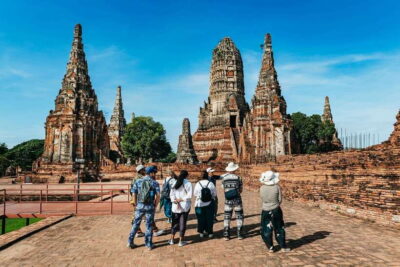
- From Bangkok: Ayutthaya Temples Guided Tour with Lunch
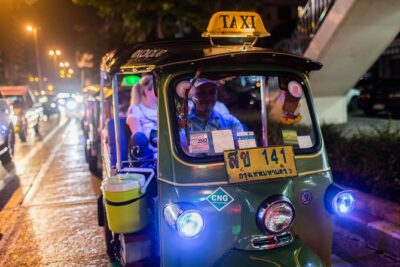
★ 4.7 · 10,535 reviews - Bangkok by Night: Temples, Markets and Food Tuk-Tuk Tour
★ 5.0 · 3,752 reviews - Bangkok: Temples, Canals & Local Life Bike Tour
★ 4.9 · 3,511 reviews
Meeting at River City Bangkok and heading into old Bangkok
You meet at the Big Country Experience office inside River City Bangkok by 9:00 AM. River City is a practical starting point because it sits by the Chao Phraya River and connects naturally with the old temple district.
The first transport leg takes about 30 minutes. The route is part of the experience, not just dead time between sights. You may pass the amulet market on Rattanakosin Island, one of the area’s long-established community markets. Amulets are important in Thai Buddhist culture, and the market gives you an early look at everyday belief and commerce before you reach the grand royal buildings.
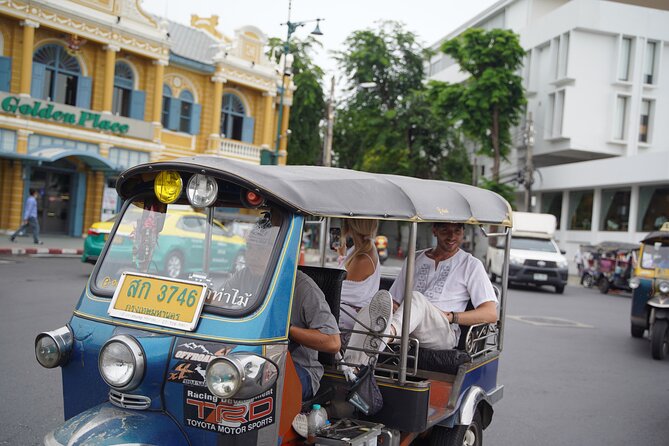
Some tours also use the river ferry and tuk-tuks. That can be a real highlight for you if this is your first time in Bangkok. One guide helped a participant find the correct boat to continue to Iconsiam after the tour, and another guided a participant onward to a Khon show. That sort of practical help is valuable because the final stop is near a useful river transport area.
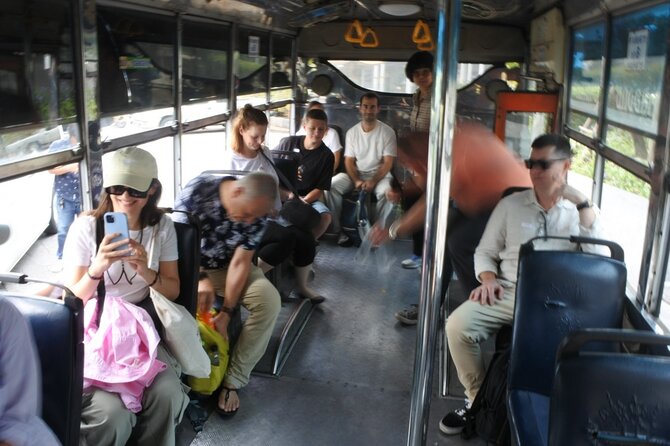
The tradeoff is that public transport adds uncertainty. You may wait, board with other passengers, or adjust your pace around traffic and river conditions. If you prefer a private vehicle and a fixed route, this is not the right format. If you want a more grounded look at how Bangkok moves, it is a good choice.
Grand Palace and Emerald Buddha Temple
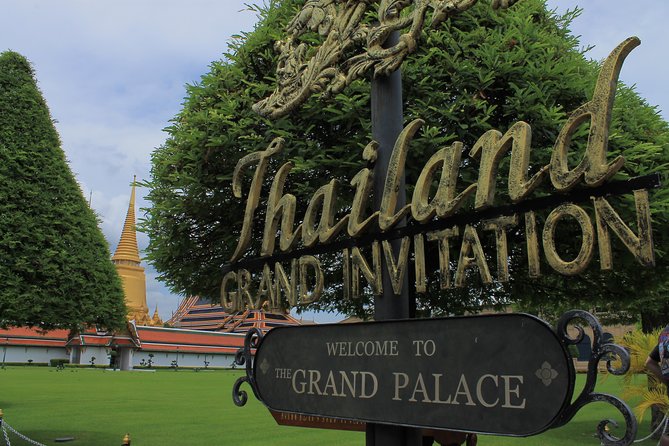
The central visit begins at Wat Phra Kaew, formally Wat Phra Si Rattana Satsadaram and commonly called the Temple of the Emerald Buddha. It is regarded as Thailand’s most sacred Buddhist temple, so this is not simply another ornate stop on a sightseeing checklist.
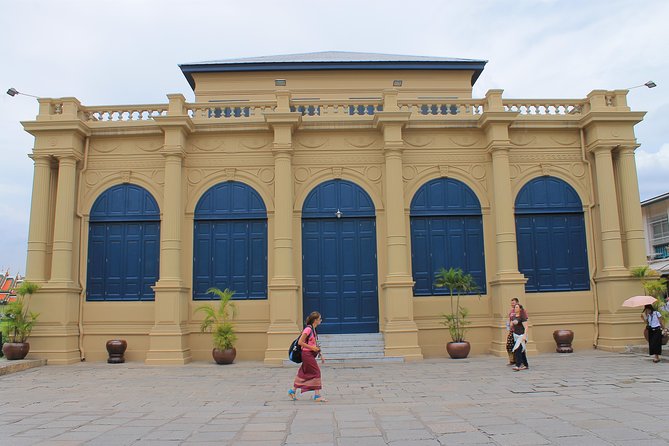
Expect brightly painted buildings, gold spires, glittering mosaics and detailed figures. The grounds reward close attention. Your guide may explain the characters and stories shown in the murals and statues, as Peter did when he connected palace artwork to Thai dynastic mythology.
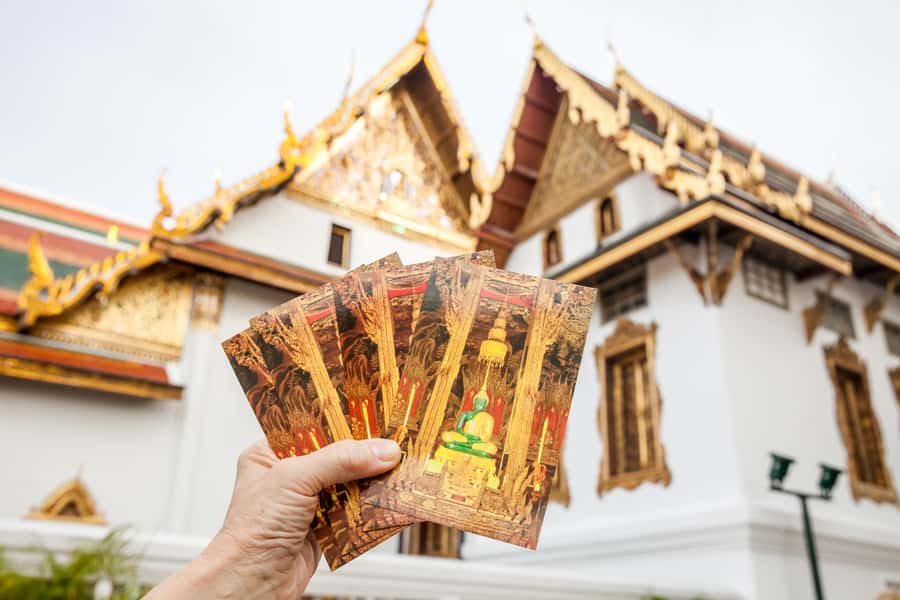
The Emerald Buddha itself is made of jade, despite its familiar name. It wears different outfits for the seasons, and the clothing is changed in a formal ceremony. You cannot photograph the Buddha inside the chapel, but guides may show you images and explain the seasonal changes outside.
The chapel is a national shrine, and the rules are strict. You need clothing that covers your shoulders and knees. Sleeveless tops, bare shoulders, bare knees and strapless-heel shoes are not allowed. You also remove your shoes before entering temple buildings. Photography is allowed in the Royal Palace grounds and the Emerald Buddha compound, but not inside the buildings.
The Grand Palace surrounds this sacred temple. It was the official residence of Thailand’s kings and remains a setting for royal ceremonies and state functions. The palace is not presented as a museum frozen in time. It still has an official role, which helps explain why the dress code and behavior rules matter.
Allow about 1.5 hours for the guided palace visit and nearby sightseeing. That is enough for a solid orientation, though not enough to examine every building at length. The grounds can feel hot and exposed. Guides have made a point of finding shade, arranging water stops and keeping breaks sensible, but you should still arrive prepared.
Wat Pho, the Reclining Buddha and Thai massage
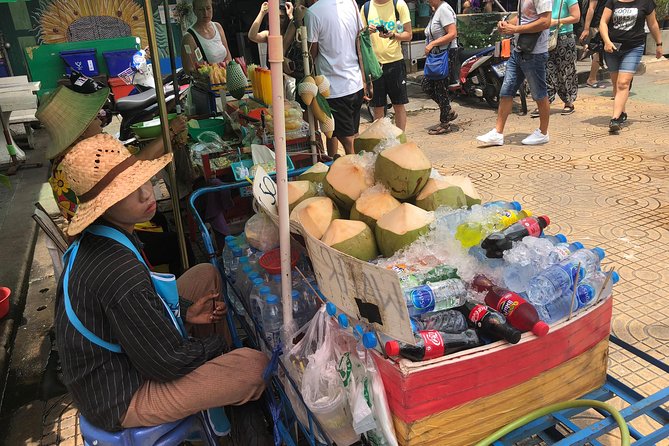
If you select the version that includes Wat Pho, you continue after the Grand Palace. The route passes Tha Thien Market, a cultural food market known for dried, salted seafood and wholesale products. It is not a polished tourist market, and that is part of its appeal. You get a quick look at the food trade that supports the old riverside district.
Wat Pho is officially Wat Phra Chetuphon Wimon Mangkhalaram and is one of Thailand’s highest-grade first-class royal temples. Most people first notice the enormous Reclining Buddha, but the temple complex deserves more time than a quick photograph.
King Rama I rebuilt Wat Pho on an earlier temple site and made it his main temple. Some of his ashes are enshrined there. The compound also became an early center for public medical education, with marble illustrations and inscriptions intended to teach visitors. Those materials have been recognized through UNESCO’s Memory of the World Programme.
Wat Pho is also associated with traditional Thai massage. The temple is widely regarded as the birthplace of the practice, which is still taught and practiced there. That gives the visit a useful connection to living Thai culture. You are not only looking at old buildings. You are seeing a place tied to education, medicine, religion and a skill still used today.
The drawback is time. If the tour includes the Grand Palace, Emerald Buddha Temple, Wat Pho and Wat Arun in a short period, each visit becomes a focused introduction. You will see the essential features and hear the main stories, but you may want to return later if you care about inscriptions, murals or architectural details.
More market tours in Bangkok:
- Bangkok: Damnoen Saduak Market and Maeklong Railway Market
★ 4.5 · 26,723 reviews - The Old Siam: Damnoen Saduak and Maeklong Railway Market
★ 4.5 · 10,992 reviews - Bangkok: Train Market & Floating Market with Boat Ride
★ 4.7 · 9,547 reviews - From Bangkok: Ayutthaya & Ayothaya Floating Market Day Trip
★ 4.7 · 6,084 reviews
Wat Arun beside the Chao Phraya River
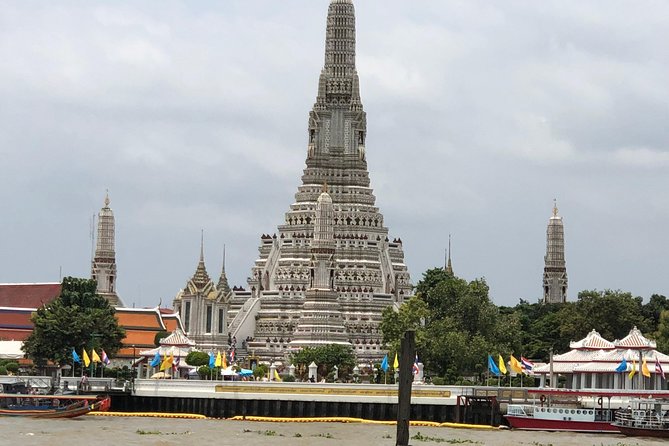
Wat Arun, or the Temple of Dawn, completes the classic temple route. Its best-known feature is the tall central tower beside the Chao Phraya River. The tower is decorated with tiny pieces of colored glass and Chinese porcelain, creating a surface that changes as you walk around it.
The pagoda is usually described as about 70 meters high. Its bell tower and giant statues add to the scale, while the river setting gives the visit a different mood from the enclosed palace grounds. At the Grand Palace, the emphasis is royal ceremony and sacred authority. At Wat Arun, the river, tower and decorated surfaces create a more open visual experience.
You should check the booking option to confirm Wat Arun admission is included. The same applies to Wat Pho. The base inclusion clearly covers the Grand Palace and Emerald Buddha Temple, while the other two temples depend on the option selected. That detail affects both the price and the time you need.
Transport to Wat Arun can also make the outing more memorable. Several people specifically valued river travel, and local transport gives you a better sense of Bangkok than staying in a tour van. Still, boats and short walks mean you should wear comfortable shoes and keep your belongings secure.
Markets, transport and the shape of the day
The market stops are brief, but they stop the tour from becoming a chain of grand monuments. The amulet market shows a long-standing side of Bangkok’s religious life. Tha Thien Market gives you a glimpse of food distribution and riverside trade.
The public transport sections are listed at roughly 30 minutes each. That time can feel long if you only want temple interiors, but it gives the guide a chance to explain neighborhoods and answer questions. One guide used waiting periods and pauses to explain Thai customs, building details and the seasonal clothing of the Emerald Buddha.
I would treat the transport as part of the tour’s character. You are not buying a sealed sightseeing bubble. You are moving through Bangkok with the public, crossing between old districts and getting a taste of the city’s practical rhythm. On the other hand, weather can affect comfort. A thunderstorm did not stop one outing, but the group needed care to stay dry, so a small umbrella or light rain layer is sensible even if the morning begins bright.
Heat, clothing and practical comfort
Bangkok’s temples require respectful dress, and you should plan this before leaving your hotel. Wear clothing that covers your shoulders and knees. Sleeveless shirts are not allowed, and the temple rules also exclude strapless-heel shoes. Since you remove shoes before entering temple buildings, easy footwear helps.
Bring water, although drinking water is provided. A hat and sun protection may be useful, but remember that you still need to follow temple rules. The guides have been attentive to toilet stops, shade and water breaks, which makes a difference in hot weather.
Restrooms are available. Still, use a convenient facility when you have the chance rather than assuming the next stop will be immediate. The route includes walking, waiting and changing transport, so you will be more comfortable if you allow a little flexibility.
Photography is permitted in the Royal Palace grounds and in the Emerald Buddha temple compound, but not inside the buildings. Follow the guide’s instructions and avoid treating the sacred spaces as ordinary photo sets. The best details are often outside anyway: roof lines, mosaics, guardians, murals and the layered colors of the buildings.
The guide makes the difference
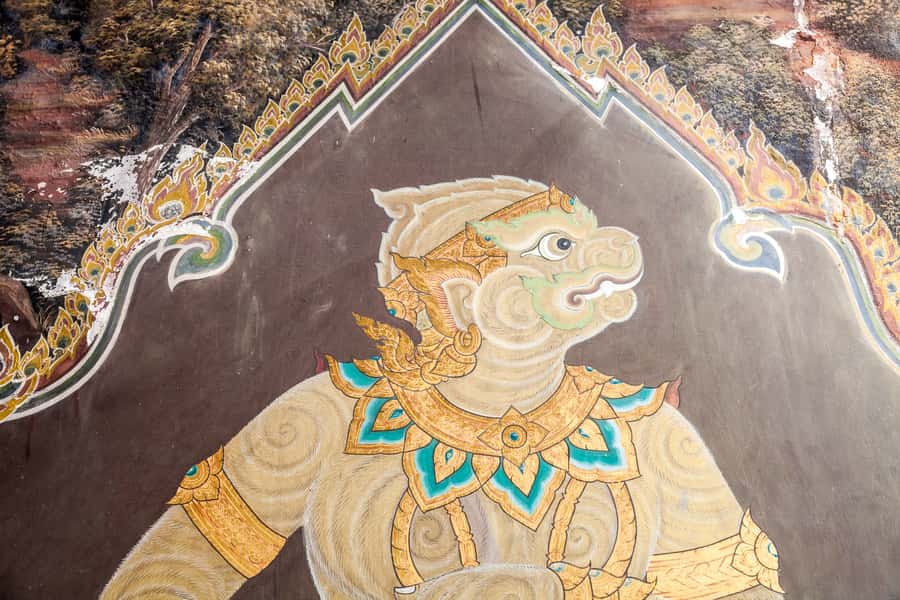
The tour is sold with an English or German-speaking licensed guide. The individual guide shapes the experience more than any fixed script. Strong guides have explained Buddhism, royal history, seasonal temple rituals and architectural symbols in an engaging way while watching the group’s pace.
Mina is described as energetic, warm and able to answer questions. Kiwi has been praised for clear explanations, attention to group needs and useful food advice at the end. Johnny has combined humor with historical detail, and Pete has used lively stories to explain the palace and its mythology.
Air, Tan, Philips, Mimi, Peter and Ong are also among the named guides connected with positive experiences. Some guides have helped participants find onward boats, taxis, shows or hotel transport. That makes the tour useful beyond the formal end point, especially if you are still finding your way around Bangkok.
You should keep your expectations realistic. A group tour cannot stop for every question or adapt perfectly to every person. But the 10-person limit gives you a better chance of personal help than a large coach tour.
Where the tour ends and who should book
The activity ends near Tha Tien, with drop-off points listed at Tha Tien Market and the area known as Tha Tian near the Grand Palace. That is convenient if you want to continue around the riverside district, find food, or connect with a boat. It is less useful if your next plan is on the far side of Bangkok and you expected a hotel transfer.
I would choose this tour if you want the major royal and temple sights explained in one organized outing, especially on a first visit. It suits visitors who enjoy walking, local transport and historical stories, and who appreciate having someone handle admissions and route changes.
I would skip it if you want a slow architectural study, a private guide, or a quiet visit away from crowds. The tour’s strength is coverage and context, not long stretches of solitude.
At $42, the value is strongest when you choose the option that includes the sights you want. The guide, core admissions, water and transport assistance make the price reasonable for a short Bangkok orientation. Check the exact inclusions for Wat Pho and Wat Arun, dress correctly, and expect heat and walking.
FAQ
Where does the tour start?
You meet your guide at the Big Country Experience office at River City Bangkok. The meeting time is listed as 9:00 AM.
Where does the tour end?
The activity ends near Tha Tien, with drop-off locations listed at Tha Tien Market and the area known as Tha Tian near the Grand Palace.
How long does the tour last?
The tour lasts between 2 and 4 hours. Starting times and the exact duration depend on the selected option.
What is included in the price?
Admission to the Grand Palace and Emerald Buddha Temple, a professional licensed guide and drinking water are included. Admission to Wat Pho and Wat Arun is included only when you select the relevant option.
Which languages are available?
The live guide is available in English or German.
How large is the group?
The tour is limited to 10 participants.
Is local transport used?
Yes. The itinerary includes public transport between the meeting point and temple district. Some outings also include a river boat and tuk-tuk.
What should I wear?
You must cover your shoulders and knees. Sleeveless shirts, bare shoulders, bare knees and strapless-heel shoes are not permitted at the national shrine.
Can I take photographs inside the temples?
Photography is permitted in the Royal Palace grounds and the Emerald Buddha temple compound, but not inside the buildings.
Can I cancel the booking?
You can cancel up to 24 hours in advance for a full refund. A reserve-now, pay-later option is also available.
More Walking Tours in Bangkok
- Bangkok: Grand Palace and Wat Phra Kaew Guided Walking Tour
★ 4.4 · 2,417 reviews - Bangkok: Wat Pho and Wat Arun Guided Walking Tour
★ 4.6 · 1,720 reviews - Bangkok Authentic Tasting Thai-Chinatown Walking Food Tour
★ 4.9 · 852 reviews - Bangkok: Discover a Taste of Chinatown – 2 Hr Walking Tour
★ 4.2 · 152 reviews
Newly reviewed around Bangkok
- Bangkok: Chao Phraya Alangka Cruise at Icon Siam★ 3.8 · 36 reviews
- Private Ancient city of Ayutthaya Shore Excursion★ 5.0 · 9 reviews
- SEA LIFE & Madame Tussauds: Ultimate Bangkok Combo Ticket★ 4.0 · 10 reviews
- Sea Life Bangkok Ocean World Tickets★ 4.0 · 40 reviews
- Siam Park City Bangkok (Ticket) + Lunch★ 3.0 · 8 reviews
- Suvarnabhumi to Pattaya 24 hour Private Airport Transfer Service★ 5.0 · 60 reviews
- Rest And Relax Massage – Traditional Thai Massage In Bangkok / Sukhumvit★ 4.5 · 45 reviews
- Bangkok: Baiyoke Sky Hotel Observatory Entry Ticket & Drink★ 4.5 · 49 reviews
Bangkok Temple Tours, compared.
Bangkok by Night: Temples, Markets and Food Tuk-Tuk Tour
Read our review →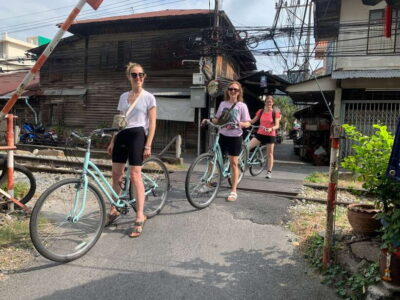
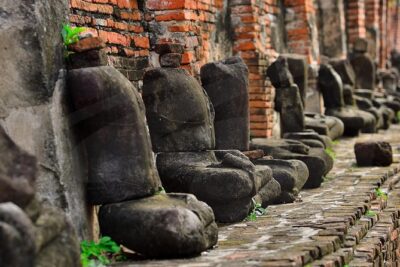
Ayutthaya Temples and River Cruise from Bangkok
Read our review →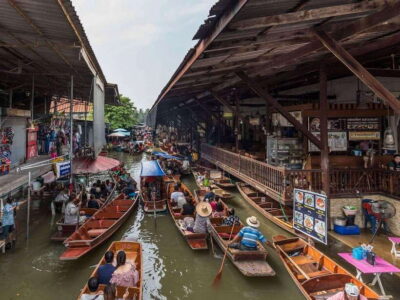
Railway and Floating Market Tour with Dragon Temple
Read our review →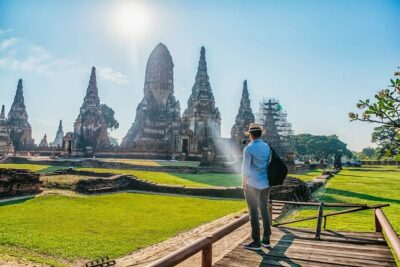
The Old Siam: Ayutthaya Temples Small Group Tour with Lunch
Read our review →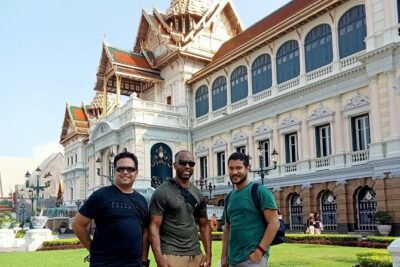
Grand Palace & Temples of Bangkok with experienced guide
Read our review →
Night Bike Tour with Temples & Flower Market Visit
Read our review →Browse the lists this tour appears in