
Reviewed · FOOD & DRINK
Bangkok: Backstreets Food Tour with 15+ Tastings
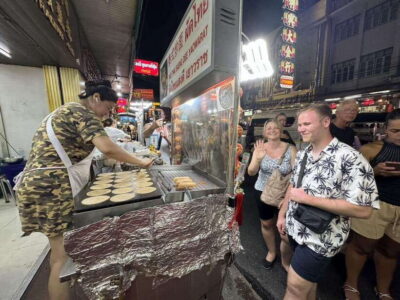
Bangkok’s best food discoveries often sit down a narrow lane, behind a busy storefront, or in a place you would pass without knowing what to order. This small-group Chinatown walk takes you through Yaowarat’s backstreets for more than 15 tastings, including stops at Michelin-listed street food spots. I like the sheer range, and I like that an assistant runs ahead to secure tables and food at busy places. The main catch is simple: come hungry, but pace yourself.
I also like the Chinese influence woven through the menu, from noodles and dumplings to braised pork and seafood soup. Guides such as Anya, JT, Annie, Ploy, and Pukpik have been praised for explaining ingredients, local customs, and Thai phrases along the way. Still, this is not a good choice for strict vegetarians, vegans, or anyone with a severe food allergy, and soft-spoken guides can be hard to hear beside busy streets.
Key points at a glance
- 15-plus tastings in 3.5 to 4 hours: This is a full meal spread across 8 to 9 stops, not a quick snack crawl.
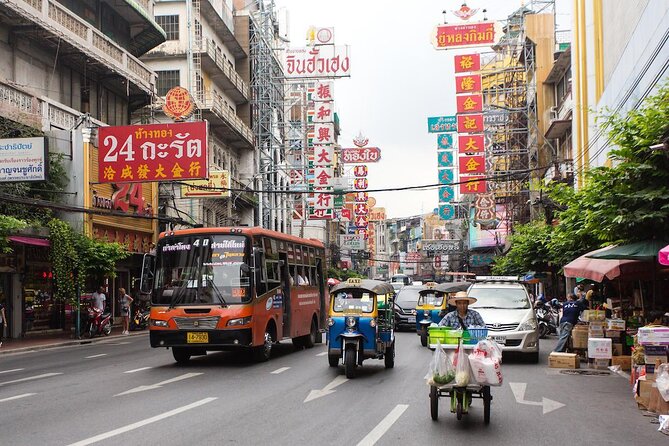
- Backstreets of Yaowarat: You walk into narrow lanes and local corners where tuk-tuks cannot go.
- Two-person guide team: One guide explains the food while an assistant handles tables, timing, and vendor coordination.
- Thai-Chinese food focus: Learn how Chinese cooking traditions shaped noodles, stir fries, dumplings, pork dishes, and more.
- Maximum of eight people: A small group makes it easier to ask questions and keep up in crowded Chinatown.
- Dietary limits matter: Pescatarians can be accommodated with fewer tastings, but strict vegetarians, vegans, and people with serious allergies should skip it.
Why this Bangkok food tour works so well
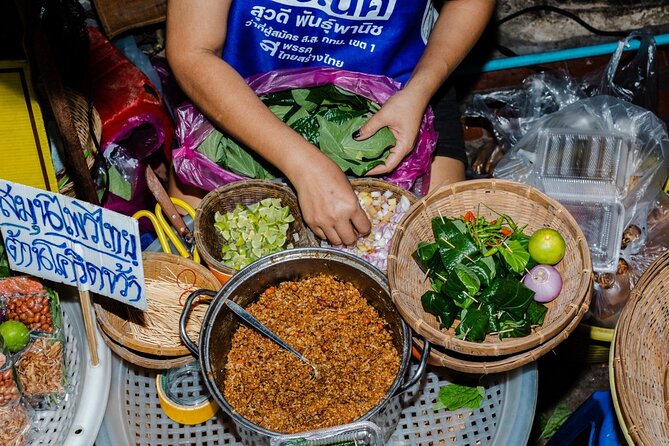
This tour succeeds because it treats Chinatown as both a dining room and a neighborhood. You do not simply sit down for one large meal. You move from stall to stall, sampling small portions while your guide explains what is in front of you and why it belongs in Yaowarat.
That variety matters in Bangkok. Thai food is not one narrow style, and Chinatown adds another layer. Chinese migration has shaped many familiar Thai dishes, especially noodles, dumplings, stir fries, roast and braised meats, and seafood preparations. A good guide helps you notice those connections instead of treating each snack as an isolated bite.
The group limit of eight is a real advantage. Yaowarat can be crowded, noisy, and confusing, especially around the evening market. A large group would spend too much time stopping on sidewalks or waiting for tables. Here, the guide can keep the group moving, while the second staff member goes ahead to arrange seating and prepare the next stop.
Several guides receive especially warm praise for their food explanations and friendly approach. Anya is described as engaging and full of local detail. JT is noted for his enthusiasm, while Annie and Ploy are praised for combining food information with easy conversation. Your actual guide will depend on the departure, but the setup is consistent: one person leads the storytelling, and an assistant keeps the practical side moving.
More food tours in Bangkok:
- Bangkok: White Orchid Chao Phraya Dinner Cruise free Beer
★ 4.4 · 4,573 reviews - Bangkok by Night: Temples, Markets and Food Tuk-Tuk Tour
★ 5.0 · 3,752 reviews - Bangkok Midnight Food Tuk Tuk Tour
★ 5.0 · 2,542 reviews
Meeting at Shanghai Mansion Bangkok
The tour starts outside Shanghai Mansion Bangkok in Chinatown. Look for a staff member in a black A Chef’s Tour polo shirt. The group then moves to a nearby café or bar on a side street, where you can use the restroom and gather before eating begins.
This is a useful arrangement. The meeting point is easy to identify, but the short move away from the main road gives the guide a chance to organize the group before entering the maze of Yaowarat. You should arrive ready to walk and wear comfortable shoes. An umbrella and weather-appropriate clothing are sensible in Bangkok, where heat and sudden rain can both affect a walking tour.
The route finishes back at Shanghai Mansion Bangkok, near Yaowarat Road and its famous neon signs. You do not need to arrange hotel pickup, so plan your own way to Chinatown and allow extra time if you are coming from another part of Bangkok.
First tastes: dumplings, sauces, and charcoal smoke
The exact order of dishes may change, but the early stops set the tone. Expect foods that show off texture and seasoning rather than one long, heavy plate. Crispy chive dumplings with nam jim jaew sauce provide a good example. The dumplings offer a firm, browned exterior, while the dipping sauce adds sour, salty, and spicy notes.
You may also taste shrimp dumplings and other steamed items. These are useful introductions to the Chinese side of Yaowarat’s cooking, especially when your guide explains how the fillings, wrappers, and sauces differ from familiar versions elsewhere.
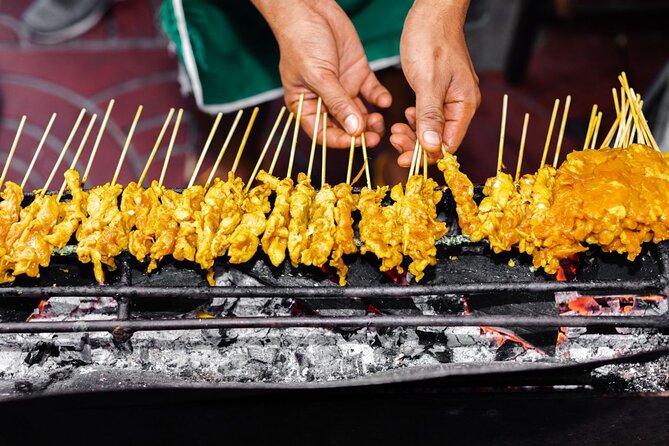
Satay is another likely highlight. The meat is cooked over charcoal and served with a savory sauce, giving you a smoky bite early in the route. Since portions can be larger than expected, do not treat the first few stops as mere samples. You are building toward a very substantial meal.
A smart habit is to taste each dish before adding extra chili, vinegar, sugar, or sauce. One guide specifically encouraged this approach, allowing the group to understand the original balance before changing it. That small lesson is useful for the rest of your time in Thailand. Street food condiments are there to adjust a dish to your taste, not to hide its basic flavor.
Braised pork and the Chinese side of Yaowarat
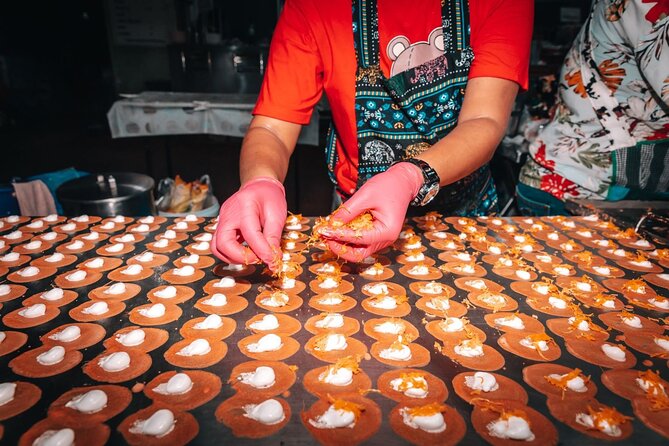
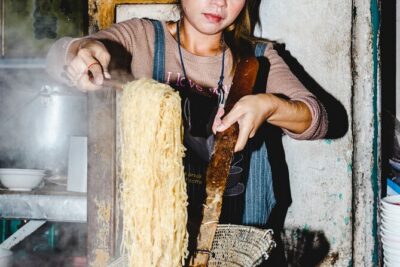
As the walk continues, the food shifts toward deeper flavors. Slow-braised pork is likely to appear, with tender meat and a dark, savory cooking liquid. This is the sort of dish that can be difficult to identify or order on your own if you cannot read the menu, but a guide can explain what you are eating and how it was prepared.
The route is designed to show the relationship between Thai and Chinese food rather than present a list of unrelated snacks. You may notice familiar Chinese techniques alongside Thai herbs, sauces, heat, and seafood. That mix is one of the strongest reasons to choose this tour over a general market walk.
Some stops are in busy venues with limited seating. This is where the assistant becomes more than a second guide. The assistant may move ahead, secure space, and help make sure the food is ready before the group arrives. Several people specifically praised this arrangement because it reduced waiting at popular spots, including Michelin-listed vendors.
The tradeoff is that the route can feel fast. You are covering many stops in four hours, and Chinatown streets are not always easy for a group to navigate. One participant found the host talked at length, while another found a soft voice difficult to hear beside traffic and crowds. If you want a slow meal with long conversations at every stop, this is not that kind of outing.
Same city, a completely different sort of day:
- Bangkok: Damnoen Saduak Market and Maeklong Railway Market
★ 4.5 · 26,723 reviews - The Old Siam: Damnoen Saduak and Maeklong Railway Market
★ 4.5 · 10,992 reviews - From Bangkok: Ayutthaya Temples Guided Tour with Lunch
★ 4.7 · 10,535 reviews - Bangkok: Train Market & Floating Market with Boat Ride
★ 4.7 · 9,547 reviews
Seafood soup and Michelin-listed street food
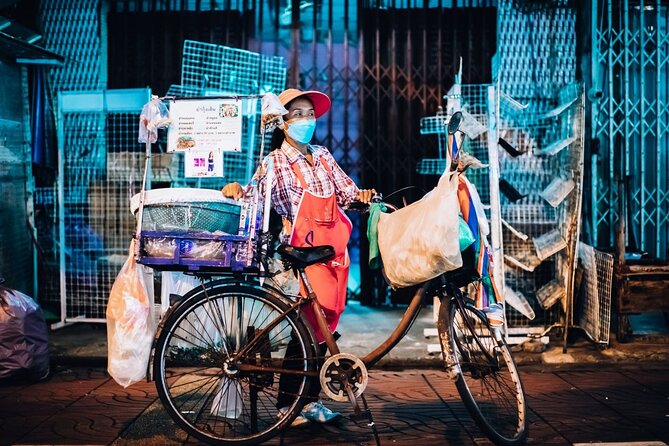
The tour includes two Michelin-listed street food venues, and the total may reach two or three depending on the route and operating hours. This does not mean you are eating in formal restaurants. The Michelin mention points to respected street food vendors, often valued for a focused dish made well over many years.
One featured style is poh taek seafood soup, a fragrant and spicy broth with seafood. It brings a different texture and flavor profile after dumplings, satay, and braised pork. The soup also shows why a food tour is useful in Chinatown: seafood dishes can carry strong seasoning, and the guide can help explain the ingredients before you taste.
The Michelin stops are not the whole point of the walk. In fact, the less famous backstreet vendors may be more memorable because you would not know to look for them. The tour combines recognized names with small food windows and local spots that are hard to find without someone who knows the area.
Do not expect every stop to offer a full individual serving. The promise is more than 15 tastings, but the size of each portion can vary. Some portions are surprisingly generous, and people who arrive without breakfast or lunch may still find themselves full before the final stop.
The surprise ending: soy sauce ice cream
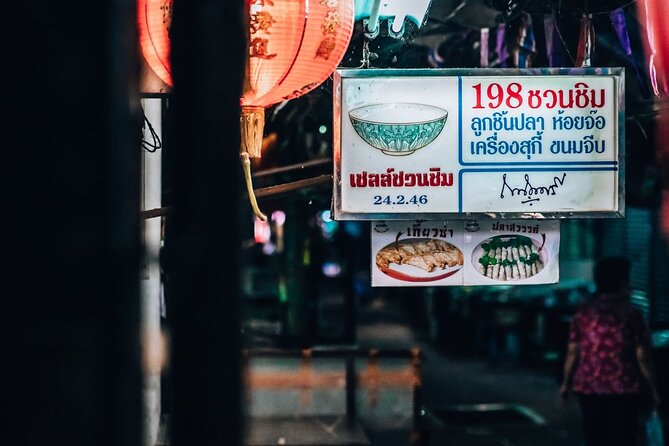
The final stretch includes a dessert stop, with soy sauce ice cream singled out as an unexpected favorite. The flavor may sound strange if you are picturing a salty condiment poured over a sweet dessert, but the point is to try something outside your usual Bangkok food list.
This is also a good example of the tour’s approach. You are not only sampling famous pad thai or mango sticky rice. You are being shown foods and combinations that might not appear in a standard sightseeing plan. The dessert offers a lighter finish after the savory dishes, though you should still save room for it.
The route ends back near Shanghai Mansion Bangkok along Yaowarat Road. By then, you should have a useful list of dishes to seek out again, even if the exact alleyways blur together. One practical improvement would be a written list of the stops, since the route moves through many lanes and it may be hard to remember every location later.
What you get for $62
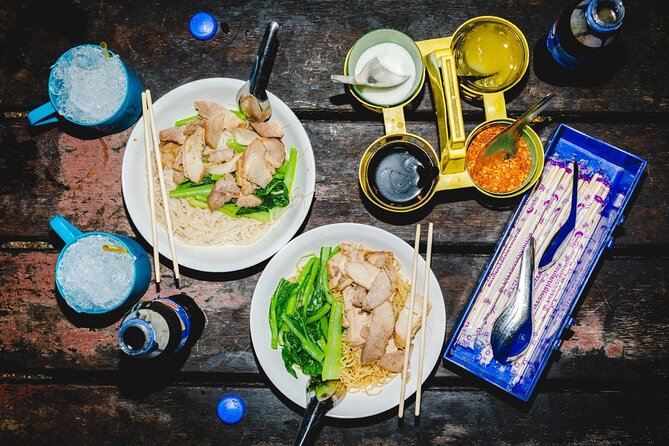
At $62 per person, the value depends on how you use the tour. If you count only the food, you are paying more than you would at local stalls on your own. But the price includes 15-plus tastings, a licensed English-speaking guide, a second staff member, bottled water, and the work of finding, ordering, timing, and coordinating the stops.
The two-person setup is especially useful in Chinatown. At a busy stall, the assistant can go ahead while the guide keeps explaining the current dish. That saves time and gives you a better chance of eating at places where a group of eight would otherwise be awkward.
You are also paying for confidence. Ordering one unfamiliar dish at a time can be fun, but trying 15 or more items alone would mean guessing what to choose, where to go, and how much to order. This tour turns those decisions into a four-hour tasting route.
For me, the best value comes when you take it early in your Bangkok stay. You learn what certain dishes look like, how local condiments work, and which parts of Chinatown are worth revisiting. Several people wished they had done it on their first day, so they could use the food knowledge for the rest of the trip.
Morning or evening departure?
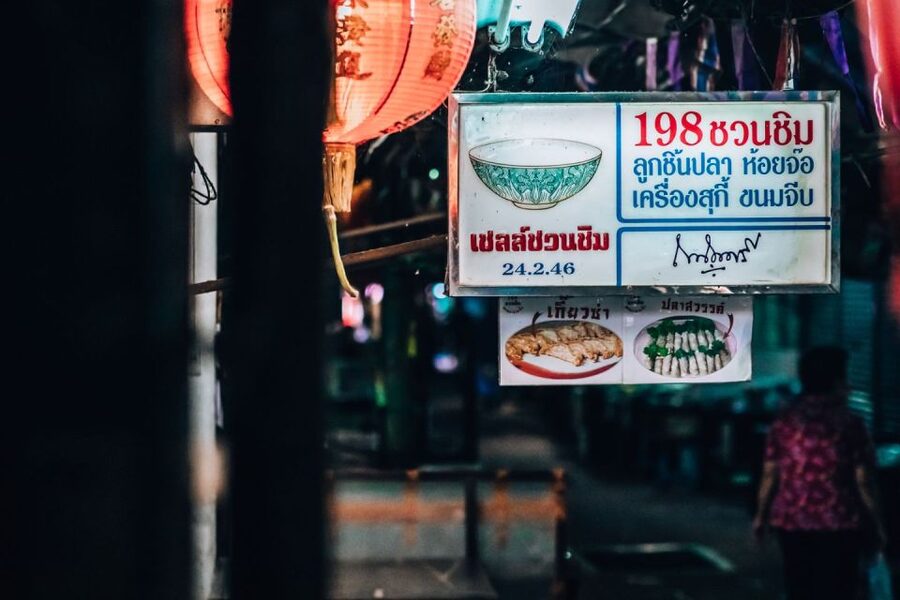
The morning departures use most of the same food stops, but some vendors change because opening hours differ. That is worth knowing if you are choosing a time based on a specific dish. The experience remains a walking food route through Yaowarat, but the precise menu is not fixed.
An evening departure lets you see Yaowarat Road under its neon lights and experience the market at its busiest. It may also bring more crowd noise and less room to stop comfortably. Morning departures can offer a different rhythm, with some markets and vendors easier to observe during daylight.
Either way, wear shoes suited to several hours on foot. Bring an umbrella, and do not schedule an important appointment immediately afterward. The tour lasts 3.5 to 4 hours, and the amount of food can leave you ready for a quiet break rather than another major meal.
Who should book this tour?
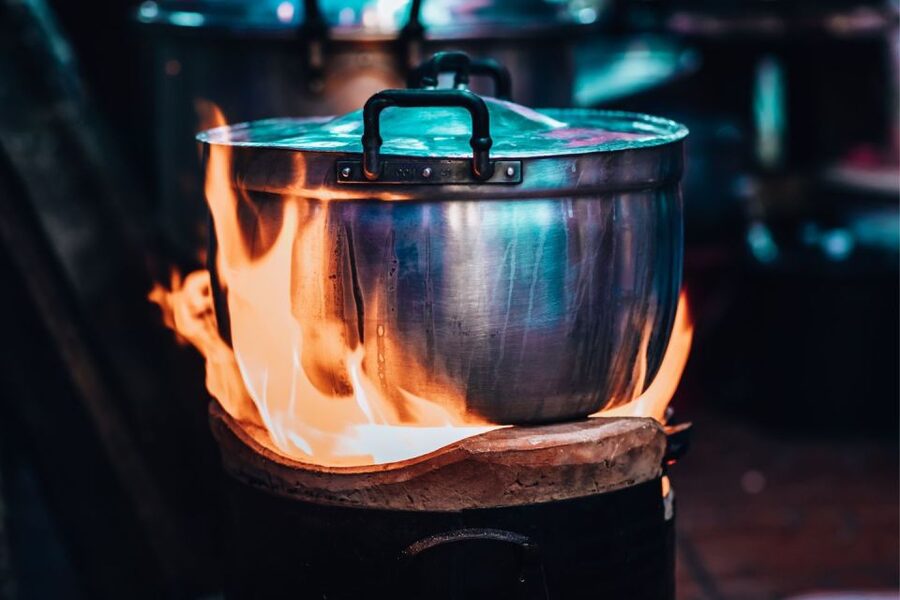
This is a strong choice for first-time visitors who want an organized introduction to Thai-Chinese food. It also suits people who enjoy trying many small dishes, asking questions, and walking through side streets rather than sitting in one restaurant.
Food fans who already know Bangkok may still find value in the less obvious stops. The draw is not simply learning what pad thai is. It is finding unfamiliar dumplings, braised dishes, sauces, seafood, and dessert in places that are difficult to identify from the main road.
The tour is less suitable for anyone who wants a relaxed pace or needs full control over every ingredient. Strict vegetarians and vegans should not book it. Pescatarians can take part, but they will miss two or three of the 15 or more tastings because some vendors cannot provide alternatives.
People with severe allergies should also skip this experience because of cross-contamination risks. Mild gluten intolerance may be manageable, but the operator advises against it for people with celiac disease because soy sauce and traces of gluten are difficult to avoid.
Should you book the Yaowarat backstreets food tour?
Book it if you want a large range of food, a small group, and guidance through Chinatown’s less obvious lanes. The strongest reasons are the 15-plus tastings, the two-person team, and the chance to understand how Chinese cooking traditions fit into Bangkok’s food culture.
Skip it if you need a vegetarian or vegan menu, have serious allergy concerns, or prefer a slow sit-down dinner. For everyone else, $62 is a fair price for a food-heavy route that removes much of the guesswork from eating in Yaowarat. Go early in your Bangkok visit, pace yourself, and save room for the soy sauce ice cream.
FAQ
Where does the tour start?
It starts outside Shanghai Mansion Bangkok in Chinatown. Look for a staff member wearing a black A Chef’s Tour polo shirt.
Where does the tour finish?
The tour returns to the Shanghai Mansion Bangkok area along Yaowarat Road.
How long does the experience last?
The walking food tour lasts about 3.5 to 4 hours.
How many tastings are included?
You receive more than 15 tastings across 8 to 9 food stops.
How large is the group?
The group is limited to a maximum of eight participants.
Is the tour offered in English?
Yes. The tour has a live English-speaking guide.
Are alcoholic drinks included?
No. Alcoholic drinks are not included in the price.
Can pescatarians join?
Yes, but pescatarians should expect two or three fewer tastings because some vendors do not have suitable alternatives.
Can vegetarians or vegans join?
No. The tour is not suitable for strict vegetarians or vegans because many dishes contain meat or seafood-based ingredients.
Is the tour suitable for people with food allergies?
It is not suitable for severe food allergies because of cross-contamination risks. Mild gluten intolerance may be accommodated, but the operator advises against the tour for people with celiac disease.
Newly reviewed around Bangkok
- Twilight Firefly Bangkok Bicycle Tour★ 5.0 · 24 reviews
- Wonderful Pearl Cruise with Private Hotel Transfer★ 4.6 · 24 reviews
- Day Tour of Ayutthaya and Bang Pa In★ 5.0 · 3 reviews
- re:leaf spa and massage★ 4.0 · 10 reviews
- Bangkok: Wonderful Pearl Dinner Cruise at River City Pier★ 4.3 · 13 reviews
- Yoga in the Park Thailand★ 5.0 · 12 reviews
- Bangkok Half Day Guided Tour: Grand Palace, Wat Arun & Wat Pho★ 5.0 · 4 reviews
- Wonderful Pearl Dinner Cruise★ 3.5 · 27 reviews
Food & Drink, compared.
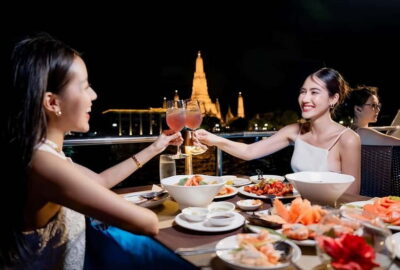
White Orchid Chao Phraya Dinner Cruise free Beer
Read our review →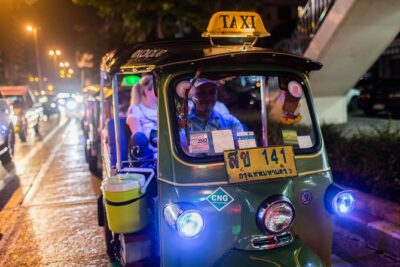
Bangkok by Night: Temples, Markets and Food Tuk-Tuk Tour
Read our review →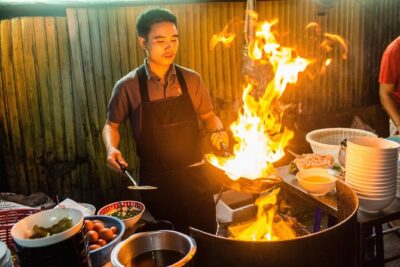
Bangkok Backstreets Food Tour with 15+ Tastings
Read our review →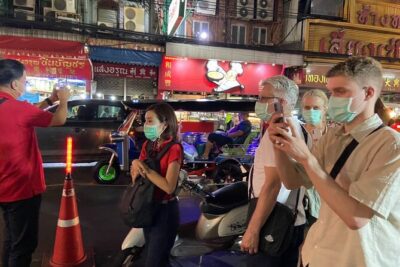
Bangkok Authentic Tasting Thai-Chinatown Walking Food Tour
Read our review →
Luxury White Dinner Cruise Free Flow Beer and Wine
Read our review →Browse the lists this tour appears in