
Reviewed · THAI COOKING CLASSES IN BANGKOK
Bangkok: Favourite Thai Flavors Cooking Class by Smart Cook
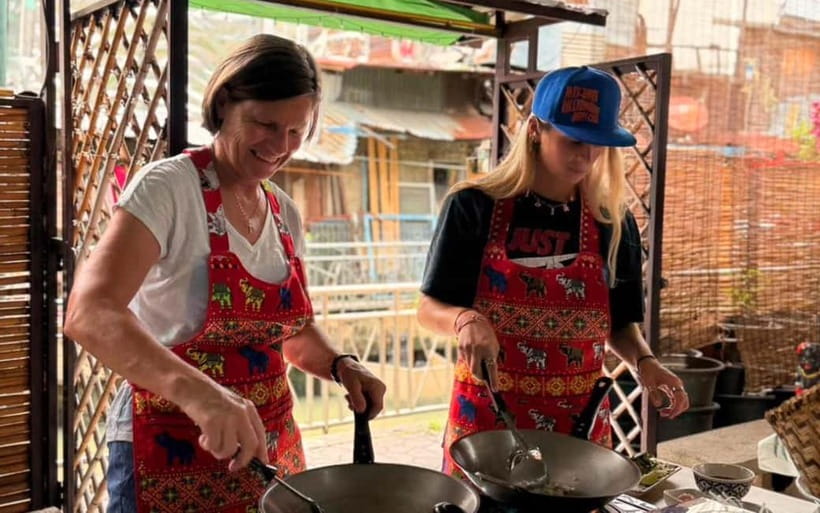
Bangkok’s Smart Cook class turns a Thai family home into a small, friendly kitchen school. In 150 minutes, you prepare Pad Thai, chicken in coconut milk, and sweet sticky rice with mango, then sit down to eat what you made. The setting feels more personal than a large demonstration class, and instructors such as Snow White and Poppy bring plenty of humor to the work.
I like two things here: you do the cooking yourself, and the ingredient lessons help you understand why Thai food tastes the way it does. You also leave with a PDF recipe book, which gives the class value after your holiday ends. One practical concern is finding the house. It is a two-storey teak home, and some people have needed extra time or local help to spot the entrance, so arrive early.
Key points before you book
- Three useful Thai dishes: Prepare Pad Thai, chicken in coconut milk, and sweet sticky rice with mango.
- A small class of up to eight: The limited group size gives you more room to ask questions and handle the ingredients.
- A home-based setting: Meet at a traditional two-storey Thai teak house rather than a large commercial kitchen.
- Friendly English instruction: Snow White, Poppy, and other Smart Cook teachers explain each step in English.
- A recipe book for later: The online PDF helps you recreate the dishes after returning home.
- Good value at $32: The price includes ingredients, instruction, drinks, and the full hands-on meal.
Cooking Thai food in a two-storey teak home
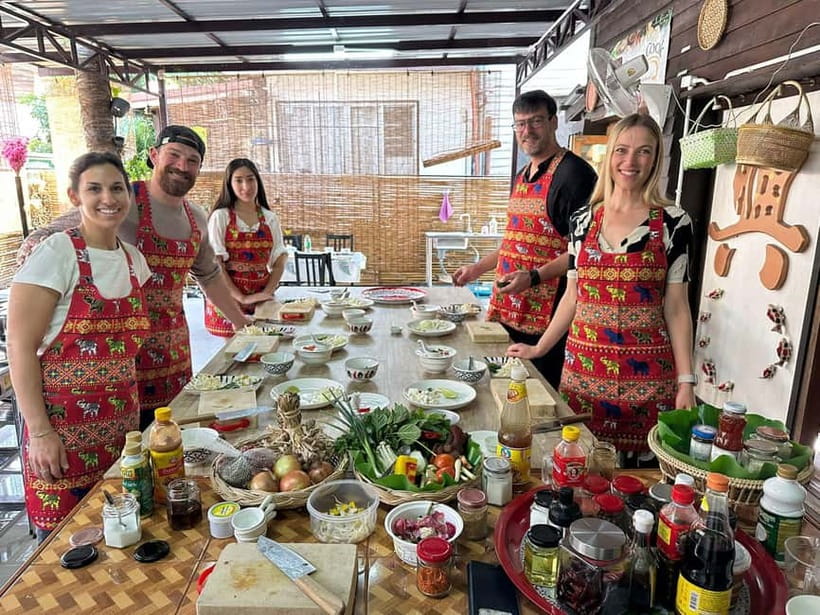
The first thing to understand is the setting. You meet at Smart Cook Bangkok’s house, a traditional two-storey Thai-style teak home. This is not a polished restaurant kitchen or a quick cooking demonstration. It is a more intimate place where the class takes place in a domestic setting.
That matters because Thai cooking makes more sense when you see ingredients in a familiar home context. You are not simply watching someone add curry paste to a pan. You learn what the ingredients are, how to choose them, and how they work together in a Thai kitchen.
The house can be tricky to find. Several people have found the location less obvious than expected and needed to ask locals for directions. I would allow extra time, save the meeting details before leaving your hotel, and avoid arriving at the last minute. Once you are inside, the space is described as clean, quiet, and private.
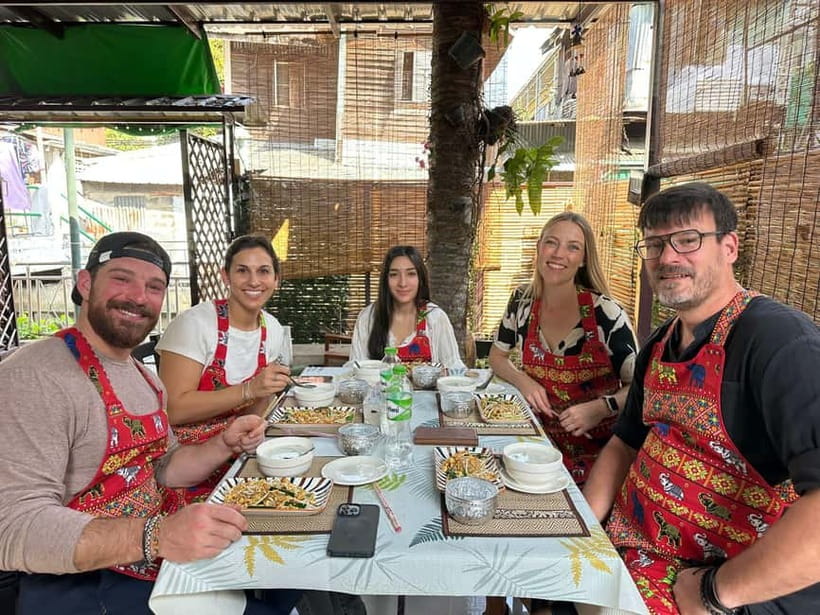
The class is taught in English and limited to eight people. That is a useful size: large enough to meet others, but small enough for the instructor to see what you are doing. Solo participants can fit in comfortably, and the class may be even smaller depending on the day.
More Thai Cooking Classes in Bangkok
- Bangkok: Hands-on Thai Cooking Class and Market Tour
★ 4.9 · 1,614 reviews - Bangkok: Tingly Thai Cooking School Half-Day Cooking Class
★ 4.9 · 1,191 reviews - Bangkok: Maliwan Thai Cooking Class with Market Tour
★ 4.9 · 1,133 reviews
Getting started with Thai ingredients
The opening part of the class focuses on ingredients and preparation. Your instructor explains the herbs, seasonings, sauces, coconut products, rice, and other items used in the recipes. You also learn how to choose ingredients and what alternatives may be available at home.
This section is more useful than it may sound. Thai recipes often look simple on paper, but the balance depends on the right mixture of sweet, sour, salty, spicy, creamy, and aromatic flavors. If you understand the purpose of each ingredient, you have a better chance of adjusting the recipe without losing its character.
The instructors also explain small cooking tricks. These can include how to prepare ingredients, when to add them, and how to adjust flavors. The emphasis is on manageable steps, so you do not need much cooking experience. People who describe themselves as inexperienced in the kitchen have still found the instructions easy to follow.
You should feel free to ask about substitutions for ingredients in your home country. The class has addressed where certain ingredients can be found in places such as Belgium and Australia, and the digital recipe book gives you a useful reference once you leave Thailand.
Pad Thai: a practical first dish
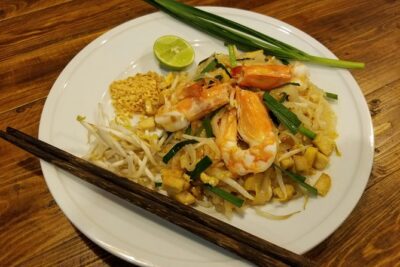
Pad Thai is usually the most familiar dish on the menu, but it is also a good lesson in Thai flavor balance. You prepare it rather than simply watching a chef cook it, and the instructor breaks the process into clear steps.
This is a helpful first recipe because it gives you immediate practice with timing. Ingredients need to meet the heat in the right order, and the final flavor should not be dominated by one sauce or seasoning. Your instructor guides you through the method and helps you adjust the result to your taste.
The recipe is also a sensible souvenir. You can find Pad Thai ingredients in many countries, and the PDF instructions make it easier to repeat the dish at home. If you want to bring back more than photographs, this is one of the class’s strongest features.
The exact preparation may vary slightly according to available ingredients and personal preferences. That is not necessarily a problem. The useful lesson is learning the method and the flavor balance, not producing a restaurant-perfect plate under laboratory conditions.
Chicken in coconut milk and the art of balance
The second main dish is chicken in coconut milk. Some classes have prepared a coconut soup or a slightly different version of the dish, so you may see a small variation in the final recipe. The core lesson remains the same: using coconut milk with Thai herbs and seasonings to make a dish that is creamy without becoming flat or heavy.
This is where ingredient instruction pays off. Coconut milk softens strong flavors, while herbs and seasonings keep the dish lively. Your instructor explains how the ingredients fit together and how to build the taste in stages.
The recipe suits a range of cooking abilities. You work through the preparation and cooking yourself, but the teacher is there to demonstrate, correct, and explain. If you are nervous about handling unfamiliar ingredients, this guided approach makes the process feel much less demanding.
This dish can also be easier to repeat at home than some elaborate Thai preparations. You still need access to the right herbs and coconut products, but the class gives you a framework rather than a long list of unexplained steps.
Same city, a completely different sort of day:
- Bangkok: Damnoen Saduak Market and Maeklong Railway Market
★ 4.5 · 26,723 reviews - The Old Siam: Damnoen Saduak and Maeklong Railway Market
★ 4.5 · 10,992 reviews - From Bangkok: Ayutthaya Temples Guided Tour with Lunch
★ 4.7 · 10,535 reviews - Bangkok: Train Market & Floating Market with Boat Ride
★ 4.7 · 9,547 reviews
Mango sticky rice for the sweet finish
The dessert is sweet sticky rice with mango, a simple-looking dish that depends on texture and timing. The rice should be tender and pleasantly sticky, while the mango adds freshness and sweetness.
The class normally lists mango, but seasonal fruit can affect what is served. One session used banana when mango was not in season. If you are booking mainly for mango sticky rice, keep that possibility in mind. The substitution still follows the same basic idea, but it is worth knowing that the fruit may not always be identical.
This final recipe gives the class a nice change of pace. After working with savory sauces and coconut flavors, you finish with something softer and sweeter. It is also easy to remember and share at home, especially if you explain that the texture of the rice is just as important as the fruit.
A friendly teacher makes the difference
The instructor is a major part of this experience. Snow White is frequently named as the teacher, while Poppy and Mac have also led sessions. The teaching style described across the experience is calm, clear, patient, and playful.
Snow White appears especially suited to people who want more than a recipe. She explains ingredients, cooking methods, Thai food customs, and even culinary etiquette. Her sense of humor helps keep the class relaxed, but the instruction remains practical.
Poppy has also taught families with children and adapted the pace to suit them. Some children have been allowed to take part where appropriate. The class is not specifically advertised as a children’s program, but families may find the hands-on format more engaging than a standard sightseeing stop.
English is the stated teaching language. The instruction is intended for international participants, and the cooking steps are explained clearly. If you want a highly technical professional chef course, this may feel informal. If you want to learn useful home-style Thai cooking in a friendly setting, that informality is part of the appeal.
Eating what you cook
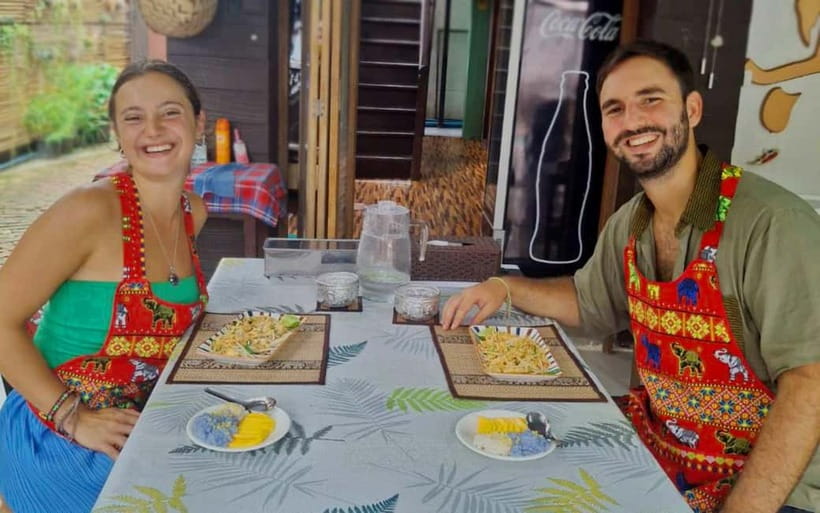
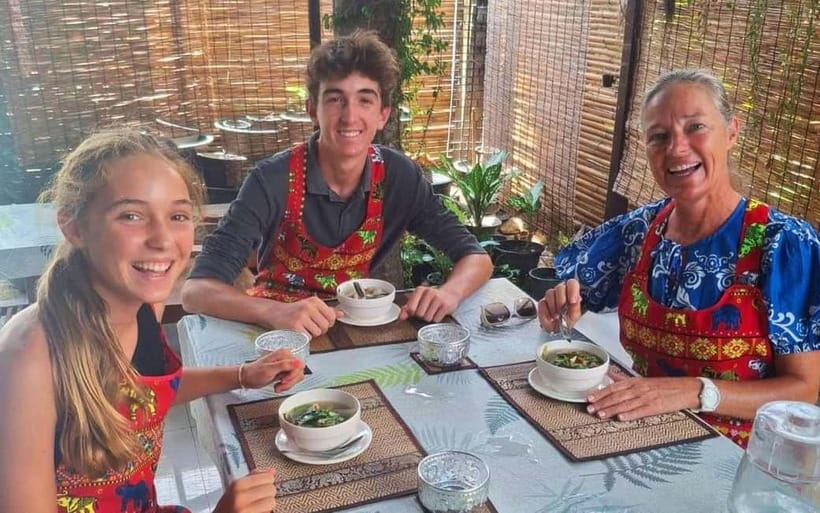
The class is not only about watching and taking notes. You prepare the food, then enjoy the meal you have made. That gives each dish a clear purpose and lets you taste the results while the instructions are still fresh.
I like this format because you can connect a cooking choice with the final flavor right away. If a sauce is too strong or a dish needs more balance, the instructor can explain what happened while you are still working through the recipe.
The food is served as part of the experience, but beer and other beverages are not included. Tea, coffee, and drinking water are provided. Alcohol and drugs are not allowed, so this is a food lesson rather than a drinking activity.
Some people have attended alone and enjoyed meeting the other participants. With a maximum of eight, conversation comes naturally without turning the class into a large social event. You might also find the group is very small, sometimes only a few people, which gives the session a more private feel.
What the $32 price really covers
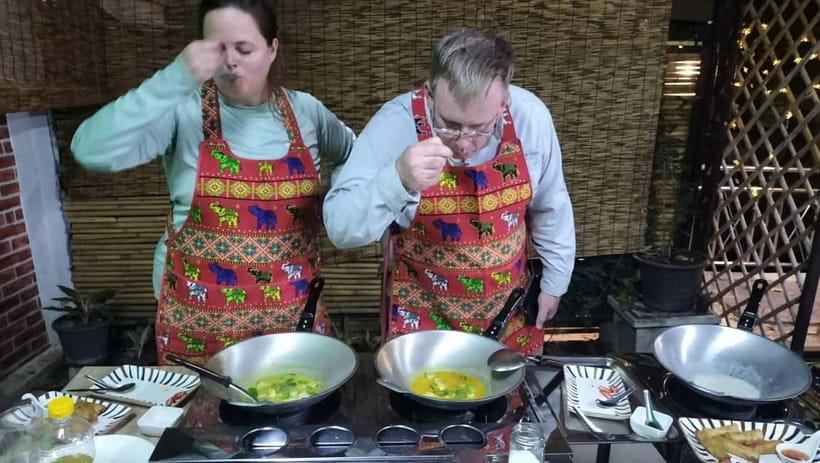
At $32 per person, this is a good-value activity for Bangkok. The price includes the instructor, all cooking ingredients, hands-on preparation, tea, coffee, drinking water, and the meal you make.
The PDF recipe book adds value because it gives you something practical to use after the trip. A market visit may help you recognize ingredients, but it will not necessarily teach you how to turn them into three complete dishes. Here, you get a meal, a lesson, and recipes for a relatively modest price.
The class lasts 150 minutes, or two and a half hours. That is long enough to cover ingredient guidance, preparation, cooking, and eating without taking up an entire day. You can choose from three class times, which may make it easier to fit around temple visits, shopping, or an evening plan.
You should still be realistic about what $32 buys. This is not a full market tour, a multi-day culinary course, or a lesson in dozens of dishes. You focus on three recipes and the skills behind them. For a short Bangkok activity, that focused format works well.
Who should take this class
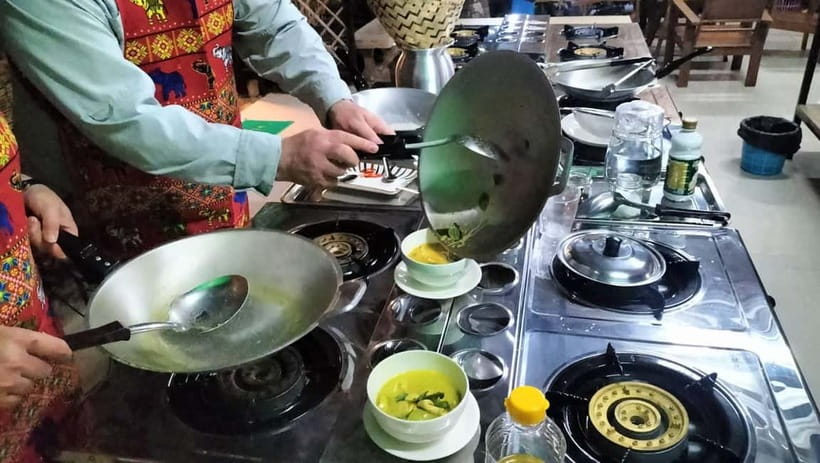
I would recommend Smart Cook Bangkok to first-time visitors who want a direct connection with Thai food. It is especially useful if you enjoy eating local dishes and want to understand how they are made instead of simply ordering another plate.
It also suits solo visitors, couples, families with older children, and small groups of friends. The class welcomes different ability levels, and the teacher’s hands-on approach means you do not need to arrive with kitchen confidence.
You may want to choose another activity if you need wheelchair access, since the class is not suitable for wheelchair users. You should also think twice if you dislike small home-based spaces, want a formal culinary qualification, or prefer a class built around many different dishes.
Wear comfortable clothes and bring a camera if you want photographs of the food and setting. Cooking can be messy, so comfort matters more than dressing up.
Booking advice and cancellation flexibility
You can cancel up to 24 hours before the activity for a full refund. The reserve-now, pay-later option also helps if your Bangkok plans are still changing.
I would book ahead if you want a particular time or hope for a small group. The activity is limited to eight participants, and the three available class times may fill at popular periods.
Give yourself extra time to locate the teak house. This is the one repeated practical warning that could affect an otherwise smooth afternoon. The meeting point is described clearly as a two-storey Thai-style teak home, but the entrance may not look obvious from the street.
Should you book Smart Cook Bangkok?
Book it if you want useful cooking skills, a home setting, and a meal you prepare yourself. The price is fair, the group is small, and the three dishes give you a solid introduction to Thai cooking without requiring a full day.
The best reason to choose this class is the combination of clear teaching and practical follow-through. Snow White and Poppy are known for making the steps easy to follow, and the PDF recipes give you a chance to cook the dishes again at home.
Keep the location issue in mind, and remember that mango may be replaced by another seasonal fruit. If those points do not bother you, this is a smart choice for a relaxed Bangkok afternoon and a food souvenir you can actually use.
FAQ
How long does the Smart Cook Bangkok class last?
The class lasts 150 minutes, or two and a half hours.
What dishes will I cook?
The advertised menu includes Pad Thai, chicken in coconut milk, and sweet sticky rice with mango.
Can the dessert fruit change?
Yes. Mango is the planned fruit, but banana has been used when mango was not in season.
Who teaches the cooking class?
The English-speaking instructors include Snow White and Poppy. Mac has also taught some sessions.
How many people can join?
The class is limited to eight participants.
What is included in the price?
The $32 price includes the hands-on cooking lesson, a professional Thai instructor, all cooking ingredients, tea, coffee, drinking water, and an online PDF recipe book.
Are alcoholic drinks included?
No. Beer and other alcoholic beverages are not included. Tea, coffee, and drinking water are provided, and alcohol and drugs are not allowed.
Where does the class meet?
You meet at Smart Cook Bangkok’s two-storey Thai-style teak home.
Is the class suitable for wheelchair users?
No. The activity is not suitable for wheelchair users.
More Classes and Workshops in Bangkok
- Hands on Thai Cooking Class and Market Tour
★ 5.0 · 660 reviews - Tingly Thai Cooking Class with Morning Market Tour
★ 5.0 · 589 reviews - Hands-on Thai Cooking Class & Market Tour in Sukhumvit
★ 5.0 · 571 reviews - Pink Chili – Thai Cooking Class and Market Tour in Bangkok
★ 5.0 · 416 reviews
Newly reviewed around Bangkok
- Wonderful Pearl Cruise with Private Hotel Transfer★ 4.6 · 24 reviews
- Twilight Firefly Bangkok Bicycle Tour★ 5.0 · 24 reviews
- Day Tour of Ayutthaya and Bang Pa In★ 5.0 · 3 reviews
- re:leaf spa and massage★ 4.0 · 10 reviews
- Bangkok: Wonderful Pearl Dinner Cruise at River City Pier★ 4.3 · 13 reviews
- Bangkok Half Day Guided Tour: Grand Palace, Wat Arun & Wat Pho★ 5.0 · 4 reviews
- Wonderful Pearl Dinner Cruise★ 3.5 · 27 reviews
- Yoga in the Park Thailand★ 5.0 · 12 reviews
Thai Cooking Classes in Bangkok, compared.
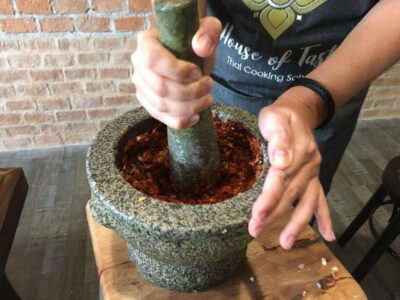
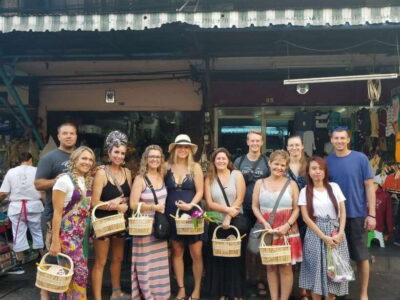
Tingly Thai Cooking School Half-Day Cooking Class
Read our review →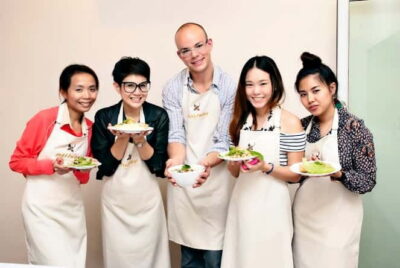
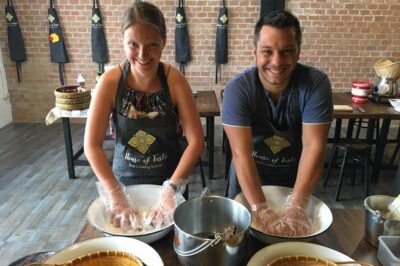
Tingly Thai Cooking Class with Morning Market Tour
Read our review →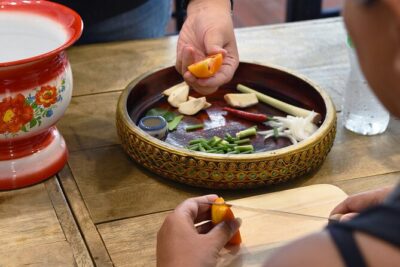
Hands-on Thai Cooking Class & Market Tour in Sukhumvit
Read our review →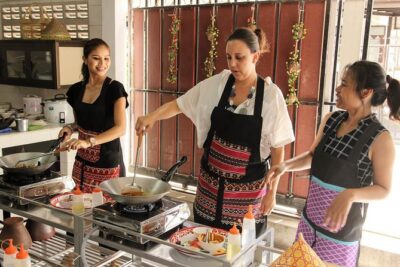
Pink Chili – Thai Cooking Class and Market Tour in Bangkok
Read our review →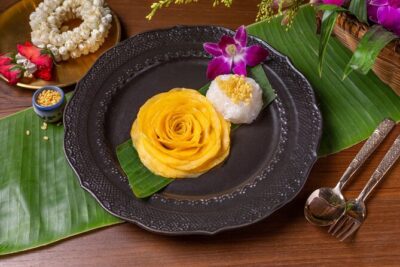
Authentic Thai Cooking with the Largest market visit &TukTuk ride
Read our review →Browse the lists this tour appears in