
Reviewed · BANGKOK HOP-ON HOP-OFF TOURS
Bangkok: Hop-On Hop-Off Bus with 24, 48 or 72-Hour Validity
Bangkok is enormous, hot, and often slow by road. This hop-on hop-off bus gives you a useful first look at the city without forcing you to bargain with a taxi driver or decode every street corner. The route links temples, markets, shopping centers, Chinatown, and the riverside in one broad loop.
I especially like the live bus tracker, which helps you decide whether to wait or find another way around, and the choice between an open-air upper deck and cool indoor seating. The main drawback is Bangkok traffic. A full loop can take 3 to 3.5 hours, and the final buses leave early enough that a relaxed sightseeing day can quickly become a race.
Key points to know before you ride
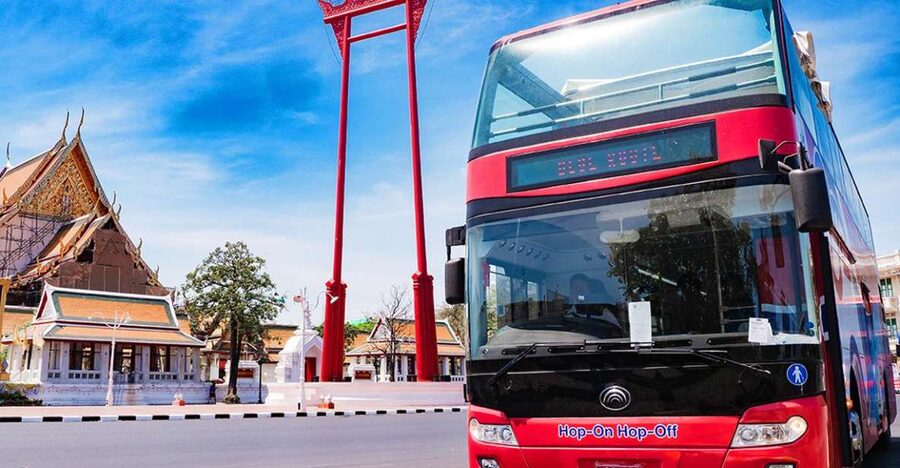
- Start at Siam Paragon or CentralWorld: These major shopping centers are the clearest places to begin, though the bus stops themselves can be hard to spot.
- Plan on a 35 to 40-minute wait: Traffic can stretch that gap, especially later in the day.
- A 48-hour pass is the sweet spot: One day works for a city overview, but two days give you time to visit the major temples and malls.
- Use the live tracking app: Bangkok’s regular bus stops are used, and they do not always carry obvious hop-on hop-off signs.
- Expect recorded commentary: GPS triggers the seven-language audio guide, but it is brief and can occasionally cut off or jump ahead.
- Save temple visits for the cooler parts of the day: The bus is air-conditioned, but queues and open courtyards at Wat Pho, Wat Arun, and the Grand Palace can be hot.
Why this bus makes sense in Bangkok

Bangkok is not a city you can neatly cover on foot. Its sights spread across shopping districts, old royal quarters, Chinatown, and both sides of the Chao Phraya River. The bus gives you a simple way to connect those areas while you watch the city change outside the window.
You can stay aboard for the full circuit to get your bearings, then repeat the route and get off where you want. That two-stage approach works well: first ride around with the map, then use the remaining time for the sights that caught your attention.
The service costs about $25 per person. That is fair if you use it for several rides or choose the 48-hour or 72-hour option. It is less convincing if you spend the whole day at the Grand Palace or ICONSIAM and only ride between two stops. For a family, anyone with limited mobility, or a first-time visitor trying to connect far-flung sights, the cost can make sense.
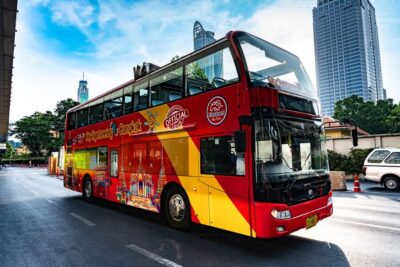
The bus has upper-deck outdoor seats for city views, along with covered or air-conditioned seating. Bangkok’s heat makes the indoor option more than a small comfort. The open upper deck is pleasant for photos and a better sense of the streets, but bring sun protection and water.
More hop-on hop-off passes in Bangkok:
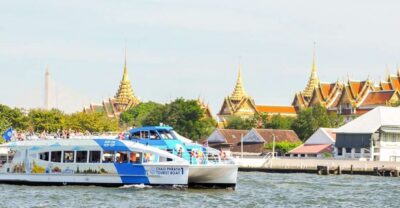
- Bangkok: Chao Phraya River Hop-on Hop-off Boat
★ 4.5 · 2,990 reviews - The Best Bangkok Hop-On Hop-Off Bus Tour
★ 3.5 · 228 reviews - Bangkok: City Sightseeing Hop-On Hop-Off Bus Tour
★ 4.1 · 136 reviews
Starting at Siam Paragon and CentralWorld
The main starting point is at Siam Paragon, in front of LOCK BOX Plus+ on the ground floor by the South Gate, next to Bangkok Bank. You can also board at CentralWorld, in front of the Hug Thai Gate on the first floor.
Siam Paragon puts you in Bangkok’s modern shopping core. The nearby MBK Center offers a very different feel, with a wide range of shops and a more practical, crowded mall atmosphere. Samyan Mitrtown adds another modern stop, with food and retail options near Wat Hua Lamphong.
These first stops are useful if you are staying in central Bangkok or want air-conditioning before heading toward the older districts. They are not the strongest sightseeing stops in themselves, but they show how quickly Bangkok shifts from polished malls to temples, markets, and older streets.
You do not need to exchange the booking confirmation at a special office. Show it to the driver or staff at a stop, and the driver issues your ticket. Arrive 10 to 15 minutes before the expected bus, but remember that traffic can upset the schedule.
Golden Buddha, Chinatown, and Wat Mangkon
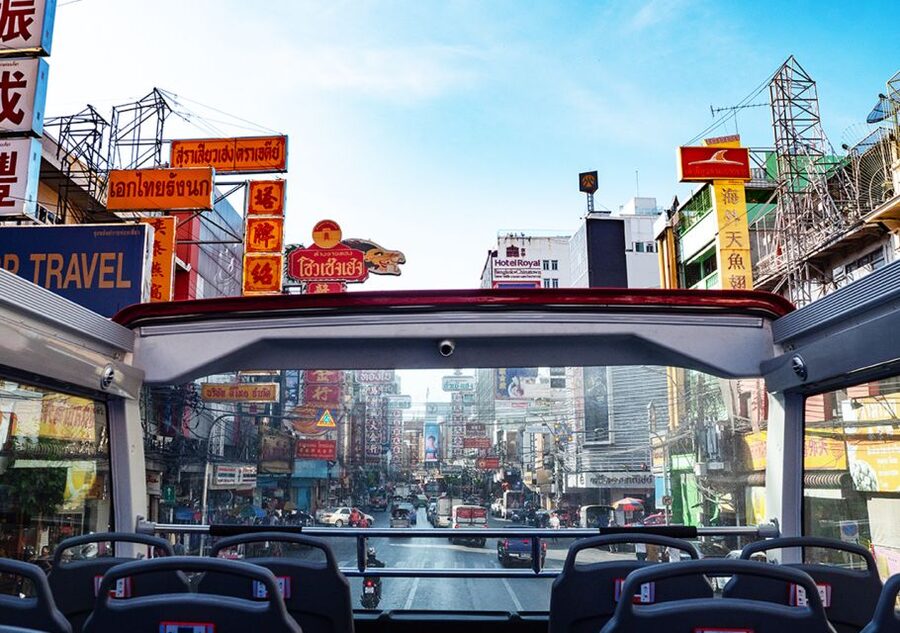
The route then moves toward the Golden Buddha Temple, also called Wat Trai Mit. This is one of the more worthwhile temple stops because it is near the edge of Chinatown and easy to combine with a walk through the district.
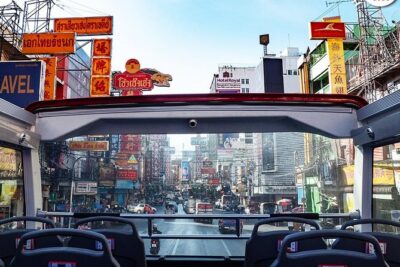
Chinatown is a good place to get off if you want food, market streets, and a closer look at one of Bangkok’s oldest commercial areas. The bus only delivers you to the area, of course. You will need to walk from the stop, and the heat and crowds can make a short distance feel longer than expected.
The next stop is near Grand China Hotel and Wat Mangkon Kamalawat, sometimes called the Dragon Temple. This gives you another doorway into Chinatown and its Chinese Buddhist traditions. Check the map carefully before leaving the bus, since the exact pickup points are not always obvious.
The route is circular, so you can continue around and return later. That is handy in Chinatown, where you may want to eat, browse, or simply pause rather than follow a strict timetable.
Loha Prasat, the Giant Swing, and Khao San Road
Wat Ratchanatdaram, known for its unusual Loha Prasat metal-spired structure, is one of the more distinctive stops on the circuit. Nearby is the Giant Swing, an instantly recognizable Bangkok landmark outside Wat Suthat.
This area rewards getting off. The sights are close enough to connect on foot, and the old city feels more rewarding at street level than from the top deck. The bus route gives you the transport link, but your own walking time supplies most of the experience.
Khao San Road is the route’s most famous backpacker stop. It is a convenient place to pause for food, drinks, and people-watching, though you should not expect a quiet or traditional Bangkok street. If your interest is mainly temples and royal-era buildings, you may prefer the nearby historic stops.
The audio guide offers background as you ride, but it is not a replacement for a full walking tour. It is best used as orientation. Some sections are brief, and the GPS-triggered narration can occasionally start late, stop before finishing, or move to the next subject.
Same city, a completely different sort of day:
- Bangkok: Damnoen Saduak Market and Maeklong Railway Market
★ 4.5 · 26,723 reviews - The Old Siam: Damnoen Saduak and Maeklong Railway Market
★ 4.5 · 10,992 reviews - From Bangkok: Ayutthaya Temples Guided Tour with Lunch
★ 4.7 · 10,535 reviews - Bangkok: Train Market & Floating Market with Boat Ride
★ 4.7 · 9,547 reviews
Wat Pho and the Grand Palace
Wat Pho is one of the most important stops on the route. The temple complex is known for its large reclining Buddha and detailed decorative work, but give yourself enough time to walk through rather than treating it as a quick photo stop.
The Grand Palace stop is equally important, though the palace grounds can take much of your day. If you get off here late, you may have time for only one major sight before the last buses leave. This is the clearest reason to choose 48 or 72 hours if you plan to visit the temples properly.
The bus does not include entrance fees, food, or a live guide. You are paying for transport, recorded commentary, and the freedom to choose your own pace. That can be an advantage if you dislike moving through a major sight as part of a fixed group.
Keep your ticket active until the time it was validated. A 24-hour ticket started at 2 PM on Tuesday runs until 2 PM on Wednesday, not until the end of Wednesday. The buses themselves do not run around the clock, so this is a useful distinction when planning.
Wat Rakhang and Wat Arun across the river
The route continues to Wat Rakhangkhositaram, a quieter temple stop on the Thonburi side of the river. It adds a different view of Bangkok from the royal and commercial districts on the other side.
Wat Arun, the Temple of Dawn, is one of the city’s essential sights. Its tall decorated central tower is especially striking from the river, but the bus stop lets you get closer and explore the temple grounds. Allow time for walking, photographs, and the possibility of waiting for the next bus.
The route connects with the wider river sightseeing area, though a boat is not included and costs extra. If you want to use a river boat, check the stop locations and your timing carefully. The bus is useful for linking the riverfront sights, but it is not a substitute for travel on the water.
Traffic can be particularly frustrating around this portion of the circuit. If you have a fixed booking or evening plan, leave generous time rather than assuming the bus will arrive on schedule.
ICONSIAM, Mahanakhon, and Patpong
ICONSIAM is one of the strongest modern stops. This large riverside shopping center provides food, shops, indoor cooling, and a chance to rest after visiting temples. It is also a practical place to wait out rain, which can arrive suddenly during Bangkok’s wet season.
The Mahanakhon SkyWalk stop serves the King Power MahaNakhon building and its city views. The skywalk admission is not included, so check the extra cost before making it the main reason for your ride. Even without going up, the stop places you back in Bangkok’s modern business district.
Patpong Night Market offers another change of mood. It is a lively evening area with shopping, restaurants, and nightlife. The schedule matters here: the last bus from the first stop leaves around 3:25 PM, so you may not be able to use the bus for a late-night return. Plan to use another form of transport if you stay in the area after the service ends.
CentralWorld completes the loop near the main shopping district. It is a good place to finish because it has food, indoor space, and easy connections to the rest of central Bangkok.
Timing, traffic, and the real meaning of a 24-hour pass
The service begins around 10 AM, with buses leaving the first stop until about 3:25 PM. The interval is advertised in the range of 35 to 40 minutes, though traffic can make the wait longer. Some operating information suggests even longer gaps in difficult conditions, so use the tracker rather than trusting the clock alone.
A full circuit takes roughly 3 to 3.5 hours without getting off. That is not wasted time if you want an overview, but it is too long for a tight one-day temple schedule. You might spend much of the day sitting in traffic near central shopping districts.
For a quick orientation, 24 hours is enough. You can ride the loop, note the places you want to revisit, and get off at one or two stops. For actual sightseeing, I would choose 48 hours. It gives you a first ride for orientation and a second day for Wat Pho, the Grand Palace, Wat Arun, Chinatown, or ICONSIAM.
The 72-hour option suits a slow schedule, hot weather, mobility concerns, or a trip split between temples and shopping. You do not have to use the bus continuously. The pass runs from its validation time, so starting early gives you more useful daytime hours.
The audio guide and bus comfort
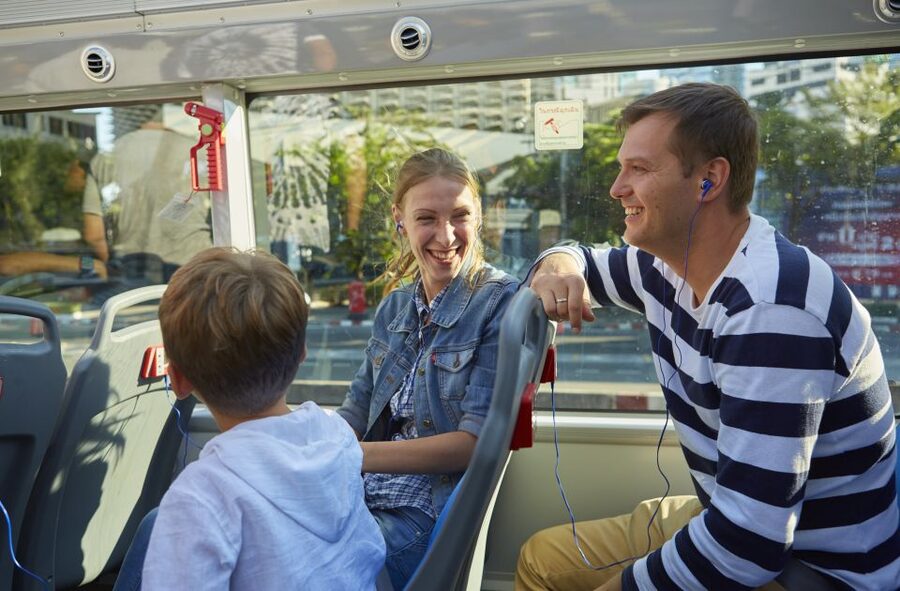
The recorded guide is available in English, Mandarin Chinese, Thai, Korean, Spanish, German, and French. Free earphones are provided. Japanese is listed among the host or greeter languages, but the audio guide language list does not include Japanese, so check at booking if that matters to you.
I like having the commentary in my own language while looking out the window. You can listen without trying to follow a live speaker over road noise. Still, the narration is fairly light. If you want detailed stories about Bangkok’s temples and neighborhoods, bring your own guidebook or arrange a separate walking tour.
The buses are clean and air-conditioned, according to the operating details and repeated use of the service. The upper deck offers better views, but the sun can be intense. The covered indoor seats are a wise choice in the hottest part of the day or during rain.
The service is wheelchair accessible. As with any bus route, it is sensible to confirm current boarding conditions if you use a wheelchair or need specific assistance.
Finding stops and using the app
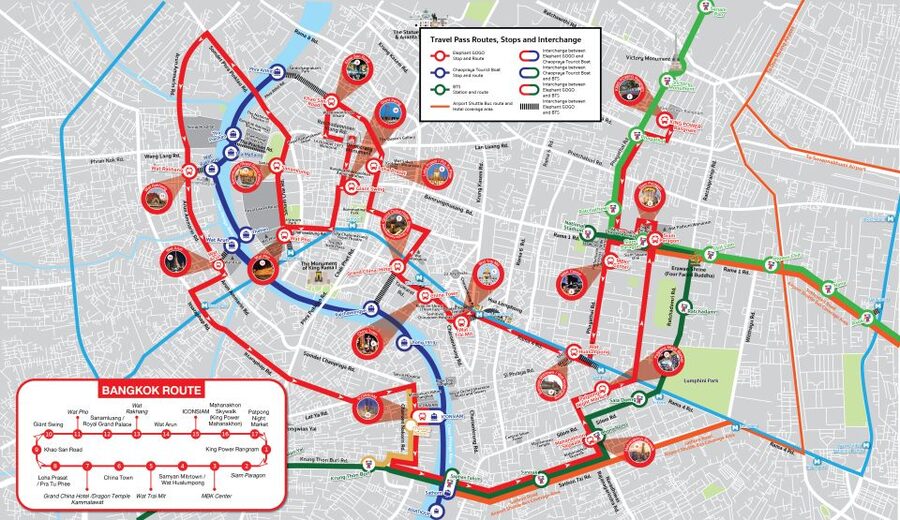
This is the main practical weakness. The bus often uses regular public bus stops, and some do not have a large, obvious hop-on hop-off sign. You should study the provided map and keep the live tracking link ready on your phone.
The app is available for iOS and Android and shows the bus location. It can save you from standing in the sun for 40 minutes, but it cannot remove Bangkok traffic from the equation. If the bus is delayed, use the time to visit a nearby shop, café, or indoor attraction when possible.
At a stop, make yourself visible and check that you are standing at the correct pickup point. Do not assume a bus will stop simply because you are near a landmark. Drivers may be helpful, but the safest plan is to use the marked location in the map.
Who should book this Bangkok bus?
I would book it if you are new to Bangkok, want a broad introduction, prefer not to arrange several taxis, or need air-conditioned transport between distant parts of the city. It is also useful for families and anyone who wants the option to stay aboard when the heat or traffic becomes tiring.
I would skip it if you have only one free afternoon and already know exactly which two sights you want. In that case, a direct taxi, train, river boat, or local transport may save time. The bus is about flexibility and orientation, not speed.
FAQ
Where does the Bangkok hop-on hop-off bus start?
You can start at Siam Paragon, in front of LOCK BOX Plus+ on the ground floor by the South Gate next to Bangkok Bank. You can also board at CentralWorld, in front of the Hug Thai Gate on the first floor.
How long are the ticket options valid?
You can choose a pass valid for 24, 48, or 72 hours. Validity begins when you first use the ticket, so a 24-hour pass started at 2 PM runs until 2 PM the next day.
How often do the buses run?
Buses depart from the first stop roughly every 35 to 40 minutes from about 10 AM until 3:25 PM. Traffic, accidents, and road closures can cause delays.
How long does the full bus route take?
A complete ride from the first stop to the last takes about 3 to 3.5 hours without getting off, depending on traffic and road conditions.
Which languages are available for the audio guide?
The GPS-triggered audio guide is available in English, Mandarin Chinese, Thai, Korean, Spanish, German, and French. Free earphones are included.
Does the ticket include entrance fees, food, or a live guide?
No. The pass includes bus access, the recorded audio guide, earphones, a map or guidebook, and the mobile tracking app. Food, drinks, attraction admission, hotel transfers, and a live guide are not included.
Are children and wheelchair users allowed?
Children aged 5 and under ride free. The activity is wheelchair accessible.
Should you book it?
Book this bus if you want to get your bearings fast, stay flexible, and connect Bangkok’s old city, shopping districts, Chinatown, and riverfront with one ticket. Choose 48 hours if you intend to get off at the Grand Palace, Wat Pho, Wat Arun, Chinatown, and ICONSIAM rather than simply ride the loop.
The key is to treat the bus as a moving base, not a fast taxi. Use the app, allow for traffic, start early, and protect time for the sights that matter most to you. With that approach, the $25 fare offers a practical introduction to a difficult city to navigate on your first visit.
Newly reviewed around Bangkok
- Twilight Firefly Bangkok Bicycle Tour★ 5.0 · 24 reviews
- Wonderful Pearl Cruise with Private Hotel Transfer★ 4.6 · 24 reviews
- Day Tour of Ayutthaya and Bang Pa In★ 5.0 · 3 reviews
- re:leaf spa and massage★ 4.0 · 10 reviews
- Bangkok: Wonderful Pearl Dinner Cruise at River City Pier★ 4.3 · 13 reviews
- Bangkok Half Day Guided Tour: Grand Palace, Wat Arun & Wat Pho★ 5.0 · 4 reviews
- Wonderful Pearl Dinner Cruise★ 3.5 · 27 reviews
- Yoga in the Park Thailand★ 5.0 · 12 reviews
Bangkok Hop-On Hop-Off Tours, compared.
Chinatown Night Walking Tour and Hop On Hop Off Bus
Read our review →Browse the lists this tour appears in