
Reviewed · KANCHANABURI AND RIVER KWAI DAY TRIPS FROM BANGKOK
Bangkok: River Kwai Day Tour with Jeath War Museum & DeathRailway
The most powerful part of this day is the train ride beside the River Kwai, where the railway still follows the route built by Allied prisoners of war during World War II. You’ll also walk across the famous bridge and pause at the Kanchanaburi War Cemetery, a quiet place that gives the story a human face.
I like the small maximum group of 15 and the fact that transport, lunch, museum visits, and an English-speaking guide are included. I also like the work of guides such as Rach and Oom, who bring structure, audio visuals, and clear explanations to a difficult subject. The main drawback is the long day from Bangkok, plus some risk of rushed stops if traffic delays the morning drive.
Key points to know before booking
- The bridge is only part of the story: The museum and cemetery add the human cost behind the famous railway.
- You ride the Death Railway: The train crosses the historic Tham Kra Sae section beside the river.
- It starts early: Pickup begins at 6:00 am, with the tour lasting about 13 hours on paper.
- Lunch is included: A buffet meal is served near Wang Po station.
- The group is limited to 15: That makes guiding and questions easier than on a large coach tour.
- Allow for traffic: One account describes a shorter day and a possible missed railway museum, so the schedule may shift.
Why this Kanchanaburi day matters
The River Kwai trip is not just a quick photo stop at a famous bridge. The bridge, railway, museum, cemetery, and train ride form a connected story about wartime construction, forced labor, disease, starvation, and the thousands of people who died building the Siam to Burma Railway.
That context matters because the bridge itself can feel surprisingly ordinary. It is a working railway crossing, and the river below is peaceful. Without the museum and cemetery, it is easy to see only a steel structure and miss the human cost behind it.
This tour gives you the main pieces in one day. You leave central Bangkok early, travel to Kanchanaburi in an air-conditioned vehicle, then return to the same meeting point. The day is tightly packed, but it saves you from arranging separate transport, museum tickets, train tickets, and lunch.
The subject is serious, and the best part of the experience is the way the stops build on one another. At the JEATH War Museum, you get a rough recreation of POW quarters. At the bridge, you see the railway itself. At the cemetery, you encounter names and dates rather than a general wartime story. On the train, you follow a surviving section of the route.
More Kanchanaburi and River Kwai days:
- From Bangkok: Erawan Park & Kanchanaburi Small-Group Tour
★ 4.5 · 1,582 reviews - From Bangkok: Historical Day Tour to River Kwai
★ 4.6 · 868 reviews - Bridge on the River Kwai and Thailand-Burma Railway Tour
★ 4.5 · 658 reviews
Leaving Bangkok at 6:00 am
The tour begins at Central Bangrak, at 1522 Soi Charoen Krung 46, with pickup from various Bangkok hotels offered as part of the service. The listed start time is 6:00 am, which is early but sensible. Kanchanaburi is well outside Bangkok, and traffic can make the journey unpredictable.
You should plan for a full day away from the city. The advertised duration is about 13 hours, although the actual timing may be shorter or may shift depending on traffic and the order of the stops. One account describes a 10-hour day and suggests that the Death Railway Museum and Research Centre may have been missed, so I would treat the schedule as flexible rather than exact.
The air-conditioned vehicle is a real advantage in Thailand’s heat. You are moving between several sites, and a private vehicle arrangement is easier than trying to connect local buses and trains on your own. The group limit of 15 also keeps the outing smaller than a standard big-coach tour.
The JEATH War Museum and POW camp recreation
The first major stop is the JEATH War Museum, with about an hour scheduled and admission included. The museum has two main sections. One focuses on the construction of the railway and recreates quarters used by Allied POWs. The other uses reconstructed bamboo huts to show the rough conditions in which prisoners were held.
This is a useful first stop because it gives you a frame for everything that follows. The bridge is famous, but the railway was built through harsh conditions by prisoners and Asian laborers. The museum helps explain why the project became associated with such a heavy loss of life.
Keep your expectations realistic. This is not a polished modern museum. Parts of the JEATH Museum need maintenance, and the displays may feel basic. That rough quality can make the subject feel immediate, but it can also make the visit seem less organized than a large purpose-built museum.
The guide matters here. Oom is described as using audio visuals while presenting the material in an entertaining way. Rach is praised for careful timing and for helping visitors come away with a clear understanding of the period. English ability can vary by guide, so if detailed interpretation is important to you, listen closely and ask questions when something is unclear.
Walking across the River Kwai Bridge
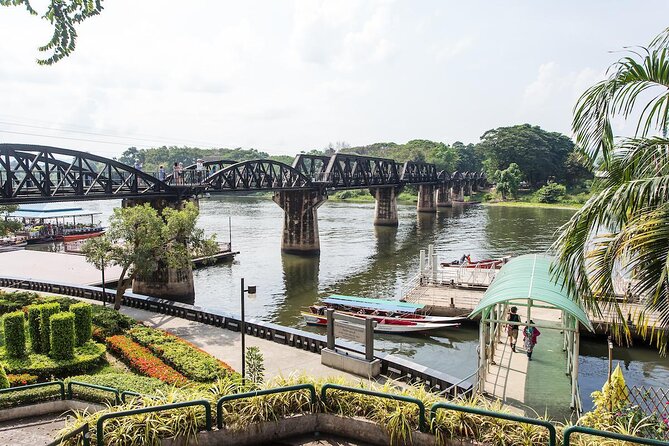
You get about an hour at the River Khwae Bridge, including time to walk across it. The bridge is the visual center of the tour, and you can see the railway line from close up rather than from a roadside viewpoint.
The bridge’s present form reflects wartime damage and later reconstruction. One account specifically notes the chance to see the section that survived bombing and the section that was rebuilt. That detail is easy to miss if you rush through with only enough time for a photograph.
This is also a working railway, so you should pay attention to your guide and follow local instructions while walking. The tour information does not promise a train crossing during your visit, so do not book this day expecting a dramatic bridge encounter with a locomotive. The value is in seeing the structure, crossing it, and placing it within the larger railway story.
The river setting is calm, which creates a sharp contrast with the history. I find that contrast useful. The bridge does not look like a battlefield, and that is exactly why the museum and cemetery are important companions.
More museums in Bangkok:
- Skip the Line: Patpong Museum Guided Tour
★ 5.0 · 80 reviews - Private Guided Day Tour to Erawan Museum & Ancient City
★ 4.5 · 25 reviews - Jim Thompson House Museum Entrance Ticket & Hotel Pick up
★ 4.0 · 9 reviews - Jim Thompson’s House and National Museum Bangkok (Phranakorn)
★ 4.0 · 9 reviews
The cemetery’s quiet record of loss
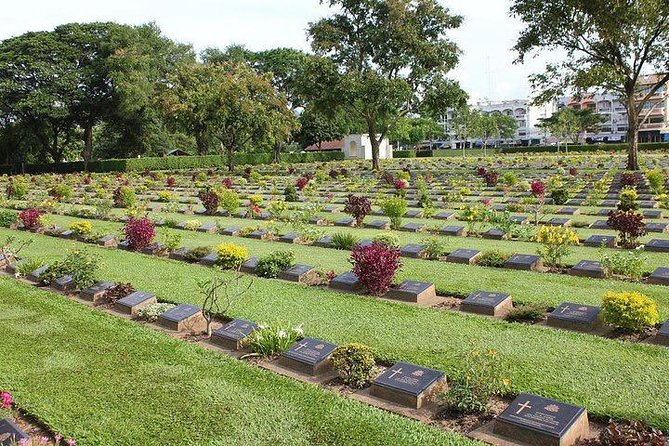
The Kanchanaburi War Cemetery, also called Don-Rak War Cemetery, is the main cemetery for POW victims connected with construction of the Burma Railway. Around 9,000 Allied soldiers who died while working on the railway and related projects are buried in the area, according to the tour information.
You have about an hour here, and that is generous enough for a quiet visit rather than a quick stop. The cemetery is a very different experience from the bridge. Instead of machinery and river views, you see rows of graves and personal names.
I recommend treating this stop with more time and silence than you might normally give a sightseeing attraction. You do not need a long speech to understand the place. The names and dates do much of the work.
For anyone with a family connection to World War II, military history, or memorial sites, this may be the most affecting stop of the day. It also helps correct the common mistake of treating the Death Railway as a scenic railway ride first and a wartime memorial second.
The Death Railway Museum and Research Centre
The itinerary allows about an hour at the Death Railway Museum and Research Centre. Its purpose is to explain the railway itself, including the route between Ban Pong in Thailand and Thanbyuzayat in Burma, a distance of about 415 kilometers.
This stop should help connect the museum displays, bridge, cemetery, and train journey. If your schedule is compressed by traffic, confirm with your guide whether this visit remains included. The listed itinerary includes it, but timing can change during a long day from Bangkok.
The museum is especially useful if you want more than a quick bridge visit. It gives scale to the project and helps explain why the railway became known as the Death Railway. The name refers to the enormous loss of life among POWs and forced laborers during construction.
The amount of explanation you receive will depend partly on the guide and the time available. A strong guide can turn the visit into a clear sequence of events. If the English is difficult to follow, focus on the maps, photographs, and displays, then ask for the main points in simpler terms.
The train at Tham Kra Sae and Wang Po
The train journey is the tour’s most memorable physical experience. At Tham Kra Sae, also known as a section of the Death Railway, the track follows the river and crosses a historic railway bridge built by prisoners during World War II.
The ride gives you a way to picture the environment faced by the people who constructed the line. You are not simply looking at a bridge in isolation. You are moving along the route, watching the river and track from a carriage, and seeing why the railway required such difficult construction.
The tour description calls this an exhilarating train ride, but the mood should remain thoughtful. The scenery may be pleasant, yet the route carries a grim history. That contrast is part of the experience, not a reason to treat the ride like a theme-park attraction.
Lunch is served as a buffet near Wang Po station. The meal is included, which makes the day easier and avoids another search for food during a tightly scheduled route. The available information does not specify the full menu, so you should think of it as a practical included meal rather than a special dining event.
How much value do you get for $83.68?
At $83.68 per person, the price is fair if you want a guided, all-in-one day from Bangkok. You are paying for round-trip transport, an English-speaking guide, lunch, an air-conditioned vehicle, and admission to the JEATH Museum and the bridge area.
The value is strongest for anyone who does not want to plan the long journey to Kanchanaburi independently. You would otherwise need to arrange transport, work out the railway timing, find the museums, and organize food. The tour also gives you historical interpretation, which is difficult to measure but central to making sense of the sites.
The value is weaker if you want a slow visit at each location. Five stops, a long road journey, lunch, and a train ride create a busy schedule. Traffic can reduce time at the museums, and the actual day may not match the stated 13-hour estimate.
Group discounts are available, and the maximum group size is 15. That is a useful middle ground. You get the convenience of a shared tour without being placed in a huge group, though the experience can still depend on the guide’s English and the day’s traffic.
What the guides add to the day
The strongest guide feedback centers on clear organization, good timing, and lively presentation. Rach is praised for explaining the history and keeping the day on schedule. Oom is noted for using audio visuals and presenting the material in an engaging way.
Those details matter because this is not a tour where the sights explain themselves. A bridge can be visited in ten minutes if nobody tells you what you are seeing. The museum displays need context, and the cemetery benefits from a guide who can explain its place in the wartime story without turning the visit into a lecture.
You should also know that guide quality may vary. One account found the English difficult to understand, and the visitor felt rushed at times. That does not make the tour a poor choice, but it is a reason to ask questions early and keep track of the promised stops.
Who should book this day
I would recommend the tour to you if you have one free day in Bangkok and want a focused introduction to Kanchanaburi’s World War II sites. It suits first-time visitors who value convenience, history, and a guide-led schedule.
It is also a good match for people who want to ride the Death Railway but do not want to arrange the train and road connections themselves. Families with older children may appreciate the combination of a museum, bridge walk, cemetery, and train ride, though the subject is serious and may not suit very young children.
You may want a different plan if you prefer independent travel, long museum visits, or a slower pace. The early start and long return journey will feel tiring, especially if Bangkok traffic disrupts the schedule. You should also avoid treating this as a light sightseeing day. The central subject is wartime suffering, and the memorial sites deserve respect.
The tour requires good weather. If poor weather forces cancellation, you can choose another date or receive a full refund. You can cancel for a full refund up to 24 hours before the start time, but changes or cancellations inside that window are not accepted.
Should you book the River Kwai tour?
Book it if you want the key Kanchanaburi sites covered in one organized day, with transport, lunch, museum admission, and a train ride handled for you. The bridge and train are memorable, but the cemetery and POW camp recreation give the day its real weight.
Go in expecting a long schedule, possible traffic delays, and a museum that is useful but not highly polished. If you can accept that tradeoff, the $83.68 price offers solid value and a respectful introduction to one of Thailand’s most important wartime sites.
FAQ
Where does the tour start?
The tour starts at Central Bangrak, 1522 Soi Charoen Krung 46, Si Lom, Khet Bang Rak, Bangkok. The listed start time is 6:00 am.
How long does the tour last?
The advertised duration is approximately 13 hours. Actual timing can vary, and one account describes a day lasting about 10 hours.
Is hotel pickup included?
Pickup is offered from various hotels in Bangkok, and round-trip transfer is included. The listed meeting point is Central Bangrak.
Is lunch included?
Yes. A buffet lunch is included and is served near Wang Po station.
What sites are included?
The planned stops include the JEATH War Museum, River Khwae Bridge, Death Railway Museum and Research Centre, Tham Kra Sae Bridge, and Kanchanaburi War Cemetery.
Can I cancel for a refund?
Yes. You can cancel at least 24 hours before the experience start time for a full refund. Cancellations or changes made less than 24 hours in advance are not accepted.
Newly reviewed around Bangkok
- Twilight Firefly Bangkok Bicycle Tour★ 5.0 · 24 reviews
- Wonderful Pearl Cruise with Private Hotel Transfer★ 4.6 · 24 reviews
- re:leaf spa and massage★ 4.0 · 10 reviews
- Bangkok: Wonderful Pearl Dinner Cruise at River City Pier★ 4.3 · 13 reviews
- Day Tour of Ayutthaya and Bang Pa In★ 5.0 · 3 reviews
- Bangkok Half Day Guided Tour: Grand Palace, Wat Arun & Wat Pho★ 5.0 · 4 reviews
- Wonderful Pearl Dinner Cruise★ 3.5 · 27 reviews
- Yoga in the Park Thailand★ 5.0 · 12 reviews
Kanchanaburi and River Kwai Day Trips from Bangkok, compared.
Bridge on the River Kwai and Thailand-Burma Railway Tour
Read our review →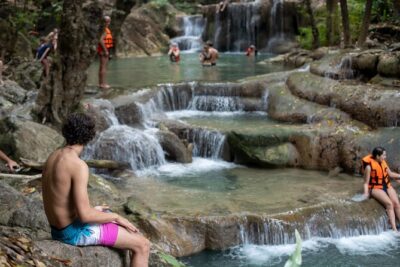
Erawan Waterfalls and Bridge Over River Kwai Tour from Bangkok
Read our review →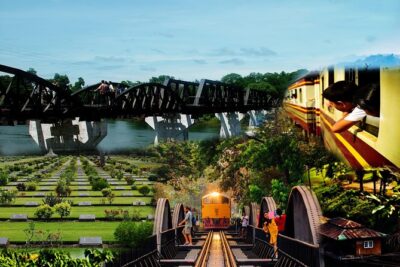
Bridge on the River Kwai and Thailand-Burma Railway Guided Tour
Read our review →
Kanchanaburi Full Day Tour: River Kwai and Erawan Falls
Read our review →
Floating Markets and Bridge on River Kwai Tour from Bangkok
Read our review →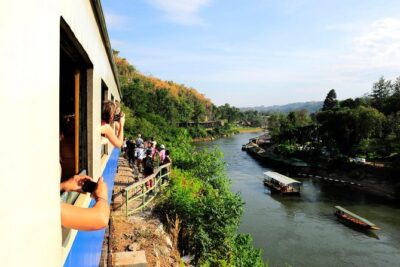
River Kwai Day Tour from Bangkok – History, Scenery & Culture
Read our review →
Bridge over River Kwai and Hellfire Pass Tour with Train Ride
Read our review →Browse the lists this tour appears in