
Reviewed · AUDIO TOURS
Bangkok’s Wireless Road: A Self-Guided Audio Tour
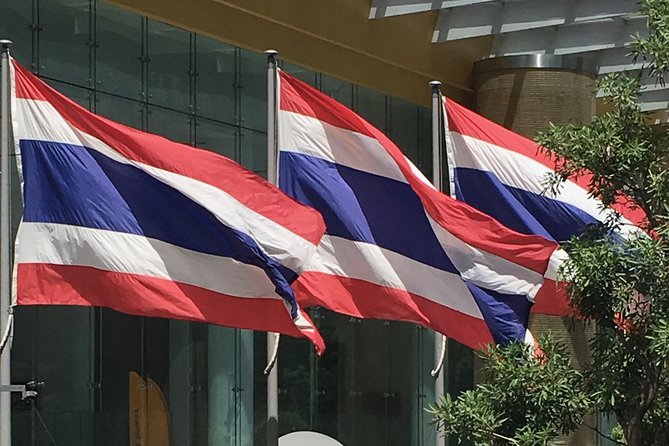
Wireless Road is more than a leafy route between Bangkok’s business districts. With historian Paul Jorgensen in your ear, ordinary sights become clues to Thailand’s past: a line of motorcycle taxis, a convenience store, a Hindu shrine, a national flag, or a giant rain tree. The GPS-triggered storytelling gives this self-guided walk a clear sense of place without tying you to a group schedule.
I like the freedom to pause, restart, or take the walk early in your Bangkok stay, when its cultural explanations can help you understand the rest of the city. I also like the price: at $7.99, it costs less than many short guided walks and remains available for repeated listening. The main drawback is simple: you need a charged smartphone and earphones, and the tour offers no live guide to answer questions or adjust the route.
Key points to know before walking
- Starts and ends at BTS Phloen Chit, making the route easy to fit into a Bangkok day.
- Runs about 50 minutes to one hour, with GPS audio that plays at the right places.
- Paul Jorgensen explains the meaning behind everyday sights, from spirit houses and Thai colors to the number nine.
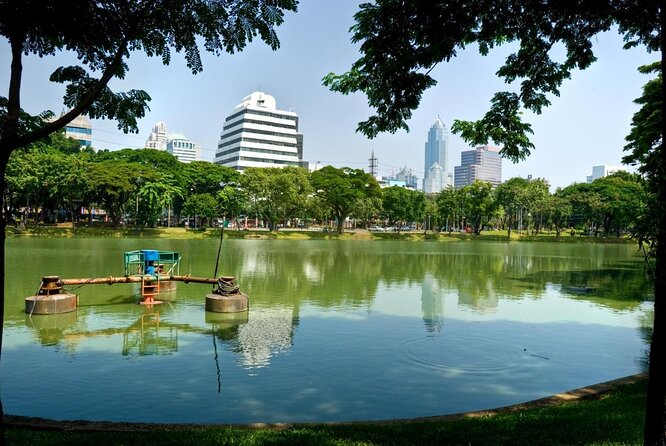
- The route follows Wireless Road toward Lumpini Park and back, passing embassies, rain trees, shopping areas, and shrines.
- The Green Mile and Trimurti shrine add variety, so this is not simply a walk past office buildings.
- Offline maps, audio, and location data are included, but transportation, food, drinks, and attraction tickets are not.
Why Wireless Road makes a good Bangkok introduction
Many Bangkok walks focus on temples, markets, or royal monuments. Wireless Road offers a different view. It is a central urban corridor shaped by embassies, commerce, parks, religion, and international connections.
That mix gives Paul Jorgensen plenty to explain. You are not just moving from one formal sight to another. The walk asks you to look at the city around you and consider why certain trees were planted, why a shrine sits where it does, or how Bangkok’s links with the United States appear in the streetscape.
This is especially useful during your first days in town. The tour reaches beyond Wireless Road itself, introducing ideas about Thai beliefs, food, color, flags, and local numbers. I like that approach because it gives you tools for reading other parts of Bangkok later, rather than filling your head with a list of isolated dates.
The route is also a practical choice if you are staying near Phloen Chit or already using the BTS Skytrain. There is no need to arrange a meeting with a guide or find a distant starting point. You begin at Phloen Chit station, walk south toward Lumpini Park, and return to the same general starting point.
More self-guided walks in Bangkok:
- Bangkok: Tuk Tuk Day Pass App & Boat Chao Phraya River
★ 4.2 · 593 reviews - Bangkok Combo: Tuk Tuk App Pass, Chao Phraya Boat & E-sim
★ 4.5 · 94 reviews - Private ‘Breeze & Pleased’ Canal Boat Ride – 2hrs (self-guided)
★ 5.0 · 91 reviews
Starting at Phloen Chit BTS Station
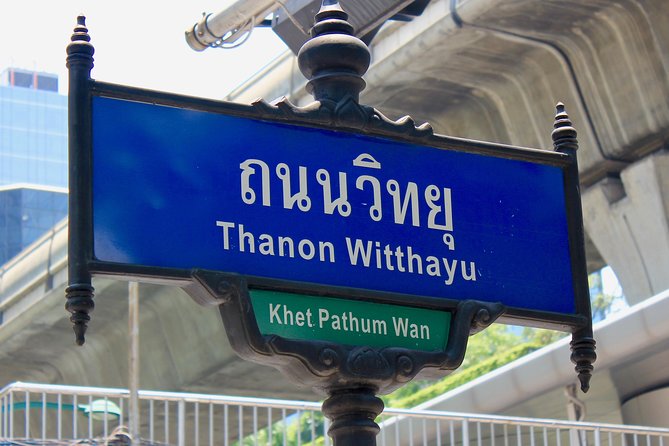
The tour begins at Phloen Chit BTS Station on Thanon Phloen Chit. Before you start walking, download or open the VoiceMap app and make sure the offline audio, map, and geodata are available.
This preparation matters. The guide is built around GPS triggers, so Paul’s commentary is designed to begin as you reach the relevant locations. Once the tour is running, you can put your phone away and listen through earphones. That makes the walk feel less like reading instructions and more like having a local historian point things out as you go.
The system also gives you room to set your own pace. If you need to stop, take a break, or look more closely at something, you are not holding up a group. You can start and stop the tour as needed, a feature that suits Bangkok’s heat and unpredictable street activity.
Still, this is not a fully guided street experience. The app can explain the route, but it cannot answer a follow-up question, help if you miss a turn, or change the subject because you are curious about something nearby. I would treat the map as an important part of the experience, not just a backup.
Wireless Road, embassies, and Bangkok’s international story
As you head along Wireless Road, the setting gives the narration a useful backdrop. This part of Bangkok is known for grand compounds, diplomatic buildings, major roads, and large trees. The route uses these surroundings to explain how Bangkok developed and how international relationships shaped the area.
One particularly interesting stop concerns the shopping mall that grew from the grounds of the former British Embassy. That detail gives you a reminder that Bangkok’s modern retail districts are often built over earlier diplomatic and colonial-era spaces.
The tour also explains the American connection found along this strip. If you pay attention to the buildings and landmarks, the route helps you see how Thailand’s relationship with the United States appears in a very specific part of the capital.
You should not expect entrance visits to embassies or museums. The value here comes from the explanation of what you are seeing from public streets. The walk works best for people who enjoy context and small discoveries, not those looking for grand interiors or ticketed attractions.
Rain trees and the work of Nai Lert
The trees along Wireless Road are not just pleasant decoration. The tour tells the story of entrepreneur Nai Lert and his role in bringing the neighborhood’s rain trees into being.
That is the sort of detail I appreciate in an audio walk. A printed guide might identify a green street, but Paul connects the trees to a person and a decision. Suddenly, the shade overhead becomes part of Bangkok’s urban story.
This section also helps balance the tour’s focus on embassies and commercial development. Wireless Road is not presented only as a corridor of offices and luxury shopping. Its trees are part of what gives the area its character, and the narration explains why they matter.
The route is still an ordinary city walk in practical terms. You will be near traffic and urban activity, and the tour does not promise a quiet nature stroll. The appeal is the contrast between Bangkok’s busy central setting and the mature trees that soften it.
More audio-guided walks in Bangkok:
- Bangkok: Audio guides for Bangkok, Ayutthaya & Chiang Mai
★ 4.0 · 38 reviews - Bangkok Grand Palace & Emerald Buddha Flexible Pass w/ Audio
★ 3.8 · 35 reviews - Bangkok Self-Guided Audio Tour
★ 3.5 · 4 reviews - Bangkok Grand Palace & Emerald Buddha Flexible Entry with Audio
★ 3.5 · 3 reviews
Shopping, convenience stores, and everyday clues
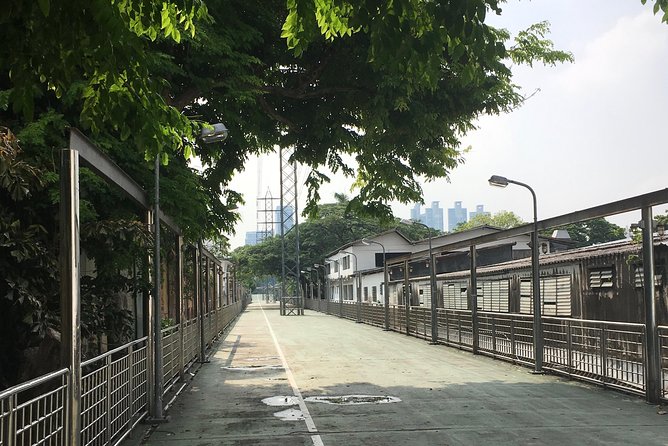
A strength of Paul’s approach is his attention to things you could easily ignore. The audio discusses groups of motorcycle taxis and convenience stores, showing how everyday services fit into Bangkok’s wider culture.
That may sound less dramatic than a temple or palace, but it is often more useful. A motorcycle taxi stand tells you something about how people move through the city. A convenience store can point to daily habits and the way Bangkok’s neighborhoods serve residents, office workers, and visitors.
The tour also explains why food and color matter to Thai people. These topics help turn a simple walk into a broader introduction to local customs. You are given ideas to watch for elsewhere in Thailand, even when the tour has ended.
I would listen carefully rather than rush to photograph every building. The walk’s best moments may come from matching Paul’s comments to something small in front of you. The route rewards curiosity and attention more than speed.
Spirit houses, Hindu gods, and the Trimurti shrine
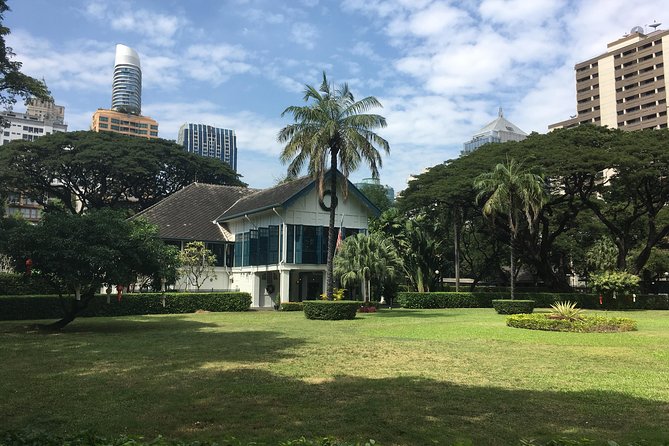
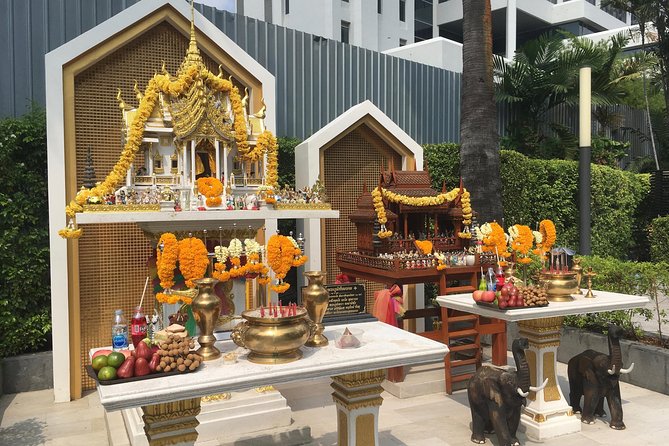
Religion appears on Wireless Road in ways that are easy to miss if you are focused only on major temples. The narration explains what spirit houses say about Thai beliefs, then brings you to a shrine connected with the Hindu god Trimurti.
This is a useful part of the route because it shows how religious ideas occupy everyday urban space. A shrine beside a modern commercial area may seem unexpected, but the tour gives you cultural background for understanding that combination.
The Trimurti stop adds a clear visual point to the walk. You are not only listening to an abstract explanation of belief. You are passing through a real shrine and learning how it fits into the surrounding neighborhood.
The experience does not include a formal temple visit, priest-led explanation, or admission. Keep your expectations in the right place: this is an outdoor audio stop, viewed as part of a walking route. Dress and behave respectfully around the shrine, and keep your attention on the app’s directions.
The Green Mile toward Lumpini Park

Another notable section introduces the Green Mile, a pedestrian pathway linking Lumpini Park and Benjakitti Park. The route uses this connection to show how Bangkok is creating walking links between major green spaces.
Even if you do not continue on to both parks, learning about the pathway gives you a better sense of the city’s public routes. It also breaks up the road walking and adds a pedestrian-focused section to an otherwise urban itinerary.
The walk heads toward Lumpini Park before returning to the Phloen Chit area. The park provides a change of setting and helps explain why this neighborhood is often considered one of Bangkok’s greener central districts.
The supplied timing places the full experience at roughly 50 minutes to one hour. That is long enough to cover several themes without demanding half a day. If you stop often for photos or pause the audio, allow extra time. The exact pace is yours, which is one of the tour’s practical strengths.
How the VoiceMap format works

VoiceMap supplies the application, the route map, and offline access to the audio and location data. Once downloaded, the tour can operate without relying on a constant mobile connection. That is helpful if you want to avoid using much data while walking.
The GPS system is meant to play each section at the proper location. You can put the phone in your pocket and listen through earphones, although you should still check the route when needed.
I would prepare before leaving the station. Confirm that the tour has downloaded properly, test the sound, and carry enough battery power for the walk. A phone is not included, and neither are earphones.
The audio format is particularly good for independent schedules. You can take the walk alone, with family, or with your own small group. The booking is for a private activity, so only your group participates, but there is no live guide physically walking with you.
What the $7.99 price gets you
At $7.99 per person, this is a low-cost way to add structure and cultural explanation to a Bangkok afternoon. You receive lifetime access to the Wireless Road tour, along with the VoiceMap app and offline route material.
That lifetime access matters if your schedule changes or you want to repeat part of the walk. It also makes the price easier to justify than a one-use attraction ticket, especially if you are interested in listening again with family or friends.
The value depends on what you want. If you need a guide to manage traffic, answer questions, or lead you inside attractions, this will feel limited. If you want a flexible introduction to Bangkok’s history and culture while walking at your own speed, the cost is modest.
Food, drinks, transportation, and entrance fees are not included. In practice, the route itself does not require a paid attraction ticket, but you should budget separately for anything you choose to visit along the way.
One important catch is the strict cancellation policy. The experience is non-refundable and cannot be changed for any reason, so book only when you are reasonably sure you can use it.
Who should choose this self-guided walk
I would recommend this tour to independent visitors who enjoy learning while walking. It suits anyone staying near Phloen Chit, anyone interested in Bangkok’s international side, and anyone who prefers a short activity rather than a full-day tour.
It is also a good choice if you are hosting family or friends and want a simple cultural outing that can fit around work or sightseeing. The ability to start at any time listed by the app makes it more flexible than a scheduled group walk.
The tour may appeal to repeat visitors, too. A person who has already seen Bangkok’s famous temples may enjoy looking at the capital through embassies, trees, shrines, parks, and everyday transport.
I would be less likely to choose it if you dislike wearing earphones, need constant personal guidance, or want access to buildings and museums. It also requires enough confidence to follow an app-based route in a busy city.
Most people can take part, and service animals are allowed. The route is near public transportation, with the BTS station at the start and finish, but the supplied information does not give a detailed accessibility assessment of every pavement or pathway.
Should you book Bangkok’s Wireless Road audio tour?
Book it if you want a short, inexpensive walk that explains the meaning behind Bangkok’s ordinary sights. Paul Jorgensen’s narration covers the area’s American and British connections, Nai Lert’s rain trees, Thai beliefs, the Green Mile, Trimurti, food, color, and local symbols in a single route.
The strongest reason to choose it is the combination of useful cultural context and personal freedom. You can begin at Phloen Chit, walk for about an hour, pause when you like, and return to the same meeting point.
Skip it if your priority is a live guide, a formal temple visit, or an activity with no phone requirements. For everyone else, $7.99 is a fair price for a thoughtful orientation to one of central Bangkok’s most interesting streets.
FAQ
Where does the Wireless Road audio tour start?
It starts at Phloen Chit BTS Station on Thanon Phloen Chit in Bangkok.
Where does the tour finish?
The activity ends back at the meeting point near Phloen Chit BTS Station.
How long does the walking tour take?
The tour takes approximately 50 minutes to one hour.
Is this a live guided tour?
No. It is a self-guided GPS audio tour led through the VoiceMap application, with narration by historian Paul Jorgensen.
Can I use the tour offline?
Yes. Offline access to the audio, maps, and geodata is included through the VoiceMap app.
What is included in the price?
The $7.99 price includes lifetime access to the Wireless Road tour, the VoiceMap application, and offline audio, maps, and geodata.
Is the tour refundable if I cancel?
No. The experience is non-refundable and cannot be changed for any reason.
Newly reviewed around Bangkok
- Twilight Firefly Bangkok Bicycle Tour★ 5.0 · 24 reviews
- Wonderful Pearl Cruise with Private Hotel Transfer★ 4.6 · 24 reviews
- Day Tour of Ayutthaya and Bang Pa In★ 5.0 · 3 reviews
- re:leaf spa and massage★ 4.0 · 10 reviews
- Bangkok: Wonderful Pearl Dinner Cruise at River City Pier★ 4.3 · 13 reviews
- Bangkok Half Day Guided Tour: Grand Palace, Wat Arun & Wat Pho★ 5.0 · 4 reviews
- Wonderful Pearl Dinner Cruise★ 3.5 · 27 reviews
- Yoga in the Park Thailand★ 5.0 · 12 reviews
Audio Tours, compared.

Bangkok Grand Palace & Emerald Buddha Flexible Pass w/ Audio
Read our review →

Bangkok Grand Palace & Emerald Buddha Flexible Entry with Audio
Read our review →Browse the lists this tour appears in