
Reviewed · BANGKOK BIKE TOURS
Past and Present Bike Tour of Bangkok
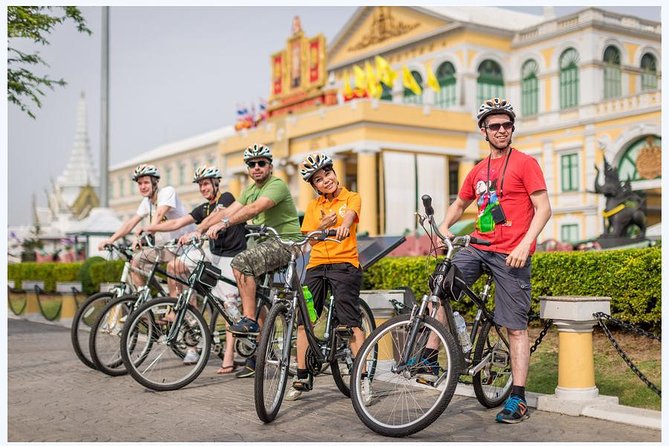
Bangkok reveals itself best at street level, and this four-hour bicycle tour takes you from the Old Customs House and Chinatown to flower markets, river ferries, and three handsome temples. You ride through lanes that cars cannot easily reach, then cross the Chao Phraya to explore Thonburi.
I like the small maximum of six people, which keeps the group nimble on narrow streets. I also like the mix of places: local neighborhoods and markets come first, then Wat Arun, Wat Prayoon, and Wat Kalayanamitr provide the big cultural sights. The main catch is physical: you need moderate fitness, confidence on a bike, and comfort riding through tight city lanes.
Key points at a glance
- Chinatown by bicycle: Follow small streets through Bangkok’s Chinese quarter, where the city’s sounds, smells, shops, and daily routines are close at hand.
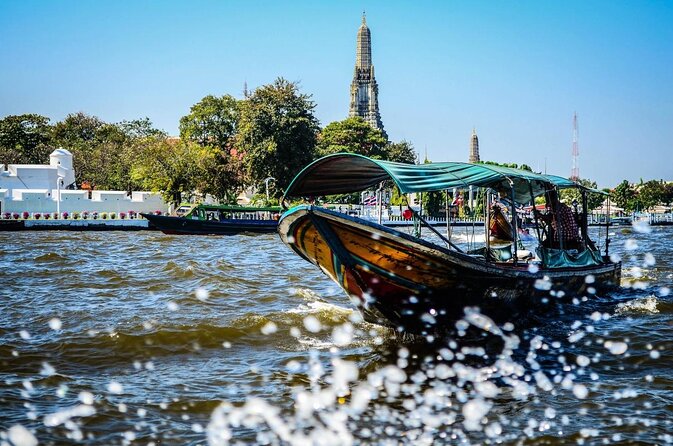
- A ferry across the Chao Phraya: The river crossing is part of the tour, not just transport, and takes you from central Bangkok into historic Thonburi.
- Three major temples: Visit Wat Arun, Wat Prayoon, and Wat Kalayanamitr, with time to walk around at each stop.
- Maximum six people: A tiny group makes it easier to follow the guide and adjust the pace.
- Choice of departure: Morning and afternoon departures make it easier to fit the ride around your Bangkok plans.
- Helpful extras included: Bike, helmet, ferry fees, lockers, cold water, soft drinks, and emailed souvenir photos are included.
Why this ride gives you a different Bangkok
Bangkok is not a city that reveals itself from a coach window. Its character sits in narrow lanes, market stalls, riverside communities, and small religious sites tucked between older buildings. A bicycle lets you move through these areas at a useful pace. You cover more ground than on foot, but you still have time to notice what is around you.
This tour begins at Bangkok Bike Tours in Bang Rak, at 2 Soi Charoen Krung 44. From there, you head toward a Muslim neighborhood and the Old Customs House beside the river. The customs house marks an important entrance point for earlier visitors arriving by water, so it gives the route a fitting start: Bangkok as a trading city, shaped by the river and by people arriving from many places.
I like the way the route connects this older riverfront setting with the modern city around it. You are not simply ticking off temples. You are watching Bangkok change from one district to the next.
The group limit matters here. A large bicycle line can be awkward in Bangkok traffic and hard to keep together at junctions. With no more than six people, the guide can give clearer directions, manage crossings, and keep an eye on the group. The small size also allows some flexibility at stops. One guide, Qing, is reported to have extended a tour beyond the planned four hours, while other guides such as Woody, Té, Kim, and Jig have been praised for clear explanations, care, and energy. Guide assignments can change, so treat those names as examples rather than a promise.
More bike tours around Bangkok:
- Bangkok: Temples, Canals & Local Life Bike Tour
★ 4.9 · 3,511 reviews - Bangkok Classical Bicycle Tour
★ 4.8 · 1,278 reviews - Bangkok: Night Bike Tour with Temples & Flower Market Visit
★ 4.8 · 751 reviews
Riding through Bang Rak and the Old Customs House
The first section takes you through a Muslim community near Bang Rak before reaching the Old Customs House. This part of Bangkok is valuable because it gives you social and commercial context before the grand temples arrive.
You will ride through streets where different communities have shaped the city over time. The route is not presented as a polished sightseeing corridor. Instead, the point is to see the ordinary spaces between major attractions, including lanes, homes, small businesses, and local movement.
The Old Customs House sits by the river, making it a natural place to pause and look back at Bangkok’s past as a port. It also helps you understand why the Chao Phraya matters so much. The river is not merely a scenic strip. It has long been a working route, a border between districts, and a link between communities.
Your guide provides the local context as you go. That matters on a bicycle tour because you are moving through places that can look confusing at first. A short explanation can turn an anonymous alley into part of the city’s story.
Chinatown’s narrow lanes and strong local flavor
From the riverfront, the route threads into Bangkok’s Chinatown. This is one of the tour’s best sections for anyone who wants to see the city at close range rather than from a major avenue.
You ride through a maze of streets and alleys, with the guide leading the way through the turns. Chinatown can feel crowded and intense, so riding here requires attention. You should be comfortable slowing down, following instructions, and sharing narrow passages with people and local traffic.
The reward is a much more immediate view of Bangkok. You hear the city before you understand it. You smell food and market produce. You see how commerce, worship, homes, and transport fit together in a very small area.
The tour’s small size is especially useful here. A six-person group is easier to keep together than a large organized ride, and the guide can stop to explain details without blocking an entire lane. The route also offers access to corners you might skip if you were exploring Chinatown alone and trying to navigate at the same time.
Do not expect a quiet cycling path. This is city riding, not a leisurely ride through a park. The tour is best for people who want local atmosphere and can accept a bit of close-quarters movement. If you dislike narrow streets or feel uneasy riding around pedestrians, this section may test your patience.
Flower and vegetable markets before the river crossing
After Chinatown, the tour continues to flower and vegetable markets. These markets add color and movement, but their real value is practical: they show Bangkok as a working city, not just a collection of monuments.
You will have a chance to look around at the produce and flowers, and the guide can help place the market in the life of the surrounding neighborhoods. This is the kind of stop that benefits from a slower pace. The bicycle gets you there, but your feet and eyes do the work once you arrive.
A moderate amount of walking is involved at the stops. That point is easy to overlook when you read bicycle tour, but you should expect to park the bike and walk around at markets and temples. Wear shoes that can handle both pedaling and short periods on uneven or busy ground.
Lunch is not included. The itinerary does not promise a meal stop, so eat beforehand if you need a full meal during the four hours. Water and soft drinks are available, but they do not replace lunch.
Same city, a completely different sort of day:
- Bangkok: Damnoen Saduak Market and Maeklong Railway Market
★ 4.5 · 26,723 reviews - The Old Siam: Damnoen Saduak and Maeklong Railway Market
★ 4.5 · 10,992 reviews - From Bangkok: Ayutthaya Temples Guided Tour with Lunch
★ 4.7 · 10,535 reviews - Bangkok: Train Market & Floating Market with Boat Ride
★ 4.7 · 9,547 reviews
Crossing the Chao Phraya by ferry
The ferry crossing is one of the route’s memorable transitions. You board with your bicycle and move across the Chao Phraya to Thonburi, the historic area on the opposite bank.
This gives the tour a useful change of pace. You leave the tight lanes of Chinatown, see Bangkok from the water, and then continue on the other side. The crossing also helps explain the city’s shape. Bangkok is not one continuous sightseeing zone. The river divides areas with their own character, and the ferry makes that division clear.
Ferry fees are included, so you do not need to handle a separate payment during the tour. The guide manages the group and bikes, which is helpful when boarding and leaving the boat.
The ferry is public transport, not a private cruise. Expect a functional crossing rather than a long sightseeing ride. That is part of its appeal. You are using the same type of transport that links the city’s river communities, not stepping into a special vehicle designed only for visitors.
Thonburi and the three temple stops
On the Thonburi side, the ride moves into a quieter historic setting before reaching three important temples. The temples are the visual high point of the tour, but they work better because you have already seen the neighborhoods and markets.
Wat Arun
Wat Arun is the best-known of the three. Its distinctive temple structure is closely linked with Bangkok’s riverfront image, and its position beside the Chao Phraya makes it especially striking.
The tour allows time to stop and walk around rather than simply cycle past. You can look at the temple details, gardens, and surrounding river setting while the guide explains what you are seeing. The visit is not just a photograph stop. It gives you time to take in the scale and decoration at ground level.
Keep in mind that temple visits require respectful behavior and suitable clothing. The supplied tour details do not set out a specific dress code, but conservative clothing is a sensible choice for Buddhist temple visits.
Wat Prayoon
Wat Prayoon gives the route another view of Thai religious architecture and temple life. It is part of the same three-temple sequence, but the stops are not interchangeable. Each offers a different setting and a different way to see how religious sites fit into the city.
You may find this stop especially useful if you prefer a broader look at Bangkok’s religious culture rather than visiting only its most famous temple. The guide can connect the buildings and grounds to the wider route, helping you see the temples as part of a living neighborhood.
Wat Kalayanamitr
Wat Kalayanamitr completes the temple trio. It adds another major religious site on the Thonburi side and gives the ride a strong finish before the return journey.
Taken together, these stops provide more variety than a single temple visit. You see different buildings, gardens, and river views, while the bicycle ride links them without the usual need to arrange separate taxis or public transport.
The trade-off is time. Four hours goes quickly once you include riding, ferry boarding, walking, and three temple visits. This is an introduction rather than a detailed architectural study. If you want long, unhurried visits inside each temple, a private full-day tour would give you more room.
Returning to base with useful extras
After the temple stops, you make the short trip back to the starting point. The tour ends where it begins, which keeps the logistics simple. There is no hotel pickup or drop-off, so you need to arrange your own way to and from the Bang Rak meeting point.
Lockers are available free of charge at the headquarters. That is useful if you want to avoid carrying a small bag while riding. A bike and helmet are included, and all passenger heights must be provided when booking so the operator can prepare a suitable frame size.
Cold water and soft drinks are available after the ride. You can buy an alcoholic drink afterward, but alcohol is not included and is available only after the tour. Souvenir photos are also emailed to you after the experience, a modest but useful extra if you want a record of the ride without stopping constantly to take your own pictures.
The price is $35.68 per person. For roughly four hours, that is good value if you would otherwise pay separately for bikes, a guide, ferry transport, and several short taxi rides. The value is strongest for first-time visitors who want orientation across both sides of the river. It is less compelling if you already know Bangkok well, own a bicycle, and prefer to explore independently.
Who should book this Bangkok bike tour?
I would choose this tour for an active first or second day in Bangkok. It gives you a clear sense of how the city fits together: river, market, neighborhood, alley, and temple. It also suits families, provided children can ride safely and are accompanied by an adult.
You need a moderate fitness level. The route includes cycling through narrow streets, getting on and off a ferry, and walking at several stops. You should also be comfortable with warm weather and city riding, although the tour offers morning or afternoon departures so you can choose the timing that works best for you.
This is not the right pick if you want a relaxed bus ride, a long lunch, or a deep temple study. It is also not ideal if you cannot ride confidently in tight urban spaces. The tour is family-friendly, but family-friendly does not mean effortless.
The booking process requires a current passport or identification number on the day for insurance purposes. Confirmation is sent within 48 hours, subject to availability. You can cancel for a full refund up to 24 hours before the start time, but late cancellations and changes are not accepted.
Should you book the Past and Present Bike Tour of Bangkok?
Yes, if you want to see Bangkok through movement and contrast. The route combines Chinatown’s tight lanes, market life, a public ferry, Thonburi neighborhoods, and three temples in one compact outing. The small group and included equipment make it easy to join without arranging much yourself.
I would book it for the access to ordinary streets as much as for Wat Arun. Guides such as Woody, Té, Kim, and Jig have been praised for keeping the ride informative and well managed, while one guide handled an accident calmly and arranged a taxi back to the office. Those details point to the kind of practical care you want on a city bike ride.
Choose the morning departure if you prefer to handle the heat earlier in the day. Choose the afternoon if you want the ride to fit around a morning plan. Either way, arrive ready to pedal, walk, listen, and keep your eyes open. At $35.68, this is a strong-value introduction to Bangkok for anyone who can manage narrow streets and a moderately active four hours.
FAQ
How long does the Past and Present Bike Tour of Bangkok last?
The tour lasts approximately four hours, although the total time can sometimes run longer.
Where does the tour begin and end?
It begins and ends at Bangkok Bike Tours, 2 Soi Charoen Krung 44, Talad Luang, Bang Rak, Bangkok 10500, Thailand.
What is included in the tour price?
The price includes a local guide, bicycle, helmet, ferry fees, free lockers at the headquarters, souvenir photos emailed after the tour, cold water, and soft drinks.
Are hotel pickup and drop-off included?
No. Hotel pickup, hotel drop-off, and transportation to and from the meeting point or attractions are not included.
Do I need to provide any information when booking?
Yes. All passenger heights must be provided to help arrange the correct bicycle frame size. You also need a current passport or identification number on the day for insurance purposes.
Can children join the tour?
Yes. The tour is family-friendly, but children must be accompanied by an adult. All participants should have a moderate level of physical fitness.
Newly reviewed around Bangkok
- Twilight Firefly Bangkok Bicycle Tour★ 5.0 · 24 reviews
- Wonderful Pearl Cruise with Private Hotel Transfer★ 4.6 · 24 reviews
- re:leaf spa and massage★ 4.0 · 10 reviews
- Bangkok: Wonderful Pearl Dinner Cruise at River City Pier★ 4.3 · 13 reviews
- Day Tour of Ayutthaya and Bang Pa In★ 5.0 · 3 reviews
- Bangkok Half Day Guided Tour: Grand Palace, Wat Arun & Wat Pho★ 5.0 · 4 reviews
- Wonderful Pearl Dinner Cruise★ 3.5 · 27 reviews
- Yoga in the Park Thailand★ 5.0 · 12 reviews
Bangkok Bike Tours, compared.
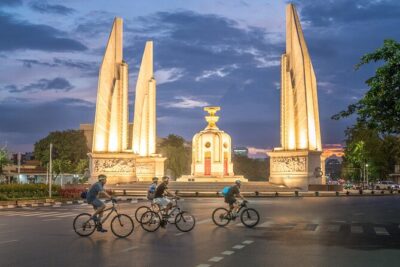
Night Bike Tour with Temples & Flower Market Visit
Read our review →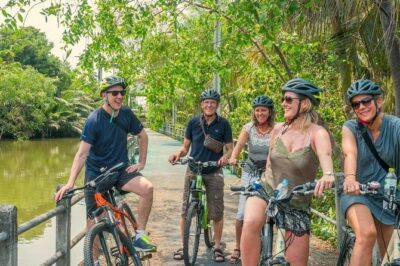
Bangkok Jungle Bike Tour – Hotel-pickup & Lunch
Read our review →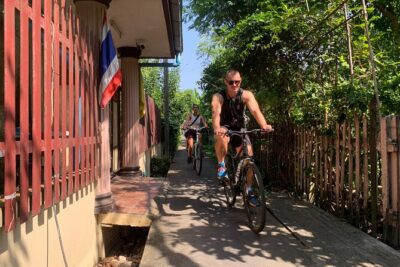
Bangkok Experiences Bike Tours-Backstreets and Hidden Gems
Read our review →
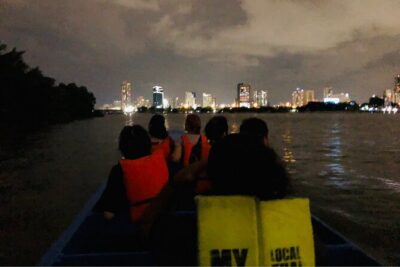
Bamboo Bicycle Tour in twilight: watch dancing Fireflies in Bangkok
Read our review →Night Bike Tour with Temples & Flower Market Visit
Read our review →Browse the lists this tour appears in