
Reviewed · BANGKOK CHINATOWN TOURS
Bangkok: Must things to see in China town, Small group
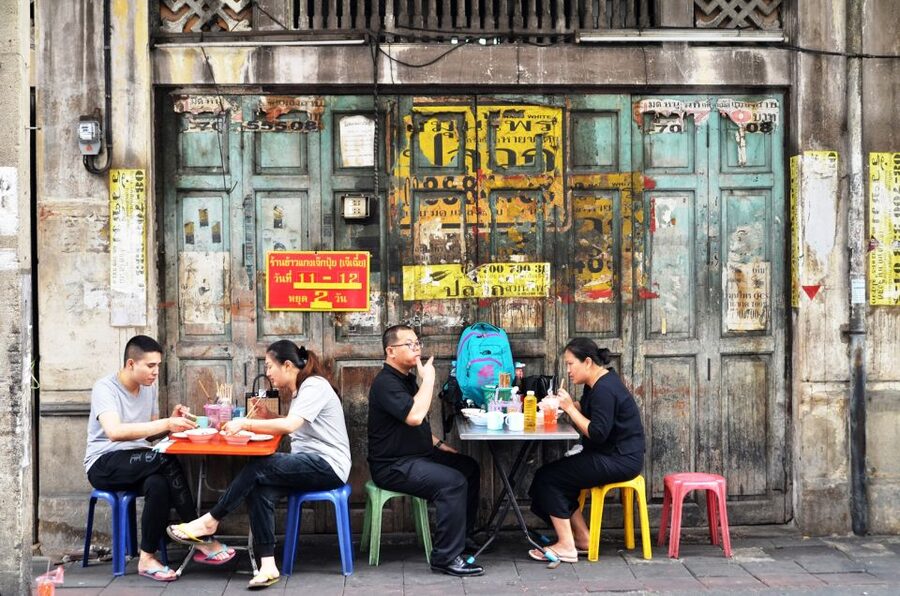
Bangkok’s Chinatown reveals itself best on foot, one narrow lane at a time. This 3.5-hour walk takes you past quiet temples, old houses, street art, and market alleys that are easy to miss if you stick to the main road. The local food stops add real flavor, not just sightseeing.
I like the way the tour connects Thai Chinese heritage with present-day neighborhood life, and I like that lunch, coffee, and snacks are included. Guide Mee brings an enthusiastic, expert touch, with stories that help make sense of what you are seeing. The main drawback is the walking: about 4 kilometers, including steep stairs at a Chinese temple, so it is not suitable for wheelchair users, pregnant women, or anyone who finds uneven walking difficult.
Key Points
- More than 15 Chinatown stops: See temples, narrow lanes, traditional houses, market streets, viewpoints, and colorful public art.
- A real neighborhood walk: Talk with local Chinese community members and see daily life away from the main tourist routes.
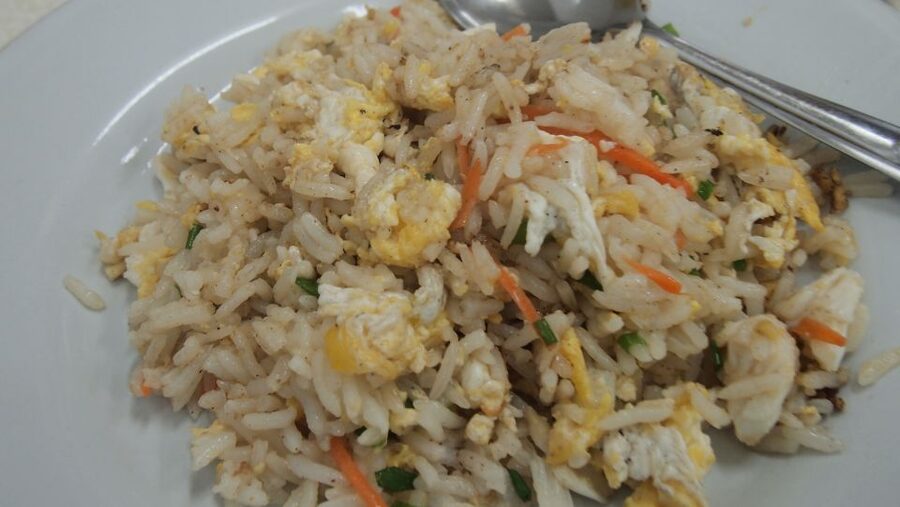
- Food is part of the tour: Snacks, coffee, and a local lunch are included in the $41 price.
- Sampeng Market included: Explore one of Bangkok’s oldest open markets through its tight, winding lanes.
- Flat walking with one steep section: Most of the route is easy, but the temple stairs require care.
- Small-group atmosphere: The format suits travelers who want questions answered and stories delivered at a human pace.
Why Bangkok Chinatown Rewards a Walking Tour
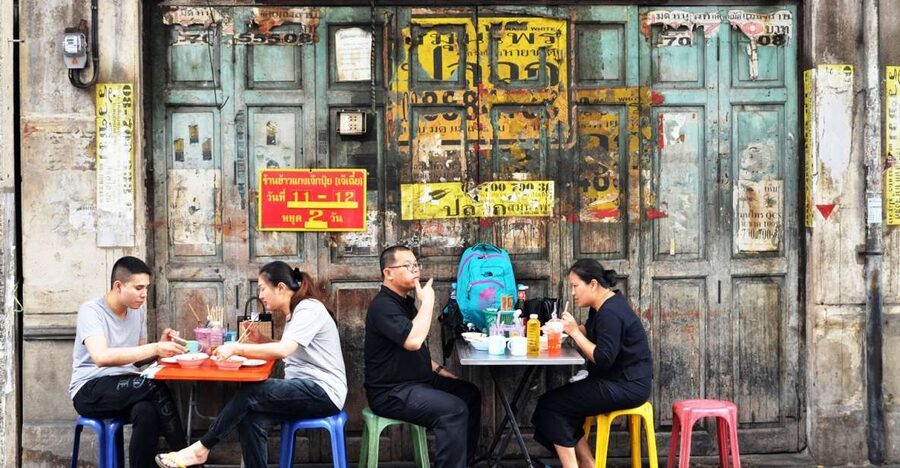
Bangkok Chinatown is not a single attraction. It is a working district of temples, food stalls, homes, shops, markets, shrines, and narrow passages. If you explore alone, you can enjoy the color and noise, but it is harder to understand how Thai Chinese families, businesses, and religious traditions fit together.
This tour gives you a local framework. Instead of simply passing a decorated doorway or an old building, you hear why it matters. The route also moves away from the obvious streets, allowing you to see corners that most first-time visitors would pass without noticing.
The small-group format matters here. Chinatown’s lanes can be cramped, and a large group would slow down the walking and make conversations with local people less natural. With fewer people, you can ask questions, pause for photographs, and stay close to the guide without turning the walk into a parade.
The tour is led in English or Thai. Guide Mee has a reputation for combining strong local knowledge with an energetic, friendly manner. That is useful in a neighborhood where the most interesting details are often small: a family business tucked behind a shopfront, a traditional house in a side lane, or a temple detail that needs explaining.
More Chinatown tours in Bangkok:
- Bangkok Authentic Tasting Thai-Chinatown Walking Food Tour
★ 4.9 · 852 reviews - Bangkok: Tuk Tuk Adventure Chinatown Michelin Food & Temples
★ 4.3 · 725 reviews - Bangkok Tuk-Tuk Tour by Night with Chinatown Street Food Meal
★ 5.0 · 635 reviews
Starting at Tang Hua Pug Building
The meeting point is at MRT Hualampong, Exit 1, near the Tang Hua Pug Building. This is a practical starting place because you can arrive by Bangkok’s subway rather than depending on a taxi in central traffic.
Look for the guide wearing an Eatwalktalktour shirt. It is worth arriving with enough time to identify the meeting point calmly, especially if you are unfamiliar with Bangkok’s MRT system. The activity ends back at the same meeting point, so you do not need to arrange a separate ride from another part of the city.
There is no hotel pickup or drop-off. That keeps the price lower, but you need to make your own way to Hualampong. For many visitors, the MRT connection is more predictable than road transport, particularly during busy hours.
Into the Lanes: Art, Homes, and Local Stories
The first part of the walk leads through Chinatown’s streets and smaller alleys. Expect a mixture of sightseeing, photo stops, short talks, and time spent watching ordinary neighborhood activity.
The street art is one of the more appealing parts of the route. Colorful walls and painted surfaces bring a modern note to an area better known for old temples and Chinese shop houses. The art gives you good photo opportunities, but the larger value is the contrast between new creative work and long-established businesses.
You also visit traditional houses and see parts of the local Chinese community that are not presented as a museum display. This helps you understand Chinatown as a lived-in district rather than a decorative backdrop. You may notice shopkeepers, residents, and workers carrying on with their daily routines while the group passes through.
The guide’s stories help tie these scenes together. You learn about the area’s past and present, including the continuing connection between Chinese customs and Thai city life. The route is especially useful for anyone who wants context rather than a list of dates and building names.
The pace includes rest stops. That makes the walk manageable for most people who are comfortable walking several kilometers in warm weather. Still, Bangkok can be hot, and the tour includes several hours outside. Light clothing, water, sun protection, and comfortable shoes are sensible choices.
The Secret Temple and Its Steep Stairs
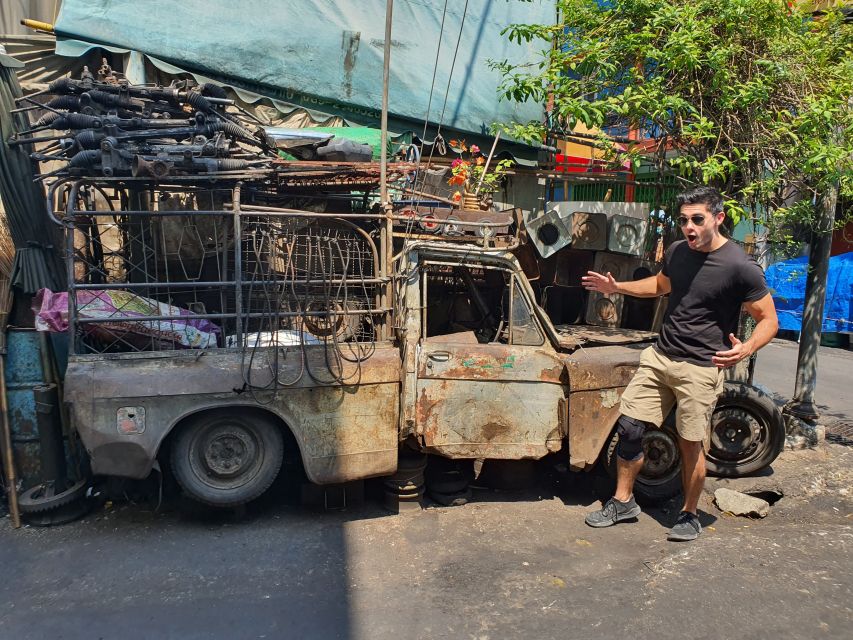
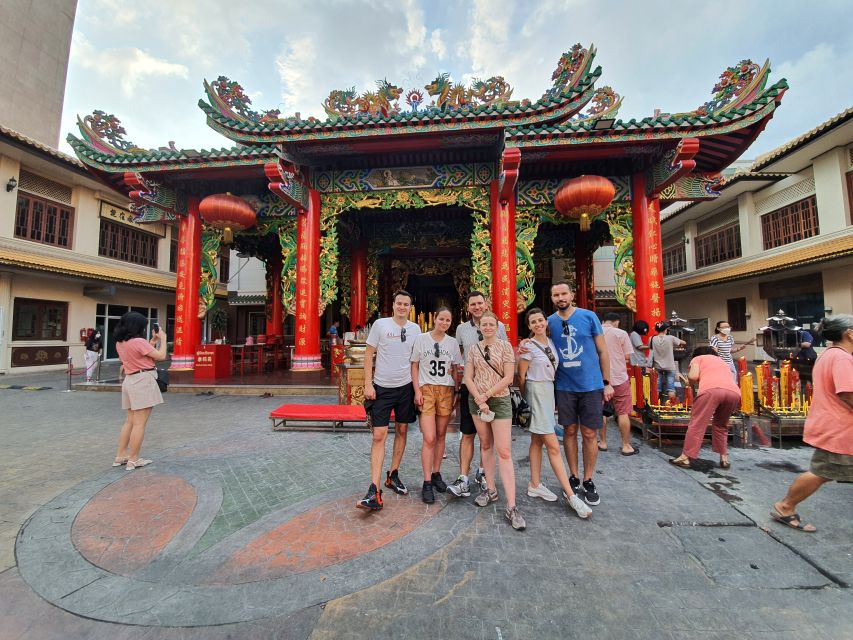
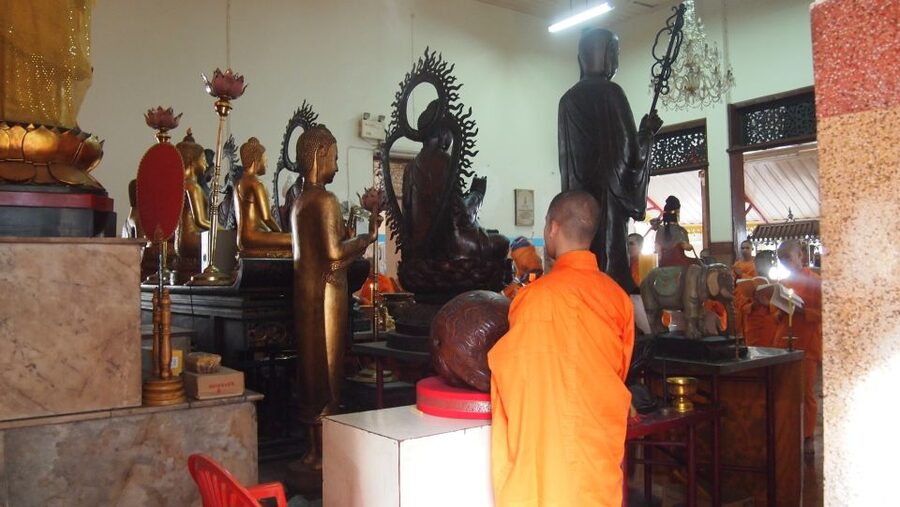
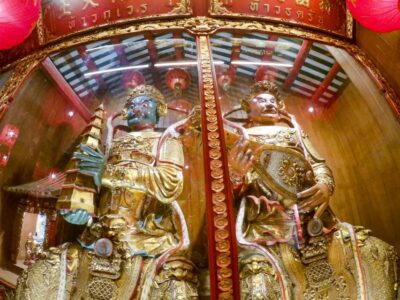
One of the route’s less obvious stops is a Chinese temple. It offers a quieter change from the market streets and provides a close look at local religious practice.
The temple has steep stairs, so this is the part of the route that requires the most care. The walking distance is mostly flat, but the temple section is not. Easy-on-and-off shoes are recommended, and flip-flops are permitted by the practical guidance for the tour, though shoes with a secure grip may feel safer on stairs.
Temple etiquette matters. Wear clothing that covers your shoulders and knees, and avoid short skirts or short pants. The visit is not simply a quick photo stop, so respectful clothing will make the experience more comfortable for you and for the people using the temple.
This stop may be less suitable for anyone with balance, knee, or mobility problems. The tour is specifically not suitable for wheelchair users, and the steep steps are an important reason to take that warning seriously.
Same city, a completely different sort of day:
- Bangkok: Damnoen Saduak Market and Maeklong Railway Market
★ 4.5 · 26,723 reviews - The Old Siam: Damnoen Saduak and Maeklong Railway Market
★ 4.5 · 10,992 reviews - From Bangkok: Ayutthaya Temples Guided Tour with Lunch
★ 4.7 · 10,535 reviews - Bangkok: Train Market & Floating Market with Boat Ride
★ 4.7 · 9,547 reviews
Sampeng Market Through Its Tight Alleys
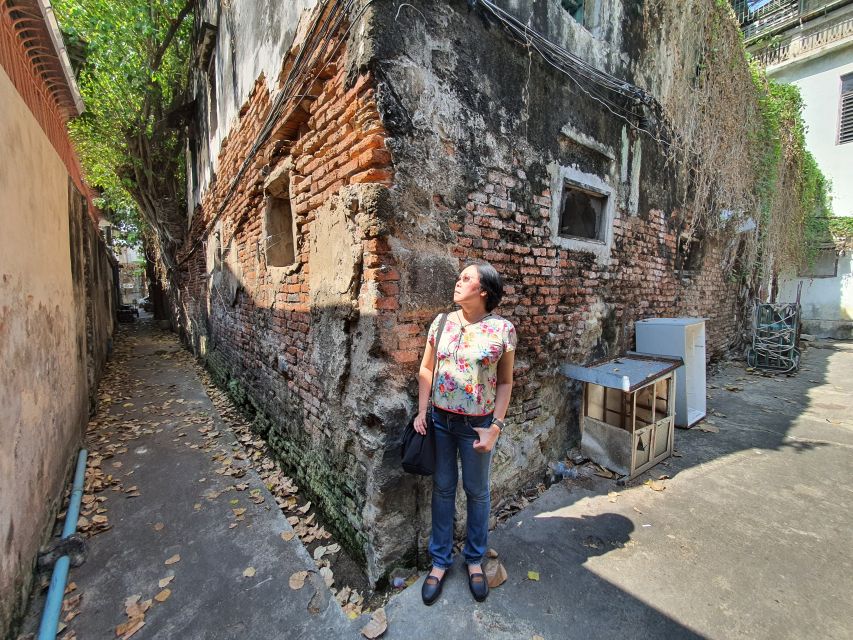
Sampeng Market gives the tour a strong dose of everyday commerce. It is one of Bangkok’s older open markets and occupies a maze of narrow lanes packed with goods.
You should expect close quarters here. The market is not arranged like a spacious modern shopping center, and walking through it requires attention to people and merchandise around you. That is part of its appeal. You see a working market rather than a polished attraction.
The guide helps you read the scene and keeps the group moving through the maze. You have time for shopping and photographs, but this is not designed as a long, independent retail session. If you see something you want, ask about the available time before stopping to browse.
Sampeng also shows why a local guide adds value. Without help, it is easy to become focused on the goods and miss the market’s place in Chinatown’s commercial life. With the route explained, the narrow lanes become part of the neighborhood story.
Local Snacks, Coffee, and Lunch
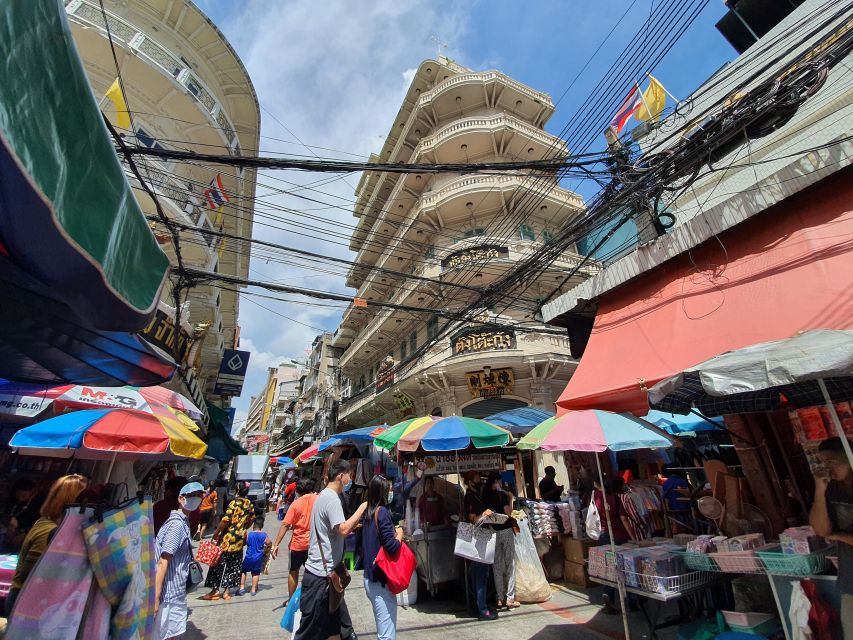
Food is built into the walk rather than treated as an optional extra. You receive local snacks, coffee, and lunch at a local restaurant. The exact dishes are not specified, so you should not book this expecting a particular menu item.
The food stops break up the walking and give you a chance to sit, cool down, and talk with the guide. They also provide a direct way to experience Chinatown’s food traditions. A meal in a local restaurant can tell you more about the district than passing a row of signs without knowing what to order.
Coffee is served at a comfortable cafe stop. This is a useful pause after the market and alley sections, particularly in hot or humid weather. The cafe also gives the group a change of setting, moving from crowded lanes to a more relaxed indoor or semi-indoor environment.
The tour does not include alcoholic drinks. If you want anything beyond the included food, coffee, and nonalcoholic refreshments, plan to pay separately.
Food allergies and dietary needs are not addressed in the supplied details, so you should ask the operator before booking if this is important to you. The same applies if you need a specific type of meal.
What the $41 Price Includes
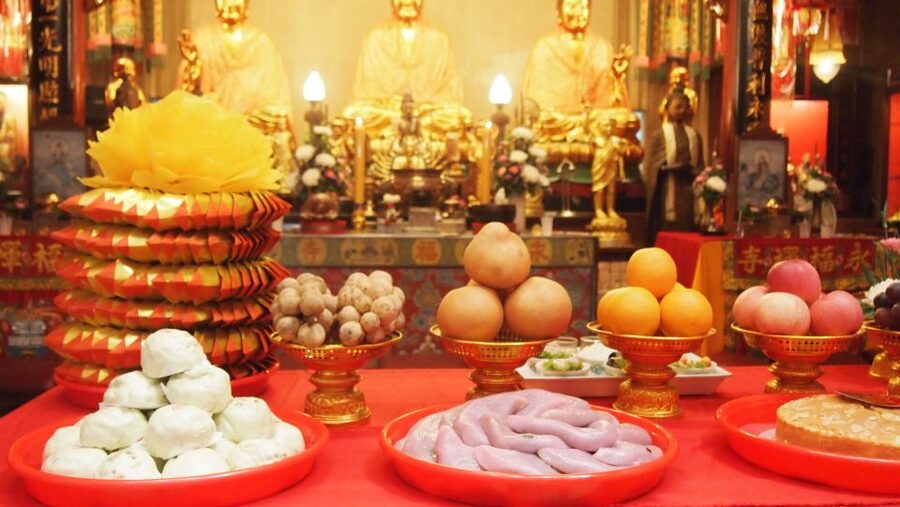
At $41 per person, the tour offers reasonable value if you would otherwise pay separately for a guided walk, snacks, coffee, and lunch. You are also paying for access to local context and route planning, which are useful in a district where the most interesting places can be hard to locate on your own.
The value is strongest for first-time visitors to Bangkok Chinatown. You see more than a few famous streets, and the 3.5-hour schedule gives enough time for food and rest without taking up an entire day.
If you prefer to walk alone, spend a long time shopping, or choose every meal yourself, the fixed format may feel restrictive. You also need to account for your own transport to and from Hualampong. Even so, including lunch and refreshments makes the cost easier to justify than a tour that charges extra for every snack.
The activity allows free cancellation up to 24 hours before the start time, and you can reserve now and pay later. Those options are useful if your Bangkok schedule is still changing.
How Demanding Is the Walk?
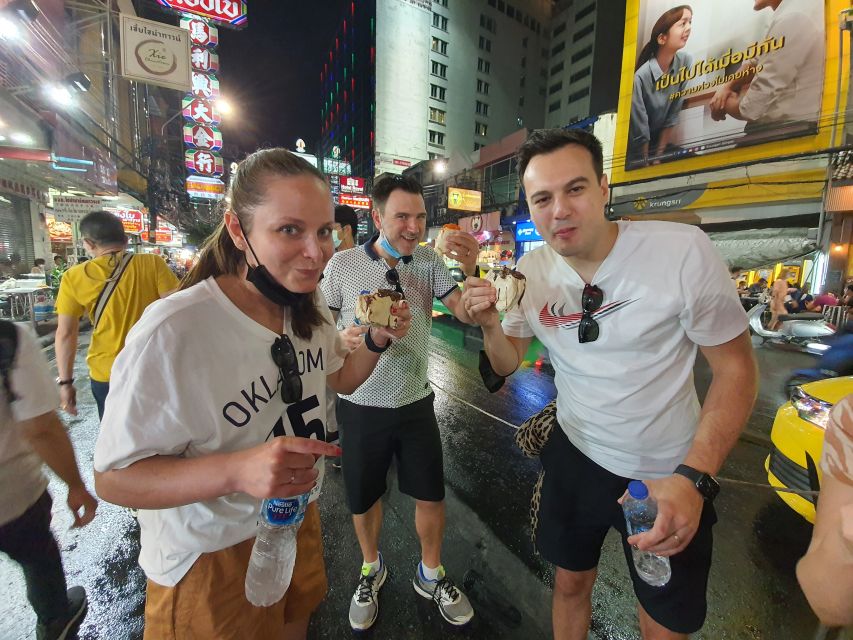
The total distance is about 4 kilometers, or roughly 2 miles. Most of the route is flat, but the temple has steep stairs. The challenge comes less from distance than from Bangkok’s heat, crowded lanes, and the need to step carefully through market areas.
Wear shoes you can walk in for several hours. Easy-on-and-off footwear is useful because you visit a temple, but secure shoes may be preferable on the stairs. During the rainy season, from May through September, carry an umbrella. A sudden shower can turn an otherwise easy walk into an uncomfortable one.
This tour is not suitable for babies under one year, pregnant women, wheelchair users, or people over 95 years old. Those limits should be read as practical guidance, not a minor footnote. The route includes active walking, narrow passages, and temple stairs.
If you are generally comfortable walking 4 kilometers and can manage stairs, the route should be realistic. If you need frequent access to elevators, wide paths, or step-free entrances, choose another Chinatown experience.
Who Will Enjoy This Experience Most?
I would recommend this tour to you if you want to see Bangkok Chinatown as a community rather than just a food district. It is a good match for curious first-time visitors, food-minded walkers, photographers, and anyone who enjoys learning through conversation.
It also suits travelers who prefer a structured half-day. You do not need to research which lanes to enter, which temple to visit, or where to stop for lunch. The guide handles the route while you concentrate on the surroundings.
History-minded visitors will appreciate the Thai Chinese focus. The tour does not treat Chinatown as a collection of old buildings. It explains how heritage continues through homes, temples, food, markets, and local relationships.
I would hesitate to recommend it to you if you dislike walking in close quarters, need a completely accessible route, or want a quiet sightseeing experience. Sampeng Market and Chinatown’s lanes can be crowded, and the temple stairs are a real consideration.
Practical Advice Before You Go
Bring water, even though refreshments are included. The included coffee and snack are helpful, but they should not be your only source of hydration during a warm 3.5-hour walk.
Dress respectfully for the temple. Knees and shoulders should be covered, and comfortable clothing will help during the outdoor sections. Pack an umbrella from May through September.
Keep your belongings close in the market lanes. This is sensible in any crowded shopping area, and a small bag is easier to manage than a large backpack.
The tour is offered at different starting times depending on availability. Check the time carefully before booking, then plan your MRT journey to Hualampong Exit 1. Since the activity returns to the starting point, it is easy to continue your Bangkok plans afterward.
Should You Book This Chinatown Walk?
Book it if you want a guided look at the lesser-seen side of Bangkok Chinatown, with food and local stories built into the route. The combination of more than 15 stops, Sampeng Market, a Chinese temple, street art, a cafe break, snacks, coffee, and lunch gives the morning or afternoon a useful range.
The strongest reason to choose it is the human scale. Guide Mee’s storytelling style, the local conversations, and the visits to ordinary neighborhood spaces make the walk feel more personal than a simple landmark circuit.
Skip it if steep temple stairs or 4 kilometers of walking will cause trouble. For everyone else, $41 is a fair price for a small-group experience that shows you how Chinatown works, not just what it looks like.
FAQ
How long does the Bangkok Chinatown tour last?
The tour lasts 3.5 hours. Starting times vary, so check availability when booking.
Where does the tour begin?
The meeting point is MRT Hualampong Exit 1, near the Tang Hua Pug Building. Look for a guide wearing an Eatwalktalktour shirt.
Where does the tour end?
The activity ends back at the same meeting point.
What languages does the guide speak?
The tour is available with a live guide in English or Thai.
How much walking is involved?
The total walking distance is about 4 kilometers, or approximately 2 miles. Most of the route is flat, but the Chinese temple has steep stairs.
Is food included?
Yes. The tour includes a snack, coffee, and lunch at a local restaurant. Alcoholic drinks are not included.
Is hotel pickup included?
No. You need to travel to the Hualampong meeting point yourself, and hotel drop-off is not provided.
Can I cancel the booking?
You can cancel up to 24 hours in advance for a full refund. The tour also offers a reserve-now, pay-later option.
Newly reviewed around Bangkok
- Suvarnabhumi Airport (BKK) Private Transfer to Bangkok Centre★ 3.5 · 5 reviews
- CTB Unlimited Hop CHAO PHRAYA RIVER: All Day River Pass★ 3.5 · 50 reviews
- Nopparat’s Traditional Thai Dinner & Dance★ 4.0 · 19 reviews
- Half-Day Bangkok Off-the-Beaten-Track Tour: Rural Villages and Khlongs★ 5.0 · 40 reviews
- Half Day Bangkok Food and Sightseeing Tour★ 4.5 · 10 reviews
- Chinatown (Yaowarat Road) Neon Photoshoot★ 5.0 · 12 reviews
- Nakhon Nayok adventure full day trip with lunch★ 5.0 · 20 reviews
- The Story of Handicrafts Full Day Experience from Bangkok★ 5.0 · 3 reviews
Bangkok Chinatown Tours, compared.
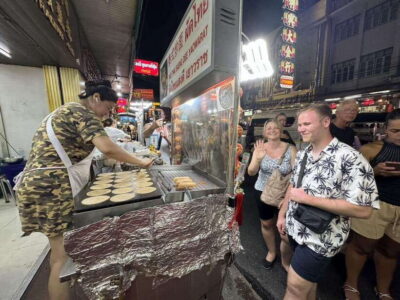
Bangkok Authentic Tasting Thai-Chinatown Walking Food Tour
Read our review →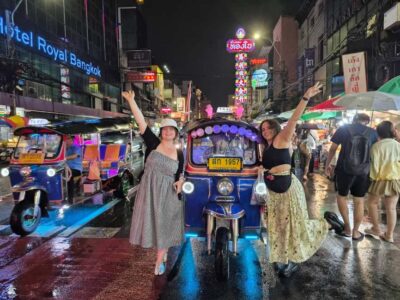
Tuk Tuk Adventure Chinatown Michelin Food & Temples
Read our review →
Bangkok Tuk-Tuk Tour by Night with Chinatown Street Food Meal
Read our review →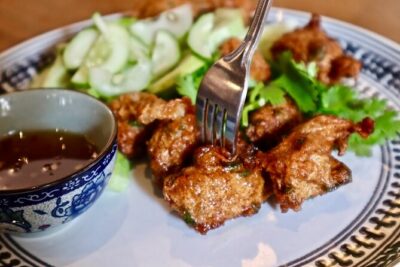
Bangkok by Night Food Tour with 10+ Tastings in Chinatown
Read our review →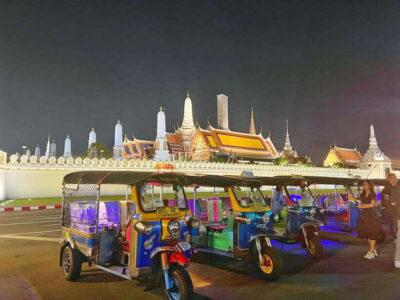
Bangkok Tuk-Tuk by Night with Chinatown Street Food Meal
Read our review →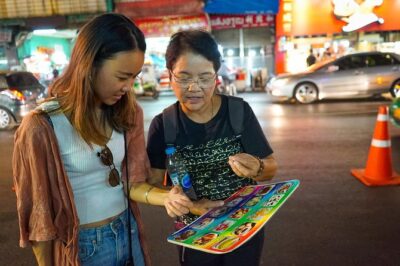
Bangkok Night Michelin Foodie Tour in Chinatown with 15+ tastings
Read our review →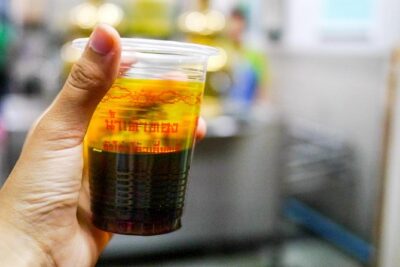
Discover a Taste of Chinatown – 2 Hr Walking Tour
Read our review →Browse the lists this tour appears in