
Reviewed · BANGKOK CHINATOWN TOURS
Bangkok China Town ,a Bangkok historic neighbourhood
Bangkok’s Chinatown is more than food stalls and neon signs. This walk takes you into Talat Noi, an old riverside quarter where Portuguese settlers, Chinese families, Vietnamese residents, and Khmer communities shaped Bangkok long before the modern city took form. You’ll see shrines, painted walls, an old coffee shop, and a Portuguese-founded church in one compact outing.
I like two things here. First, the route gives you a clear sense of how immigrants arrived through Bangkok’s first port and built new lives around it. Second, the small maximum of eight people should make it easier to ask questions, as Kaew did for one guest who wanted extra help understanding Chinatown’s culture and food.
The main drawback is timing. The experience is advertised at about three hours, so this is an introduction rather than a slow, all-day exploration. The walking route also includes ordinary lanes and working neighborhoods, not just polished sights.
Key points to know before booking
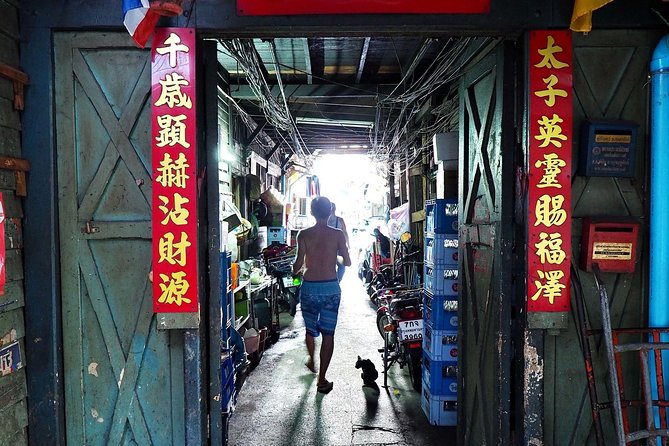
- Guan Yin Shrine opens the story with a 900-year-old statue of the Chinese Goddess of Mercy and an active local place of prayer.
- Talat Noi’s wall art mixes old homes with newer creative work, giving you a look at how the neighborhood has changed without losing its identity.
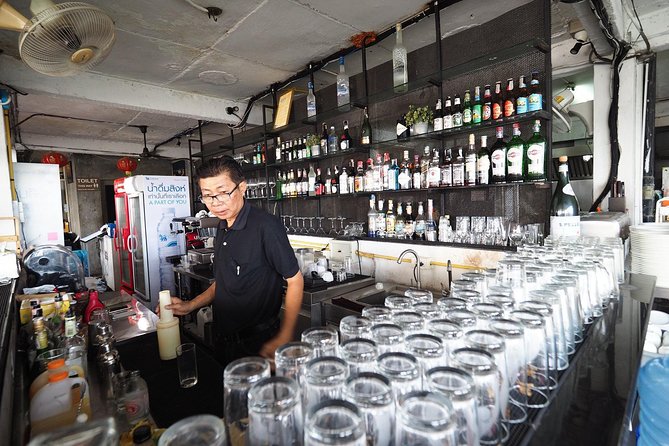
- Earsae Coffee is a 94-year-old shop, a useful stop for seeing how everyday food and drink fit into local history.
- Holy Rosary Church links Bangkok to its Portuguese past, with a riverside setting in the Samphanthawong area.
- A maximum of eight people keeps the walk fairly personal, and guide Kaew is specifically named as an attentive source of answers.
- The tour begins at 3 p.m. and ends at River City Bangkok, which makes it easy to continue along the river or arrange transport afterward.
Why Talat Noi gives Chinatown more meaning
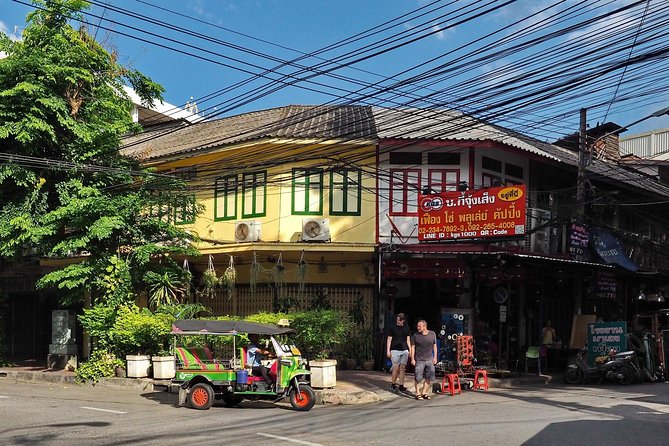
Many introductions to Bangkok’s Chinatown concentrate on markets, restaurants, and crowded commercial streets. This experience takes a different line. It uses Talat Noi to explain who lived here, how they arrived, and why the area still feels distinct from other parts of Bangkok.
Talat Noi’s story reaches back before Bangkok was founded as the capital. Portuguese settlers from Ayutthaya were among the first ethnic groups to establish themselves here. Later, Chinese, Vietnamese, and Khmer communities also made their homes in the district.
That mix matters because it prevents the neighborhood from being reduced to a single Chinese identity. You’ll hear about language, food, family customs, and folk beliefs that remain part of local life. The walk is useful for putting faces and places to Bangkok’s long history of migration.
I especially like the idea of beginning with the neighborhood’s role as a port. Immigrants landed here, and the river gave the district its connection to trade and movement. Even if you know little about Bangkok before arriving, this background helps explain why the lanes contain such a mix of religious buildings, old houses, shrines, workshops, cafés, and street art.
The tour does not promise a museum-like presentation. Much of its value comes from walking through a living district where people still live and work. That can mean uneven sidewalks, narrow lanes, and a setting that feels more ordinary than a major sightseeing stop. For me, that is part of the appeal, but you should not expect every minute to be picture-perfect.
More Chinatown tours in Bangkok:
- Bangkok Authentic Tasting Thai-Chinatown Walking Food Tour
★ 4.9 · 852 reviews - Bangkok: Tuk Tuk Adventure Chinatown Michelin Food & Temples
★ 4.3 · 725 reviews - Bangkok Tuk-Tuk Tour by Night with Chinatown Street Food Meal
★ 5.0 · 635 reviews
Starting at Guan Yin Shrine
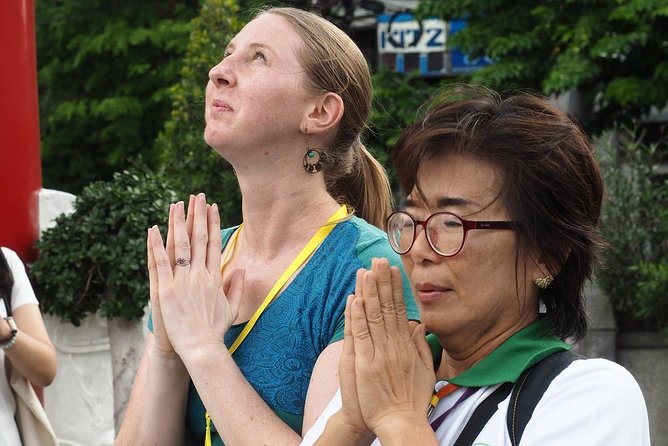
The first stop is Kuan Yim Shrine, also called the Thian Fa Foundation. It is one of Chinatown’s most colorful religious sites, with Guan Yin, the Chinese Goddess of Mercy, represented by a statue said to be 900 years old.
The shrine is not simply a monument placed there for sightseeing. Thousands of local people come to pray, so the visit gives you a chance to see a working place of worship. That makes the guide’s role important. You are not only looking at bright decorations or an old statue. You are learning why the shrine matters to the people who use it.
The scheduled visit lasts about 30 minutes, with admission included. That is enough time for an explanation and a careful look without turning the stop into a rushed photo break.
You should dress and behave respectfully at any religious site. The information provided does not specify a dress code, so your guide is the right person to follow if any local custom needs explaining. Since this is an active shrine, you may find that worshippers are present during your visit.
Starting here is a smart choice. It gives the walk a cultural center before you move into the lanes of Talat Noi. The shrine also shows that Chinatown is not only about commerce. Faith, family tradition, and public life are closely tied together.
Reading Talat Noi through its wall art
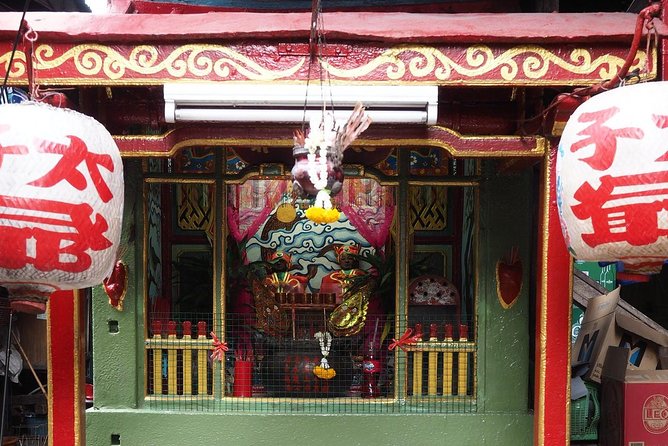
The next part of the route brings you into Talat Noi, where old lanes and houses are decorated with graffiti and wall art. The artwork has helped make the neighborhood popular with younger locals and creative visitors, but the paint is only one layer of the story.
The important thing is the contrast. You may see a contemporary mural beside an older house, a narrow lane leading past working homes, or a decorated wall that belongs to a district with customs passed down through generations. The art gives the area a fresh public face, while the neighborhood’s speech, food, and folk beliefs connect it to the past.
One portion of the visit is scheduled for about an hour. That suggests the guide has time to explain more than the location of the best photographs. You can ask how Talat Noi changed, why the art appeared, and how local residents maintain their identity as the area attracts more attention.
I would not book this walk solely for street art. Bangkok has many places with murals, and the appeal here is the setting around them. Talat Noi’s art works best when you see it as part of a residential quarter rather than as a separate outdoor gallery.
The information describes the houses and lanes as covered with graffiti, but you should expect an uneven collection rather than a formal exhibition. Some walls may appeal to you more than others. The reward is the process of looking closely and noticing how old and new Bangkok sit side by side.
This is also where a small group helps. In a group capped at eight, you can pause without being lost in a large crowd. If you enjoy asking about small details, this portion may be more satisfying than a fast-moving route through major landmarks.
A pause at Earsae Coffee
Earsae Coffee is described as a 94-year-old coffee shop and forms part of the Talat Noi visit. That age gives the stop real context. It is not just a convenient place to sit. It represents the everyday side of the neighborhood, where food and drink help carry local habits from one generation to the next.
The supplied details do not promise a particular tasting menu or a specific drink. You should therefore see this as a cultural stop rather than a full food tour. The experience includes admission, but no separate list of tastings is provided.
That distinction matters when you consider the price. At $78.73 per person, you are paying mainly for a guided interpretation of Chinatown and Talat Noi, not for a long succession of included meals. If your priority is eating your way through the district, you may want to add your own food stops before or after the walk.
Still, the coffee shop adds a useful human scale. Religious shrines and churches explain big themes. An old café shows how those themes enter ordinary life. It gives you a way to think about continuity without needing a formal history lesson.
More historic sites around Bangkok:
- From Bangkok: Ayutthaya Historical Park Guided Day Trip
★ 4.6 · 3,020 reviews - UNESCO’s Ayutthaya Historical Park: Full-Day Tour from Bangkok
★ 4.5 · 1,559 reviews - From Bangkok: Historical Day Tour to River Kwai
★ 4.6 · 868 reviews - Historical City of Ayutthaya – Unesco Full Day Tour From Bangkok
★ 5.0 · 847 reviews
Holy Rosary Church and the Portuguese connection
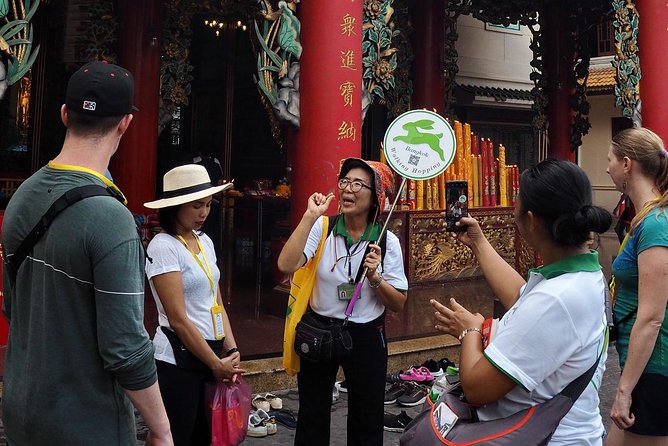
The final major stop is Holy Rosary Church, also called Kalawar Church. This Roman Catholic church is on the eastern bank of the Chao Phraya River in Bangkok’s Samphanthawong District.
Its importance goes back to the Portuguese settlers who came from Ayutthaya and built a Portuguese church here in 1786. That detail changes how you read the neighborhood. Chinatown is not a sealed Chinese enclave. It has long been shaped by several communities and by the river routes that connected Bangkok to the wider region.
The visit lasts about 30 minutes, with admission included. You can expect the guide to connect the church with the story of Talat Noi rather than treat it as an isolated religious building.
The church also gives the route a fitting end. You begin with a Chinese shrine, pass through streets shaped by many ethnic groups, and finish with a Portuguese Catholic landmark. In a short walk, you get a compact explanation of how Bangkok grew through migration and contact.
The tour ends at River City Bangkok, at 23 Soi Charoen Krung 24. That location is useful because you are not returned to the starting point. Before booking, think about your onward plans. If you want to continue near the river, the end point may suit you well. If you need to return to your hotel, allow extra time and transport costs.
How the schedule works at 3 p.m.
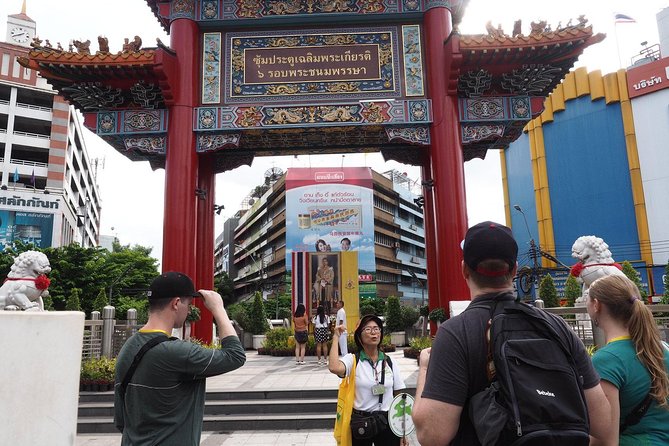
The start time is 3 p.m., and the experience lasts about three hours. An afternoon start should suit you if you prefer not to walk through the hottest part of the day, though Bangkok can still feel warm. The route includes several stops, so your pace will not be nonstop walking, but you should be prepared to spend much of the outing on foot.
The schedule gives each main stop a clear shape:
- Kuan Yim Shrine: about 30 minutes
- Earsae Coffee and the Talat Noi wall art: about 20 minutes
- Extended Talat Noi wall art and neighborhood visit: about one hour
- Holy Rosary Church: about 30 minutes
The listed stop times total less than the full three-hour duration, leaving room for walking between locations and explanations along the way. That is useful because the connecting streets are part of the experience. You are not being transported from one sealed attraction to another.
The start address is 552 Charoen Krung Road in Pom Prap, Bangkok 10100. The end point is River City Bangkok. Confirm the exact meeting instructions when you book, especially since the start and finish are in different areas.
The experience is offered with a mobile ticket, and confirmation is provided at booking. It is near public transportation, and most people can participate. No special accessibility details are supplied, so if you have mobility concerns, ask the provider before paying.
Is $78.73 a fair price?
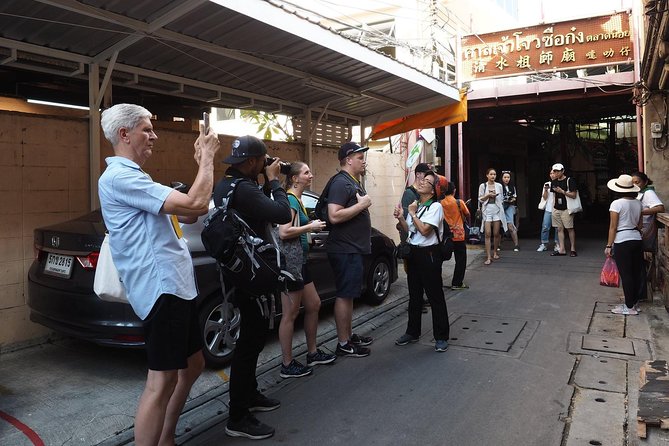
At $78.73 per person, this is not a bargain-priced neighborhood stroll. The value depends on how much you want interpretation and structure.
You are paying for a guided route through several connected themes: Chinese religious life, the history of immigration, Talat Noi’s street art, a long-running coffee shop, and the Portuguese Catholic presence. Admission is included at the listed stops, and the group is limited to eight people.
The price makes more sense if you want to ask questions and understand what you are seeing. Guide Kaew is specifically praised for answering many questions and giving extra attention. That personal exchange can be difficult to get from a self-guided walk.
The price makes less sense if you mainly want photographs or plan to spend most of your time eating. You can walk around parts of Chinatown independently, and the tour does not present itself as a full food crawl. Its strength is the explanation behind the places.
I would compare it with the cost of a private guide, but the small group keeps this from feeling like a mass-market bus outing. If you value local history and want a planned route through Talat Noi, the fee may be reasonable. If your budget is tight, you may prefer to explore independently and spend the money on meals.
Who will enjoy this walk most?
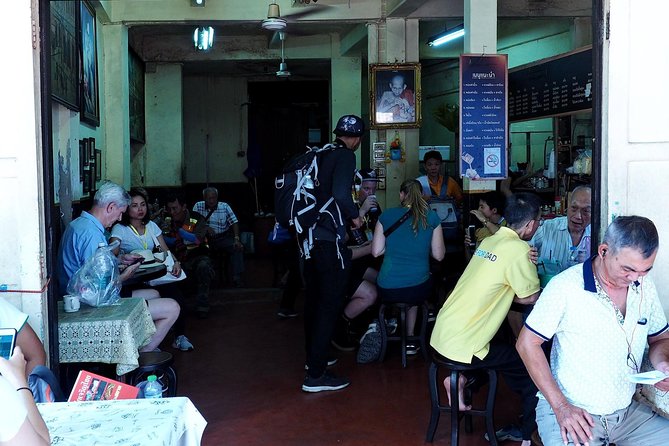
I would recommend it to first-time visitors who want a clear introduction to Chinatown beyond its main streets. It also suits anyone interested in migration, religion, old neighborhoods, street art, or the way food and language preserve identity.
The walk should appeal to photographers, but I would not choose it only for photography. It is better for people who want to know what they are looking at.
Families and older visitors may appreciate the limited group size, though the information only says most people can participate. Since no detailed accessibility information is provided, check ahead if stairs, uneven surfaces, or extended walking would be a concern.
Food-focused visitors can use the route as a starting point. You will hear about food as part of local culture, but the listed experience does not promise a sequence of tastings. Plan your own meal before or after if eating is your main goal.
The tour may be less suitable if you dislike organized walks, want a late-night Chinatown atmosphere, or prefer major landmarks over residential lanes. The 3 p.m. start also means this is not a morning activity.
Practical details that can affect your decision
The group maximum is eight people, a useful limit for narrow lanes and questions. A smaller group also makes it easier to stay together when the route moves through busy parts of Chinatown.
You receive confirmation at booking, and the ticket is mobile. The experience is near public transportation, though no specific transit route is provided. Use the start and end addresses when planning your day rather than assuming you will return to where you began.
Free cancellation is available if you cancel at least 24 hours before the 3 p.m. start time. Cancellations or changes made less than 24 hours before the start are not refunded or accepted.
Bring comfortable walking shoes and enough water for an afternoon outside. Those are practical choices for any three-hour Bangkok walking tour, even though the supplied details do not list required equipment.
Should you book this Chinatown and Talat Noi tour?
Book it if you want context with your Chinatown sightseeing. The route connects a 900-year-old Guan Yin statue, a 94-year-old coffee shop, Talat Noi’s painted lanes, and Holy Rosary Church into one understandable story.
I would especially choose it early in a Bangkok stay. Afterward, you will have more context for the food, shrines, languages, and old buildings you encounter elsewhere in the city. Guide Kaew’s strong personal attention is another reason to favor it if you like asking questions.
Skip it if you want a dedicated food tour, a long evening among Chinatown’s busiest streets, or a completely self-guided outing. At $78.73, the fee is justified by the small group and historical explanation, not by a large number of included activities.
For the right visitor, this is a useful three-hour introduction to a part of Bangkok that rewards closer attention. It shows you not just where Chinatown is, but why Talat Noi became what it is.
FAQ
Where does the tour begin?
It begins at 552 Charoen Krung Road, Khwaeng Pom Prap, Pom Prap Sattru Phai District, Bangkok 10100, Thailand.
Where does the tour end?
The tour ends at River City Bangkok, 23 Soi Charoen Krung 24, Talat Noi, Samphanthawong District, Bangkok 10100, Thailand.
What time does the experience start?
The scheduled start time is 3 p.m.
How long does the tour last?
The experience lasts approximately three hours.
What is the price?
The listed price is $78.73 per person.
How many people can join the tour?
The group can have a maximum of eight people.
Is a mobile ticket available?
Yes. The experience provides a mobile ticket, and confirmation is received at the time of booking.
Are admission fees included?
Admission is included for the listed visits to Kuan Yim Shrine, the Talat Noi stops, Earsae Coffee, and Holy Rosary Church.
Can I cancel for a full refund?
Yes, if you cancel at least 24 hours before the experience start time. Cancellations or changes made less than 24 hours before the start are not refunded or accepted.
Newly reviewed around Bangkok
- Private Shuttle SUV Bangkok From or To Pattaya★ 5.0 · 9 reviews
- Ancient City & Temples of Ayutthaya ( UNESCO ) by River Cruise with Buffet Lunch★ 4.0 · 11 reviews
- The Best Bangkok Temples★ 4.0 · 16 reviews
- Private Shuttle SUV Bangkok From or To Airport★ 5.0 · 69 reviews
- LR-01 TaLad NangLerng, ride along the old town and try local street foods★ 4.5 · 13 reviews
- White Lotus Thai Cooking Class in Bangkok★ 5.0 · 31 reviews
- Suvarnabhumi Airport VIP Fast-Track Service | Bangkok★ 4.5 · 24 reviews
- A Magical Evening in Bangkok: Private City Tour★ 4.5 · 61 reviews
Bangkok Chinatown Tours, compared.
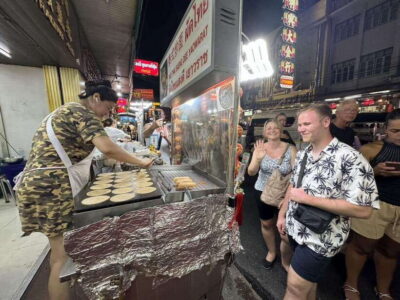
Bangkok Authentic Tasting Thai-Chinatown Walking Food Tour
Read our review →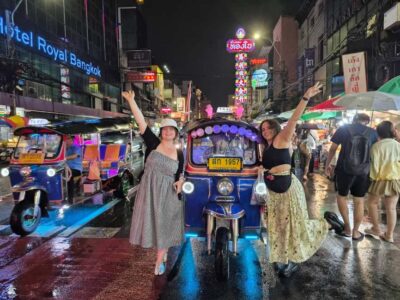
Tuk Tuk Adventure Chinatown Michelin Food & Temples
Read our review →
Bangkok Tuk-Tuk Tour by Night with Chinatown Street Food Meal
Read our review →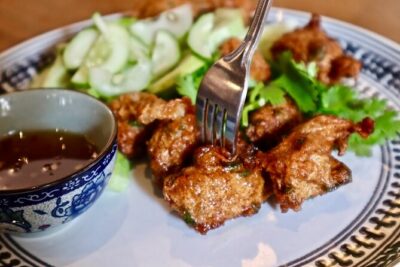
Bangkok by Night Food Tour with 10+ Tastings in Chinatown
Read our review →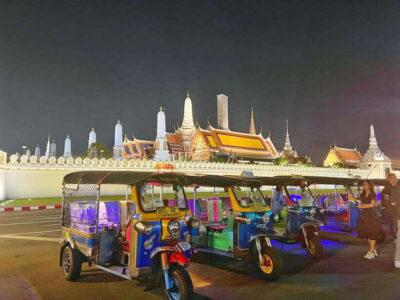
Bangkok Tuk-Tuk by Night with Chinatown Street Food Meal
Read our review →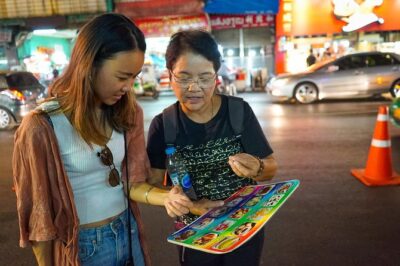
Bangkok Night Michelin Foodie Tour in Chinatown with 15+ tastings
Read our review →
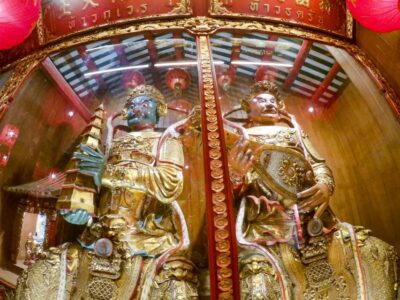
Discover a Taste of Chinatown – 2 Hr Walking Tour
Read our review →Browse the lists this tour appears in