
Reviewed · BANGKOK STREET FOOD TOURS
Bangkok: Riverside E-Scooter Adventure with StreetFood Snack
Bangkok opens up when you leave the main roads. This three-hour e-scooter and food tour takes you through Thonburi lanes, Chinatown markets, river crossings, temples, and the Portuguese-influenced Kudeejeen quarter. You cover far more ground than on foot, but still move slowly enough to notice homes, shrines, food stalls, and ordinary city life.
I like the way the tour mixes street food with local history, rather than treating Bangkok as one long list of temples. I also like the small groups, limited to eight people, and the repeated stops for water, photos, snacks, and questions. The main consideration is that you must feel comfortable riding an e-scooter in a busy city, and the tour is not suitable for children under 14 or anyone with mobility limitations.
Key points to know before booking
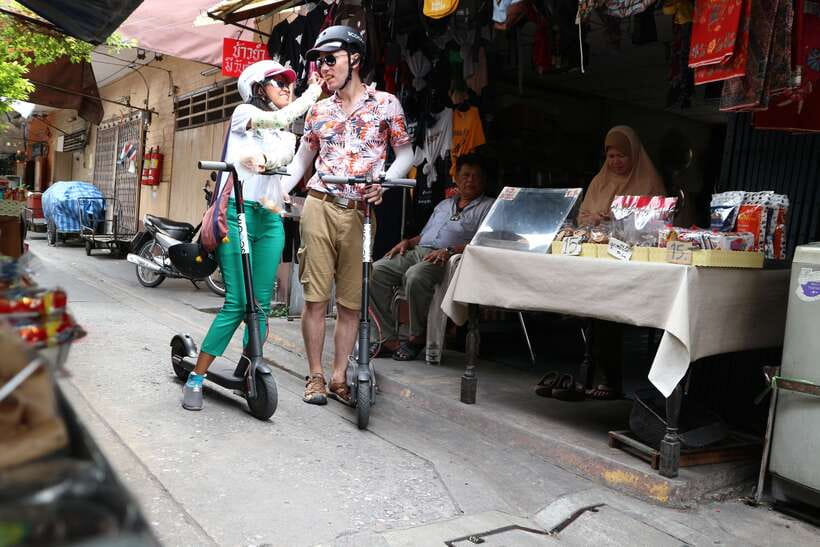
- Ride through parts of Bangkok most visitors miss: Narrow lanes on the Thonburi side, the Kudeejeen community, and back streets behind Chinatown give you a look at everyday neighborhoods.
- Food is built into the route: Expect Thai fruits, market dishes, Chinatown snacks, and muffins from a local factory, with examples including papaya salad, fried chicken, pork skewers, and dumplings.
- Two river crossings add variety: You cross the Chao Phraya by the Memorial Bridge and later take a local ferry.
- The guides shape the experience: Guides such as Pong, Jobe, Phillip, Tony, Jam, and Tommy have been praised for local knowledge, friendly conversation, safety, and photography.
- It is good value at $38: The price includes the scooter, helmet, insurance, ferry tickets, fruit, street food, and a professional guide.
- Know the limits: The minimum age is 14, minimum height is 140 centimeters, and maximum weight is 120 kilograms.
Why an e-scooter works well in Bangkok
Bangkok is too spread out for a short walking tour to cover this route comfortably. The scooter lets you move between temples, markets, riverfront districts, and Chinatown without spending the whole afternoon on foot. At the same time, it is slower and more open than riding in a car, so you can notice small lanes and local shops along the way.
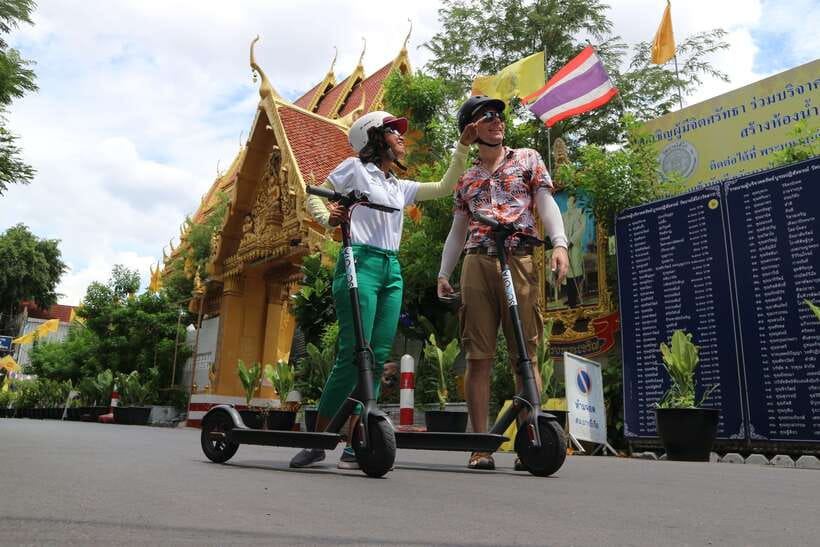
You begin at Jamming Thailand Bangkok, on the Thonburi side of the river. A guide gives you a short demonstration before you set off. If you have never used an e-scooter, that introduction matters. Alice, who had not ridden one before, found it manageable, while Portia noted that the guide made her less confident mother feel comfortable.
This is not a race. The guide leads the group through city streets and narrow passages, with stops along the way. Several people appreciated the careful pace and the attention to safety from guides including Tommy, Jobe, Tony, and Phillip. Helmets are supplied, and third-party insurance is included.
You should still be realistic about the setting. Bangkok traffic can be busy, and the route includes small lanes and city streets. If you are nervous on two wheels, tell the guide at the start. The electric motor helps with the heat, but you are still responsible for balancing and steering.
More e-scooter rides around Bangkok:
- Bangkok: E-Scooter Night Tour with Local Street Food
★ 4.8 · 488 reviews - Bangkok: Bang Kachao E-Scooter Jungle Tour
★ 4.8 · 154 reviews - Bangkok at Night by Electric Scooter
★ 5.0 · 53 reviews
Starting in Thonburi and crossing to Chinatown
The first part of the ride introduces Bangkok’s food culture and takes you toward a local Thai market. This is a useful opening because it shows how people shop for daily meals, rather than presenting food only as a restaurant experience. You will try local fruit and see the produce and prepared foods sold in a neighborhood market.
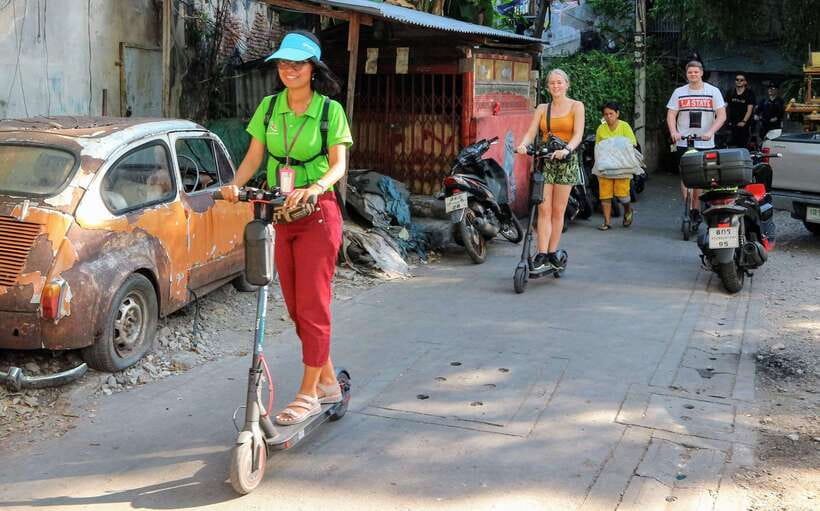
From there, you ride through the narrow alleyways of Thonburi. This is one of the tour’s strongest features. The area gives you a closer look at old Bangkok away from the polished shopping zones and major tourist roads. You may see modest homes, local businesses, religious sites, and lanes that would be easy to miss from a taxi.
The group then crosses the Chao Phraya River by the Memorial Bridge. The bridge is also known as Phra Phutthayotfa Bridge, and it links the Thonburi side with the area around Chinatown. The crossing gives the route a clear sense of movement, from the quieter lanes of Thonburi to the dense food and trading district on the other side.
Chinatown food and Chinese-Thai culture
Chinatown is the main food stop, with about 30 minutes set aside for sightseeing, local snacks, and an introduction to the Chinese community’s influence on Bangkok. The guide explains how Chinese traditions shaped Thai food and culture, giving more meaning to what you taste.
The exact food selection can vary, but the experience has included papaya salad, fried chicken, pork on skewers, Thai dumplings, and other market snacks. Fruit and street food are included, so you do not need to keep paying at every stop. You can still bring extra money if you want to buy something beyond what is provided.
I like this part because the food is not separated from the place. You are not simply taken to a restaurant to sample a fixed menu. Instead, the route uses markets and food areas to explain how the district works. One person did feel that a street cart would have been preferable to one restaurant stop, so you should not expect every bite to come directly from a roadside stall.
After the food stop, the scooter takes you through Chinatown’s back streets. This helps you see a different side of the district from the crowded main lanes. You then cross the river again, this time by local ferry. The ferry ride is included and breaks up the riding with a short, practical look at how people move across the Chao Phraya.
Tha Din Daeng Market and the everyday side of Bangkok
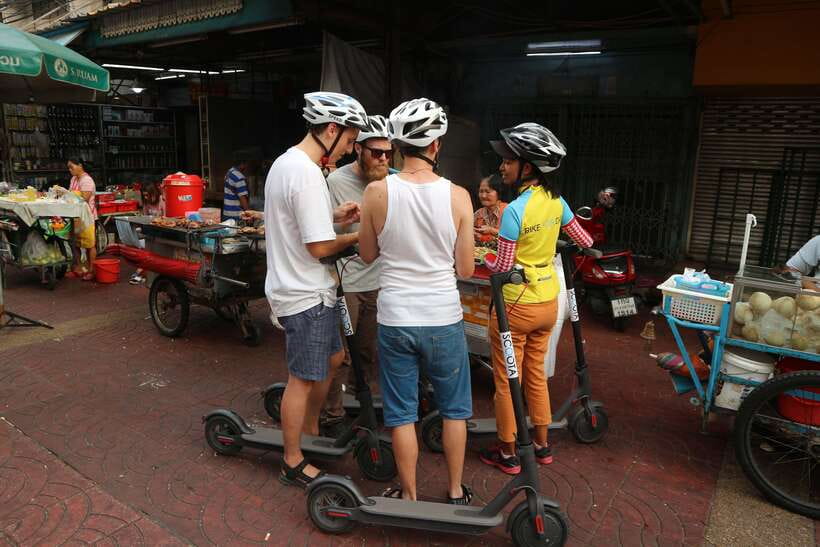
The next major stop is Tha Din Daeng Market, where you sample traditional Thai food. This market is less about grand sights and more about daily life. It gives you another chance to compare neighborhood food with what you may find in Chinatown.
The tour does not treat food as a quick checklist. Guides explain what you are eating and answer questions about local customs, ingredients, and the city’s past. Jobe, Pong, Jam, and Tony have all been praised for making this part conversational and easy to follow.
Heat is a real factor in Bangkok. One afternoon group was offered frequent cold drinks, and the scooter’s moving air was a welcome break from walking. Still, three hours outdoors can be tiring, especially during the hotter part of the day. Wear light clothing, protect yourself from the sun, and arrive ready for a warm ride.
More street food tours in Bangkok:
- Bangkok: Michelin Guide Street Food Tour by Tuk Tuk
★ 4.4 · 1,274 reviews - Bangkok Tuk-Tuk Tour by Night with Chinatown Street Food Meal
★ 5.0 · 635 reviews - Bangkok Tuk-Tuk by Night with Chinatown Street Food Meal
★ 4.6 · 263 reviews - Night Street Food Tour of Bangkok’s Chinatown
★ 5.0 · 173 reviews
Wat Prayoon and the turtle stop
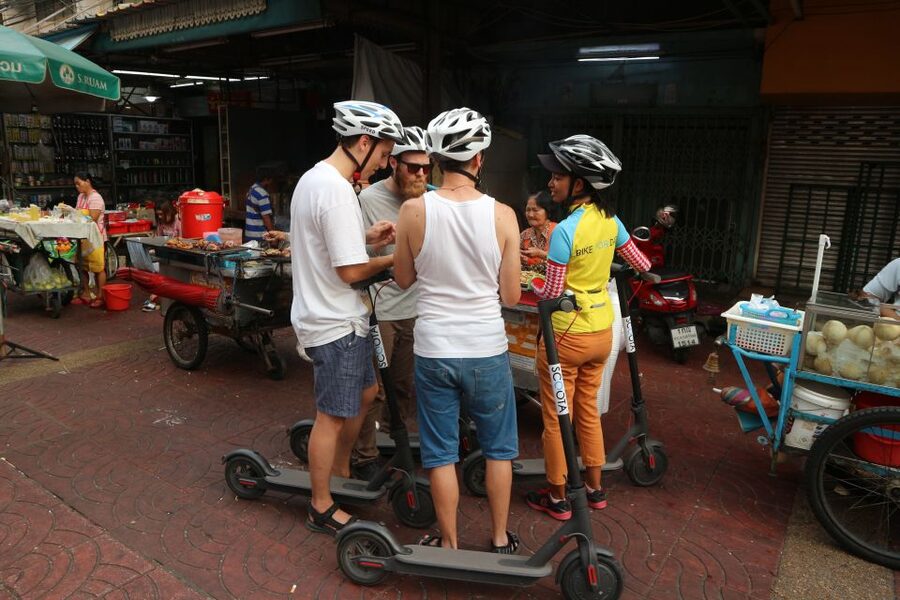
After Tha Din Daeng Market, the route pauses at a local park and visits Wat Prayurawongsawat Worawihan. The temple stop lasts about 20 minutes and adds a quieter cultural section after the food and traffic.
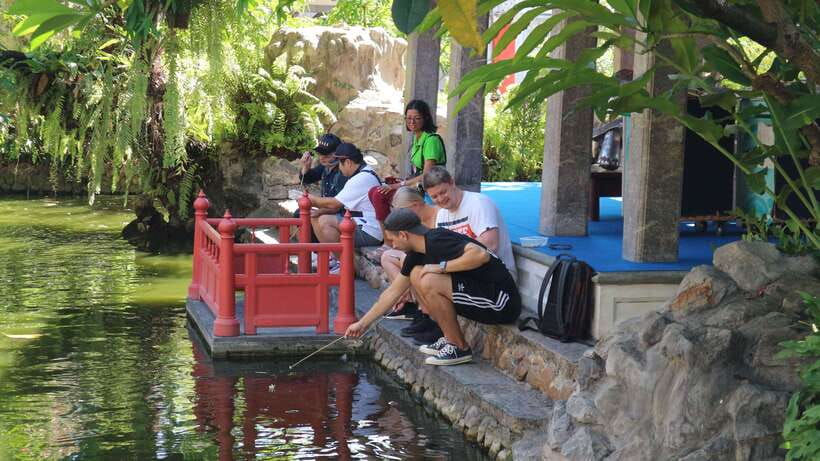
A highlight here is feeding the friendly turtles living near the temple. This is a small detail, but it gives the stop a more personal feel than simply taking a few photos outside a religious building. Several people singled out the turtles as one of the most memorable parts of the afternoon.
The tour also visits Wat Kalayanamitr Varamahavihara, with around 30 minutes for a guided visit and sightseeing. The guides use these temple stops to explain Buddhism and local traditions. Tommy, for example, was praised for answering questions about Buddhist customs, while other guides have been noted for explaining the background of the temples in clear English.
Dress and behavior should be respectful at religious sites. The supplied information does not specify a formal dress code, so check with the guide if you are unsure. You will also want to keep the temple visit in perspective: this is a short city tour, not a long architectural study.
Kudeejeen, Santa Cruz, and Portuguese influence
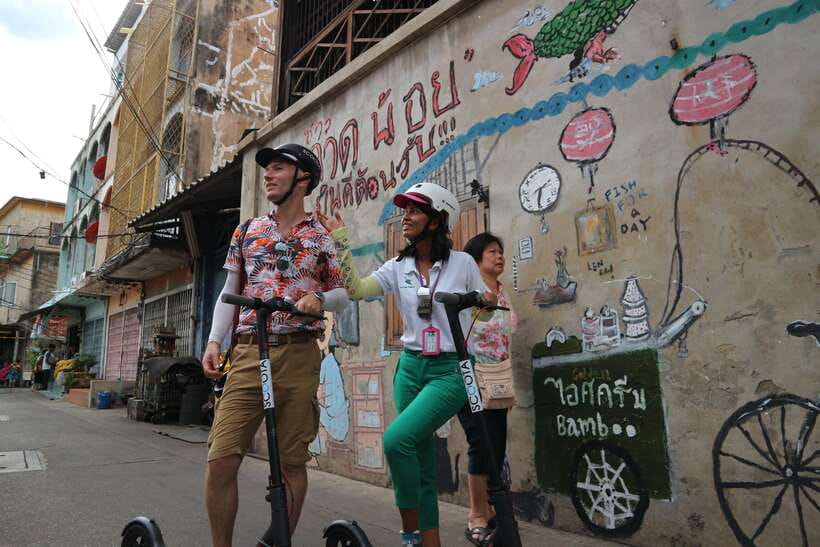
The final cultural section takes you into the Kudeejeen community along Soi Kudeejeen. This neighborhood is known for its Portuguese influence, a reminder that Bangkok’s food culture was shaped by more than Thai and Chinese traditions.
You stop for muffins from a local factory and learn how Portuguese colonizers influenced Thai food. The snack is a welcome change after the market dishes, and the stop helps explain why Bangkok’s food traditions contain so many outside influences.
Santa Cruz Church is nearby and serves as a photo stop. You will not spend a long time there, but the ten-minute visit fits the tour’s broader theme: Bangkok is a city of overlapping communities, religions, and food traditions.
The Kudeejeen lanes are also among the most unusual places on the route to reach by scooter. You ride through narrow passages and residential streets rather than simply arriving at a major attraction. That is exactly the kind of place where a local guide adds value, since you might not think to visit it independently.
Talat Noi and the ride back
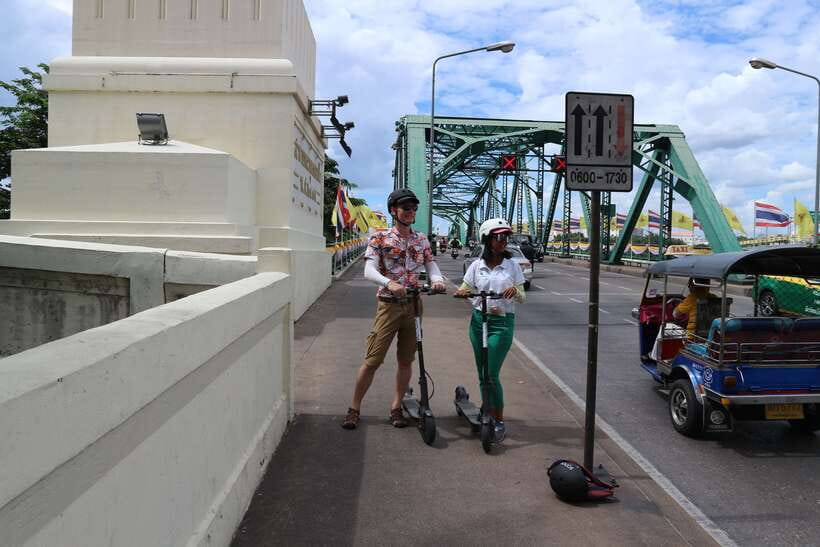
The tour passes through Talat Noi before crossing Phra Phutthayotfa Bridge again. Talat Noi is listed as a photo stop and pass-by section, so you should not expect a long walking visit or a full neighborhood tour.
Even so, this stretch helps connect the different sides of Bangkok covered during the afternoon. You have moved through Thonburi, Chinatown, the river crossings, Tha Din Daeng, and Kudeejeen, then return to the starting point at Jamming Thailand Tours.
The route is carefully packed for three hours. That makes the tour efficient, but it also means some stops are brief. If you prefer to spend an hour inside one temple or browse a market at your own pace, a slower walking tour may suit you better. If you want to see many districts in one outing, the scooter is the better tool.
Food value at $38
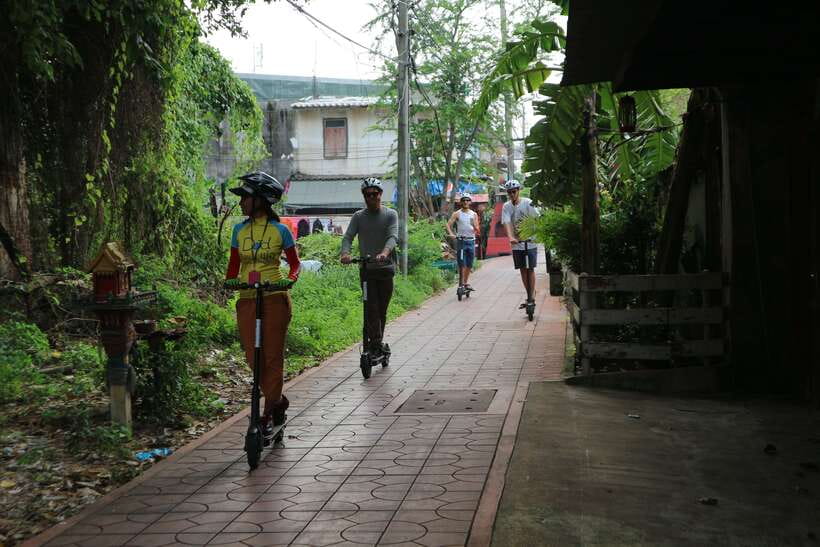
At $38 per person, this is a strong value for a three-hour tour, provided you want the combination of transport, food, and guiding. The price includes the Xiaomi electric scooter, helmet, third-party insurance, ferry tickets, fruit, street food, and a professional guide.
You are not only paying for snacks. You are paying for a route that links several areas that would be awkward to combine independently. A taxi could move you between districts, but you would miss the small lanes. A walking tour would show you local details, but it would cover less ground.
The food is enough to make the tour satisfying, but I would not book it as a full-day food crawl. Portions and selections can vary, and one stop may be at a restaurant rather than a street cart. Think of the eating as a series of tastings that support the cultural story.
The small group size also improves the value. With no more than eight participants, the guide can answer questions, help with scooter technique, and adjust the pace more easily than on a large bus tour. Some departures may be much smaller. One person ended up on a nearly private outing, while another group had only three participants and a guide.
Getting to the meeting point
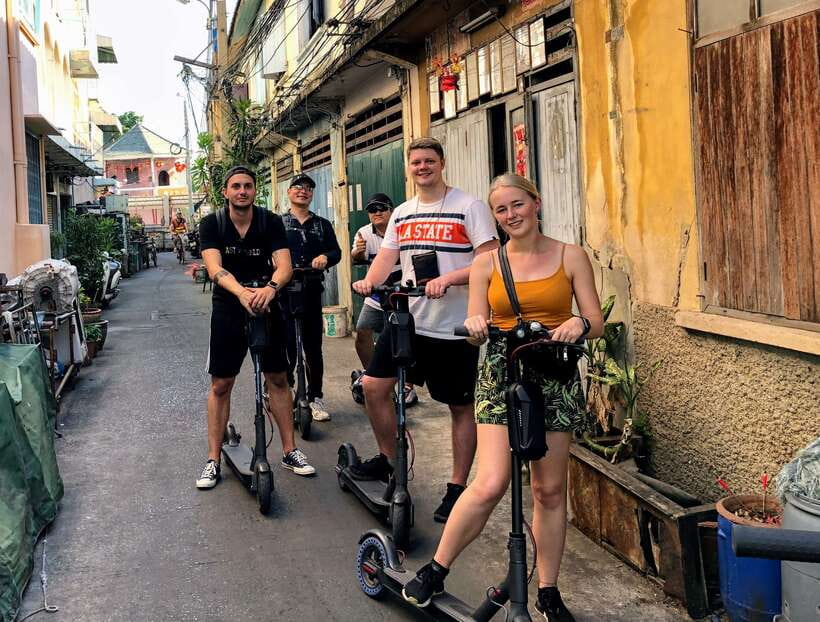
The easiest way to reach the start is the MRT to Itsaraphap station. Use Exit 2, walk to Soi 23, and continue past Achcha Coffee. The Jamming Thailand office should be easy to identify because of the bikes outside.
If you use Grab, search for Jamming Thailand Tours rather than relying on the written street address. For a regular taxi, the Thai directions supplied by the operator identify the area as Thonburi, on Itsaraphap Soi 23, close to Itsaraphap MRT and Wat Ratchasittharam.
Allow plenty of time. From downtown Bangkok, the journey can take up to an hour during rush hour. One person arrived late after using independent transport, so leaving early is wise. Hotel pickup and drop-off are not included.
The activity offers free cancellation up to 24 hours before the start, and you can reserve now and pay later. Check the available departure times when booking.
Who should book this Bangkok tour?
I would choose this for a first or second visit to Bangkok when you want a broad introduction without spending the day on a bus. It also suits people who have already seen the major sights and want old neighborhoods, local food, and smaller religious sites.
It is particularly good for:
- People who enjoy trying several small food samples rather than sitting down for one meal
- Visitors who want local history explained in plain English
- Couples, friends, and solo participants who like small groups
- Anyone comfortable learning to ride an e-scooter
- People who want photos, short temple visits, and a varied route
I would be cautious if you dislike two-wheeled transport, struggle with heat, or want a quiet, slow food tour. The route is active, and the city setting is not controlled. It is also unavailable to children under 14, pregnant women, people over 120 kilograms, people under 140 centimeters, and people with mobility impairments.
Should you book it?
Book this tour if you want to see more than Bangkok’s headline attractions and like the idea of pairing food with movement. The best parts are the narrow Thonburi lanes, the Kudeejeen community, the ferry crossing, the turtle feeding, and the chance to learn how Chinese and Portuguese communities shaped local food.
Skip it if your priority is a long, relaxed meal, a private vehicle, or detailed time inside each temple. For most active visitors, though, $38 is a fair price for the scooter, guide, snacks, ferry rides, and access to neighborhoods that are difficult to connect on foot.
FAQ
How long does the e-scooter tour last?
The tour lasts three hours, including scooter instruction, food stops, sightseeing, temple visits, and the two river crossings.
How much does the experience cost?
The price is $38 per person.
What food is included?
Fruit and street food are included. The route has included Thai market foods, Chinatown snacks, traditional Thai dishes, and muffins from a local factory in Kudeejeen. Examples mentioned include papaya salad, fried chicken, pork on a skewer, and Thai dumplings.
What equipment is provided?
You receive a Xiaomi electric scooter and helmet. Third-party insurance is also included.
What is the minimum age and height?
The minimum age is 14 years, and the minimum height is 140 centimeters. The maximum body weight is 120 kilograms.
How do I reach the meeting point?
Take the MRT to Itsaraphap station, use Exit 2, and walk to Soi 23. Continue past Achcha Coffee to the Jamming Thailand office. If using Grab, search for Jamming Thailand Tours.
Is hotel pickup included?
No. Hotel pickup and drop-off are not included. Allow extra time to reach the meeting point, since the trip from downtown Bangkok can take up to an hour during rush hour.
Newly reviewed around Bangkok
- Bangkok: Chao Phraya Alangka Cruise at Icon Siam★ 3.8 · 36 reviews
- Private Ancient city of Ayutthaya Shore Excursion★ 5.0 · 9 reviews
- Suvarnabhumi to Pattaya 24 hour Private Airport Transfer Service★ 5.0 · 60 reviews
- Rest And Relax Massage – Traditional Thai Massage In Bangkok / Sukhumvit★ 4.5 · 45 reviews
- Bangkok: Baiyoke Sky Hotel Observatory Entry Ticket & Drink★ 4.5 · 49 reviews
- Bangkok: Let’s Relax Onsen Thonglor E-Voucher★ 4.4 · 57 reviews
- Bangkok: SEA LIFE Bangkok & Madame Tussauds Entry Ticket★ 4.7 · 41 reviews
- Bangkok: Wat Pho Thai Massage in Your Hotel Room★ 4.6 · 68 reviews
Bangkok Street Food Tours, compared.

Bangkok Tuk-Tuk Tour by Night with Chinatown Street Food Meal
Read our review →
Bangkok Tuk-Tuk by Night with Chinatown Street Food Meal
Read our review →
Bangkok Street Food Variety Cultures Local Tasty
Read our review →
Bangkok 3-in-1 Tour: Longtail Boat,TukTuk & Street Food Adventure
Read our review →Browse the lists this tour appears in