
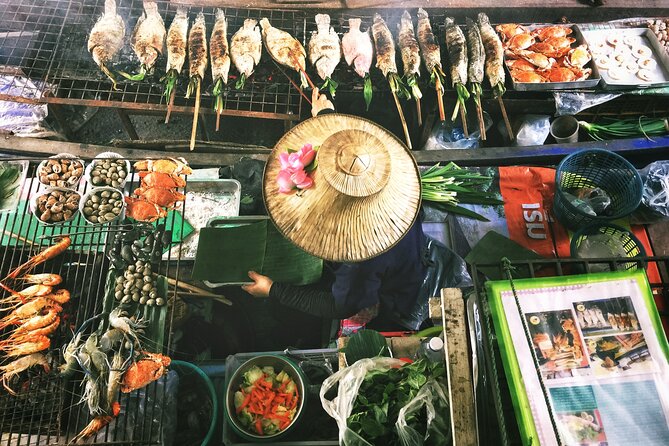
Reviewed · BANGKOK CHINATOWN TOURS
Bangkok: Chinatown By Night Walking Tour
Bangkok’s Chinatown is at its best after sunset, when Yaowarat Road glows with signs, food stalls fill the pavement, and narrow lanes reveal old homes and shrines. This two-hour evening walk links the famous sights with less obvious corners, while a local guide explains the gold trade, Thai-Chinese customs, and the food in front of you.
I like the mix of street food and local history, and I like that the route includes places such as the Chareon Chai Community museum, Talat Kao market, and So Heng Tai Mansion. Guides including Nam, Jimmy, Tony, Dan, and Bass have been praised for clear stories, kind help, and good food suggestions.
The main thing to watch is the group size. The tour can accept up to 99 people, so the experience may feel personal with a small group but less easy to follow in a crowded lane with a large one. Food is also not clearly listed among the official inclusions, so bring Thai baht for anything you want to taste.
Key points to know before booking
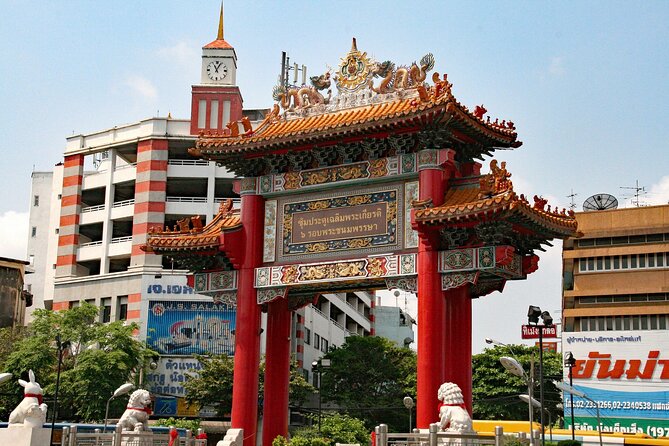
- Chinatown after dark: Start at 6:30 pm, when Yaowarat’s signs, shops, temples, and food stalls create the tour’s main atmosphere.
- A history-led food walk: Learn about Chinese migration, the gold trade, Thai-Chinese culture, herbal drinks, and familiar street dishes.
- Seven varied stops: The route includes a community museum, old market, mosque, temples, a riverside shrine, and a nineteenth-century Chinese house.
- Food costs need checking: You may have chances to buy and taste dishes, but food and attraction entry are not clearly included in the stated package.
- Guides shape the experience: Names praised for warm and engaging guiding include Nam, Jimmy, Tony, Bobby, Bass, Den, Dan, and Kim.
- Simple evening logistics: Meet at Hua Lamphong, Rong Muang, at 6:30 pm, and return to the same meeting point.
Why Chinatown works best after sunset
Bangkok’s Chinatown is not a museum district with quiet paths and neat display cases. It is a working part of the city. Gold shops, shrines, old Chinese buildings, food sellers, herbal drink stalls, and modern restaurants all sit close together.
That makes this tour useful for a first look at Yaowarat. You are not only following a famous road. You are also turning into narrow lanes and seeing how the area’s past still fits into daily life.
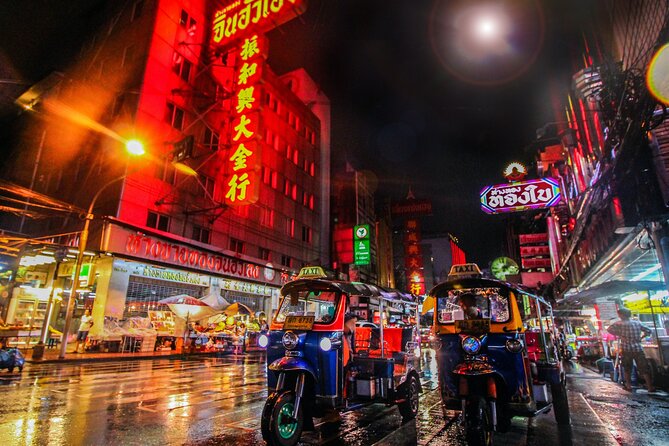
The evening timing matters. At 6:30 pm, daylight is fading and the district is taking on its night character. Neon signs become more important than architectural detail, and food stalls become part of the scenery rather than a separate attraction.
The route is listed at about two hours, although one family described its version as lasting around an hour and a half. Allow at least two hours in your plans, and avoid booking a tight dinner reservation immediately afterward.
More Chinatown tours in Bangkok:
- Bangkok Authentic Tasting Thai-Chinatown Walking Food Tour
★ 4.9 · 852 reviews - Bangkok: Tuk Tuk Adventure Chinatown Michelin Food & Temples
★ 4.3 · 725 reviews - Bangkok Tuk-Tuk Tour by Night with Chinatown Street Food Meal
★ 5.0 · 635 reviews
What the $15 price really buys you
At $15 per person, this is priced as an affordable introduction rather than a private Chinatown food crawl. The cost covers the walking tour, a local guide, local insights, storytelling, and access to three self-guided tours in the Vox City app.
That is good value if you want orientation and cultural context. A guide can explain why Chinese traditions remain important in this part of Bangkok, point out signs you would miss, and help you make sense of dishes at stalls that may otherwise look confusing.
The price does not include attraction entry or headphones. Food is the less certain point. The tour description says you will taste popular Thai street food, and the route clearly includes chances to sample dishes. Yet food is not listed under the formal inclusions, so I would treat tastings as extra unless the operator confirms otherwise.
Bring small amounts of Thai currency. That lets you buy a snack, herbal drink, or dish without stopping to solve a payment problem in a crowded street.
Hua Lamphong to the first Chinatown lanes
The meeting point is given as Hua Lamphong, Rong Muang, in Bangkok’s Pathum Wan area. The tour starts at 6:30 pm and ends back at the meeting point.
Check the exact meeting pin and instructions before you leave your hotel. The supplied meeting information uses Hua Lamphong and Rong Muang together, so you will want to know the precise exit or street corner. The area is near public transport, which makes the start practical, but the district’s streets can be confusing once the evening crowds build.
A guide may begin with the wider story of Chinatown: Chinese traders, the gold business, temple life, and the way Thai and Chinese customs developed side by side. This opening context is valuable because the later stops are not just disconnected old buildings.
The walk then moves toward the historic Chinatown streets. Wear shoes that are comfortable on uneven pavements, and keep your belongings secure. That is ordinary Bangkok advice, but it matters more here because you will be moving through tight lanes and busy food areas.
Chareon Chai Community museum
One early stop is an old house converted into a community museum. Its purpose is to protect the history, culture, and way of life of the Chareon Chai Community.
This is one of the stronger stops for understanding Chinatown beyond its restaurants. An old home can show how people lived, worked, and organized community life in a way that a quick look at a shopfront cannot.
Do not expect a major national museum. The attraction is the setting and the local scale. You are seeing a preserved community space within the neighborhood itself.
Entry fees are not included, so ask the guide whether the group will go inside or view it from outside. That distinction matters. If you are hoping for a full museum visit, confirm what the evening walk covers.
More Bangkok after dark:
- Bangkok by Night: Temples, Markets and Food Tuk-Tuk Tour
★ 5.0 · 3,752 reviews - Bangkok by Night Food Tour with 10+ Tastings in Chinatown
★ 5.0 · 545 reviews - Bangkok: E-Scooter Night Tour with Local Street Food
★ 4.8 · 488 reviews - Bangkok Tuk-Tuk by Night with Chinatown Street Food Meal
★ 4.6 · 263 reviews
The European-style mosque
The route includes an old mosque built in the style of a European villa. Its unusual appearance makes it a useful reminder that Chinatown is not culturally one-note.
A mosque among Chinese shrines, gold shops, old markets, and Thai temples gives the walk a wider view of Bangkok’s trading past. The point is less about a grand monument and more about how different communities shaped the same neighborhood.
Your guide can add meaning here by explaining the building’s place in local life. The stop may be brief, but it breaks up the usual Chinatown picture and helps you notice details you might otherwise pass without a thought.
As with the other religious sites, treat it as a place of worship. Follow the guide’s instructions about where to stand, what can be photographed, and whether entry is appropriate at that time.
Talat Kao, Chinatown’s old market
Talat Kao, also called Chinatown’s Old Market, occupies a long, narrow alley off Yaowarat Road. This is the sort of place where a guide helps most.
The lane’s shape and shopfronts give you a sense of older Chinatown commerce. You may see traditional goods, food sellers, and signs of businesses that serve local residents rather than only sightseers.
This is also a practical place to ask about food. Guides such as Jimmy and Den are praised for explaining dishes and offering suggestions, while another guide introduced traditional Chinese herbal drinks. Those details can turn a quick snack into a small lesson about ingredients and local habits.
Keep expectations realistic. A walking tour cannot stop at every stall, and the group may not linger long enough for a full meal. If a dish catches your eye, ask the guide what it is and how it is normally eaten, then decide if you want to buy it yourself.
The small riverside temple
The route includes a small temple visible from the riverside, near the Marine Department station on the Chao Phraya orange express line.
It is not presented as one of Bangkok’s giant headline temples. That is part of the appeal. The stop adds a quieter religious note to a route otherwise dominated by roads, signs, shops, and food.
The riverside location also gives the tour a change of pace. You move away from the tight lanes and get a sense of Chinatown’s connection to the Chao Phraya River, which has long mattered to Bangkok’s movement and trade.
The information supplied does not name this temple, so do not book the tour expecting a specific famous monument. Think of it as a small, atmospheric stop within a broader neighborhood walk.
So Heng Tai Mansion in Talat Noi
So Heng Tai Mansion is a nineteenth-century Chinese courtyard house in the historic Talat Noi area. This is one of the most distinctive architectural stops on the route.
A courtyard house lets you see a different side of Chinese Bangkok. Instead of a modern shopfront or a narrow market lane, you get a sense of an older residential compound and the scale of a family home from another period.
The mansion also widens the route beyond the busiest stretch of Yaowarat Road. Talat Noi has its own identity, and including it gives the walk more range than a simple neon-sign and snack tour.
Entry is not included, so access may depend on the evening schedule and the group’s plan. Ask your guide how much time is available here. If architecture interests you, this is a stop worth paying close attention to.
The Ayutthaya-era royal monastery
Another stop is an old royal monastery established during the Ayutthaya era. The supplied details do not identify it by name, but its age places Bangkok’s religious story within a much longer timeline.
This is useful context. Chinatown is often described through its Chinese heritage, but Bangkok’s older Buddhist institutions form another layer of the city. A monastery founded during the Ayutthaya period reminds you that the area’s story did not begin with modern roads or commercial signs.
The stop may appeal most to anyone who likes temples, history, and the contrast between sacred spaces and busy streets. Dress respectfully and listen for the guide’s explanation of the monastery’s place in Bangkok.
Zhou Si Kong Shrine and the final stretch
The Zhou Si Kong Shrine is an old riverside shrine in Talat Noi, about 200 years old. It is associated with prayers for good luck, good health, freedom from illness, and strength through the year.
This gives the route a personal and devotional side. You are not only looking at architecture. You are seeing a place people use for hope, prayer, and everyday concerns.
The shrine’s river setting adds to the feeling of an older neighborhood connected to trade and movement. It also gives the guide a chance to explain Chinese religious practice in Bangkok without turning the whole tour into a formal temple lecture.
The walk returns to the meeting point. Since the route has several religious and historic stops, the final stretch may feel more cultural than food-focused. If your main goal is dinner, save room and time for your own meal afterward.
Street food, herbal drinks, and what to budget
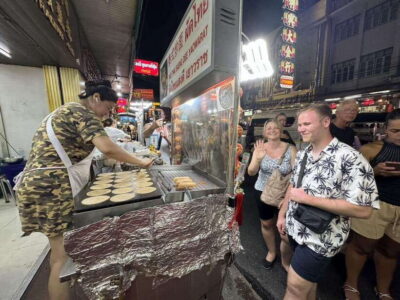
Food is a major part of the appeal, but you should read the wording carefully. The experience includes a food-focused introduction, and the description says you will taste popular Thai street food. Several accounts also describe opportunities to buy dishes from stalls, sample street food, and try traditional Chinese herbal drinks.
At the same time, the formal list of inclusions does not name meals or tastings. That means I would not assume an unlimited food package. Ask the guide at the start what, if anything, is covered, then budget separately for food.
This arrangement may suit you better than a fixed tasting menu. You can choose what looks good, avoid ingredients you dislike, and spend only what you want. The tradeoff is that your final cost is not exactly $15 if you plan to eat along the way.
The food component also depends on the guide. Jimmy is described as explaining Chinatown food, while Bobby took people to places serving delicious dishes, and Den pointed out herbal drinks and traditional items. Guides named Nam, Tony, Bass, Kim, and Dan were also praised for making the cultural side engaging.
If you have a food allergy or strict dietary need, ask detailed questions before ordering. The supplied information does not explain how dietary requests are handled.
The guides make the biggest difference
The tour uses different guides, so the tone can vary. Names connected with particularly warm or engaging guiding include Nam, Jimmy, Tony, Bobby, Bass, Den, Dan, and Kim.
Nam is described as passionate and engaging. Tony is noted for being kind and for watching out for a young family member who was struggling with the heat. Bass is described as making a solo participant feel safe and well guided.
Dan drew attention to small streets and signs that could easily be missed. Jimmy helped explain food and showed people around Chinatown, while Den added useful suggestions about street food and herbal drinks.
These details tell you what to look for in a good guide: not just facts, but help with pace, food choices, street navigation, and cultural manners. The operator does not promise one specific guide, so you should regard these names as examples rather than a guarantee.
Crowds, pace, and comfort
Chinatown can be very crowded, especially around the main road and food areas. That crowd is part of the night-time atmosphere, but it can make conversation and movement harder.
The maximum group size is listed as 99 people. That is a large possible capacity for a walking tour. The actual group may be smaller, but you should be prepared for the possibility that the guide is handling a sizable crowd.
Headphones are not included. In a narrow lane with traffic, vendors, and many voices, staying close to the guide matters. If you have trouble hearing in crowds, choose a place near the front and tell the guide early.
Most people can participate, and the activity is near public transport. Still, this is a walking experience through busy streets, not a seated tour. Families can enjoy it, but children may need help keeping pace and crossing crowded areas. One guide’s attention to a tired teenager is a good sign, though it cannot guarantee the same pace or support every time.
Who should book the Chinatown night walk
I would choose this tour if you want a low-cost introduction to Chinatown and prefer a guide to explain what you are seeing. It suits first-time visitors, people interested in Thai-Chinese culture, and anyone who likes combining food stops with temples, shrines, markets, and old buildings.
It also works well for solo visitors who want a structured evening. Having a guide can make the narrow lanes feel easier to manage, especially when you are unsure what to eat or how to approach a shrine.
I would be more cautious if you want a carefully planned food tasting with a guaranteed menu. The food details are not precise enough for that. I would also think twice if you dislike crowds, need a quiet pace, or want guaranteed entry to every attraction.
For $15, the strongest value is the guide’s local explanation and the range of stops. The tour gives you a framework for returning to Chinatown later on your own, perhaps for a longer meal or a slower look at Talat Noi.
Should you book it?
Book it if you want an affordable, guided first evening in Chinatown, with history, temples, old buildings, and chances to buy street food. The route has more substance than a simple walk down Yaowarat Road, and the best guides add warmth, useful food advice, and small details you might miss alone.
Before paying, confirm the exact meeting point, ask what food is included, and plan for crowds. If you accept those limits, this is a strong choice for seeing Bangkok’s Chinese quarter in a short time without committing to an expensive private tour.
FAQ
How long is the Bangkok Chinatown night tour?
The tour is advertised at approximately two hours. One account describes a version lasting about one and a half hours, so you should allow at least two hours in your evening plans.
What time does the tour start?
The tour starts at 6:30 pm.
Where does the tour begin and end?
It begins at Hua Lamphong, Rong Muang, Pathum Wan, Bangkok 10330, Thailand. The activity ends back at the meeting point.
Is food included in the tour price?
The experience includes opportunities to taste or buy popular street food, but food is not clearly listed among the formal inclusions. Budget extra money for dishes and drinks unless the operator confirms that specific tastings are covered.
Are attraction entry fees and headphones included?
No. Attraction entry and headphones are not included.
Can I cancel for a full refund?
Yes. You can cancel at least 24 hours before the local start time for a full refund. Cancellations or changes made within 24 hours are not refunded or accepted.
More Walking Tours in Bangkok
- Bangkok: City Highlights Temple and Market Walking Tour
★ 4.5 · 3,990 reviews - Bangkok: Grand Palace and Wat Phra Kaew Guided Walking Tour
★ 4.4 · 2,417 reviews - Bangkok: Wat Pho and Wat Arun Guided Walking Tour
★ 4.6 · 1,720 reviews - Bangkok: Discover a Taste of Chinatown – 2 Hr Walking Tour
★ 4.2 · 152 reviews
Newly reviewed around Bangkok
- Twilight Firefly Bangkok Bicycle Tour★ 5.0 · 24 reviews
- Wonderful Pearl Cruise with Private Hotel Transfer★ 4.6 · 24 reviews
- Day Tour of Ayutthaya and Bang Pa In★ 5.0 · 3 reviews
- re:leaf spa and massage★ 4.0 · 10 reviews
- Bangkok: Wonderful Pearl Dinner Cruise at River City Pier★ 4.3 · 13 reviews
- Bangkok Half Day Guided Tour: Grand Palace, Wat Arun & Wat Pho★ 5.0 · 4 reviews
- Wonderful Pearl Dinner Cruise★ 3.5 · 27 reviews
- Yoga in the Park Thailand★ 5.0 · 12 reviews
Bangkok Chinatown Tours, compared.
Bangkok Authentic Tasting Thai-Chinatown Walking Food Tour
Read our review →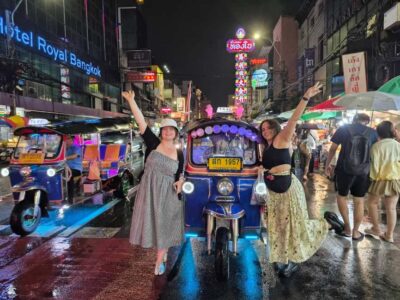
Tuk Tuk Adventure Chinatown Michelin Food & Temples
Read our review →
Bangkok Tuk-Tuk Tour by Night with Chinatown Street Food Meal
Read our review →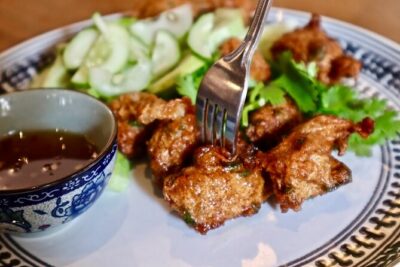
Bangkok by Night Food Tour with 10+ Tastings in Chinatown
Read our review →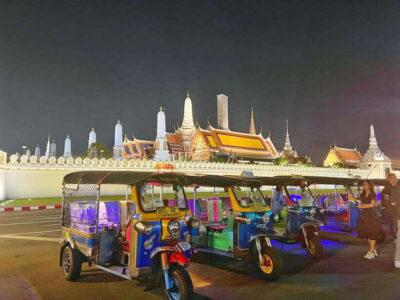
Bangkok Tuk-Tuk by Night with Chinatown Street Food Meal
Read our review →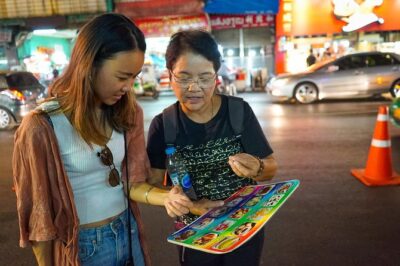
Bangkok Night Michelin Foodie Tour in Chinatown with 15+ tastings
Read our review →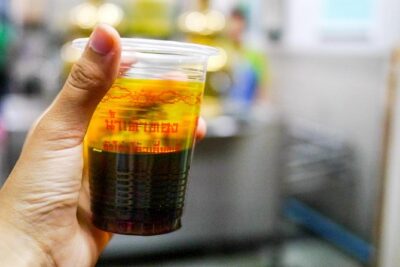
Discover a Taste of Chinatown – 2 Hr Walking Tour
Read our review →Browse the lists this tour appears in