
Reviewed · BANGKOK CHINATOWN TOURS
Bangkok Chinatown: Self-Guided Mystery Puzzle Quest
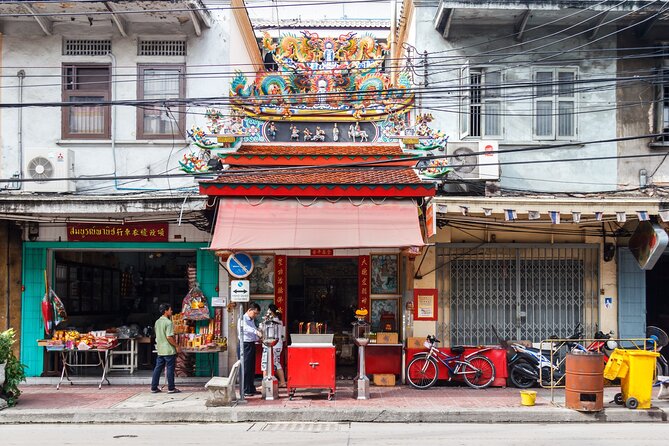
Bangkok Chinatown becomes your game board in this self-guided mystery quest. You follow clues on your phone from old herbal drink shops to temples, shrines, markets, and coffee houses, solving small challenges that reveal the next stop and the story behind it.
I like the freedom to start at any hour and pause whenever you want. I also like the low price: $6.99 per person, with one person able to buy access for a whole group. The catch is that the directions may demand patience. One player found the instructions confusing and several map points inaccurate, so this is better for flexible explorers than anyone who wants a perfectly polished guided walk.
Key points to know before you play
- Wat Traimit anchors the route: See the temple known for its 5.5-tonne seated Golden Buddha.
- Local places matter: The trail includes a century-old herbal drink maker and an old Chinese coffee shop, not only major sights.
- Your phone is the guide: Questo gives directions and puzzles, with no physical guide or set departure time.
- You can play offline: Download or prepare the experience before setting out, since an internet connection is not needed while exploring.
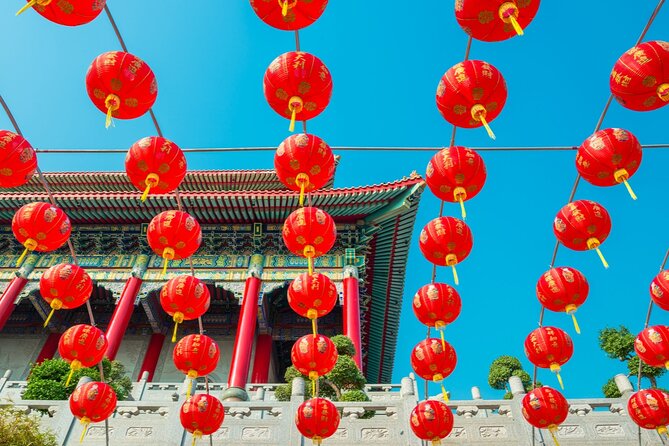
- The route mixes beliefs and daily life: Expect Chinese shrines, Mahayana Buddhist architecture, markets, food, drinks, and local customs.
- Allow extra time: The stated play time is about 90 minutes, but wrong turns, stops, and busy market lanes can lengthen the outing.
What this Chinatown puzzle walk actually feels like
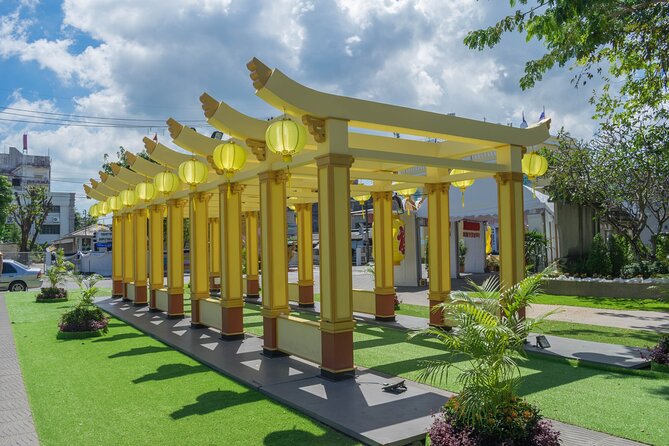
This is not a standard sightseeing tour with a guide explaining each stop. It is part walking tour, part outdoor escape game, and part treasure hunt. The Questo app sends you to a place, gives you a challenge based on what you can see there, and provides the next direction after you solve it.
I like the basic idea because it makes you look closely. Instead of walking past a sign, shrine detail, shopfront, or temple feature, you need to study your surroundings for an answer. The stories are released as you complete each task, so curiosity does some of the work that a guide normally handles.
The route is designed for about an hour and a half. That is a realistic playing time if you move steadily, but I would not treat the 90-minute estimate as a strict schedule. You may stop for a drink, pause to inspect a temple, or spend extra time finding a clue. Bangkok’s Chinatown is not a quiet museum district, and street conditions can slow you down.
You play with your own group. There is no physical guide, no fixed departure, and no required contact with another person. If you buy access for several people, everyone in the group can play on their own smartphone. That makes the experience a particularly simple option for families or friends who want a shared activity without joining strangers.
More Chinatown tours in Bangkok:
- Bangkok Authentic Tasting Thai-Chinatown Walking Food Tour
★ 4.9 · 852 reviews - Bangkok: Tuk Tuk Adventure Chinatown Michelin Food & Temples
★ 4.3 · 725 reviews - Bangkok Tuk-Tuk Tour by Night with Chinatown Street Food Meal
★ 5.0 · 635 reviews
Starting in Rong Muang with only your phone
The stated starting point is in Rong Muang, Pathum Wan, Bangkok 10330. From there, the app gives step-by-step directions to the first location. The meeting information refers to a Wedding store, so I would open the app before leaving and make sure your group knows exactly where the first instruction begins.
The activity is available every day, all day, from midnight to 11:30 p.m. That sounds wonderfully loose, but it does not mean every stop will feel equally convenient at every hour. The route includes shops, temples, and market areas, so daytime is the sensible choice if you want to see signs clearly and find businesses operating.
The app is meant to work offline. That is useful in Bangkok, where phone coverage can vary and constant data use is not ideal. Still, I would prepare the app before starting, charge your phone, and make sure everyone understands the first step. A little preparation matters because a phone-based game is only as easy as its opening directions.
The most important practical warning is navigation. One reported experience found the instructions confusing and some Google Maps locations inaccurate, eventually giving up because the quest became tiring. I would treat the map pin as a guide, not absolute proof. Read the written clue, check nearby signs, and give yourself permission to use local orientation rather than following the blue dot blindly.
Kan Kee Nam Tao Thong and the taste of old Chinatown
One early stop is Kan Kee Nam Tao Thong, a shop known for Chinese herbal drinks and a history of about 100 years. This is exactly the kind of place that gives the activity its character. You are not only ticking off famous monuments. You are being sent toward a working local business with a long family connection.
The challenge asks you to look around for the answer before moving on. That turns a simple shopfront into a small observation exercise. You might notice a sign, a name, or a detail that would be easy to miss on an ordinary walk.
The activity information also encourages you to sample local drinks and food at shops popular with local residents. That is optional rather than a stated inclusion, so budget separately for anything you buy. I like this feature because it gives you a reason to pause and taste something connected to the neighborhood instead of rushing between temples.
Do keep the structure in mind: the food and drink are not a guided tasting, and no guide is present to explain every item. You decide what to order and when to stop. For some people, that freedom is the point. For others, a short explanation from a local guide would add more context.
Wat Traimit and the 5.5-tonne Golden Buddha
Wat Traimit is the route’s biggest headline sight. The temple houses a seated Buddha made of gold, dating to the 13th century. The sculpture weighs about 5.5 tonnes and is nearly five meters high, making it an impressive stop even if you have little interest in puzzle games.
The app asks you to look around the site for an answer before revealing the next location and story. That can make the visit more active, but you should still give yourself time to appreciate the temple without staring only at your screen. A good approach is to read the challenge, put the phone down for a moment, and inspect the area carefully.
Wat Traimit is about 450 meters west of Hualampong Railway Station, which gives you a useful orientation point. The route information places the temple within the Chinatown portion of the walk. Its size and fame may make this stop feel more straightforward than the smaller shrines later on.
If you are traveling with children, this is likely one of the easier places to maintain interest. The large golden image gives the stop an immediate focus, while the puzzle supplies a simple reason to look closely. Remember that this remains a temple visit, not an amusement ride. Dress and behave respectfully at religious sites.
More self-guided walks in Bangkok:
- Bangkok: Tuk Tuk Day Pass App & Boat Chao Phraya River
★ 4.2 · 593 reviews - Bangkok Combo: Tuk Tuk App Pass, Chao Phraya Boat & E-sim
★ 4.5 · 94 reviews - Private ‘Breeze & Pleased’ Canal Boat Ride – 2hrs (self-guided)
★ 5.0 · 91 reviews - Bangkok: Audio guides for Bangkok, Ayutthaya & Chiang Mai
★ 4.0 · 38 reviews
Eiah-Sae coffee shop and a family-run atmosphere
The Eiah-Sae coffee shop is almost a century old and has passed through several generations of the same family. It is described as preserving a homey, noisy atmosphere. That detail matters. The appeal here is not a grand monument, but a glimpse of a long-running neighborhood business.
This stop helps balance the temples. Bangkok Chinatown is made up of everyday places as much as religious buildings, and an old coffee shop can tell you something about local routines that a major sight cannot. The puzzle sends you looking around, so the shop becomes part of the game rather than a quick photo stop.
You may want to pause for a drink if the shop is open and you have time. The experience does not include food or drinks, so any purchase is your responsibility. I would also avoid assuming that the stop will operate exactly like a tourist attraction. The information gives the shop’s history and atmosphere, but not a guaranteed menu, seating arrangement, or opening schedule.
For me, this is one of the most appealing parts of the route in theory. It asks you to notice a place that could be easy to overlook. The limitation is that the story may feel brief if you prefer detailed explanations about the shop’s owners, recipes, or neighborhood role.
Wat Lokanukroh beside Sampeng Market
Wat Lokanukroh is described as one of Bangkok’s smallest temples. No monks live there, but people still come to pray and hold ceremonies. Its location in the heart of Sampeng Market places religious practice right beside commercial activity.
That combination is useful for understanding Chinatown. You can see how a small place of worship continues to serve people even without the scale or quiet setting of a major temple. The challenge encourages you to inspect the surroundings, which may help you notice details that a quick pass would miss.
Sampeng Market can make navigation harder. Narrow market lanes, signs, merchandise, and people moving in different directions are not ideal conditions for a rushed phone puzzle. This is one place where I would keep your group together and avoid blocking shop entrances while searching for an answer.
The stop also shows why this experience works best for people who enjoy uncertainty. You need to observe, interpret, and keep moving rather than wait for a guide to point out the exact feature. If your priority is a calm, carefully narrated temple visit, this may feel less comfortable.
Leng Buai Ia Shrine and Chinese business tradition
Leng Buai Ia Shrine is an ancient Teochew Chinese shrine, built in 1658 during the Central Ayutthaya period. It is described as the oldest Chinese shrine in Thailand. Chinese businesspeople once came here for refuge and prayed for prosperity, which connects the shrine to the commercial life of Chinatown.
The building follows a traditional Chinese architectural style. Its importance is not only its age. The shrine helps explain why Chinese religious practice became part of Bangkok’s commercial districts and how faith, family, trade, and personal hopes can meet in one small place.
This is a good section of the quest for careful observation. Traditional Chinese architectural details can be easy to overlook when you are thinking about directions, traffic, or the next clue. Read the instruction, look around, and only then move on.
The supplied route information does not give a detailed account of the challenge itself, so I would not expect a full lesson in Teochew beliefs from the app. Instead, think of the stop as a prompt to notice the shrine and absorb a short piece of context. You can always spend longer there if the setting catches your interest.
Wat Mangkon and Bangkok’s Mahayana Buddhist heritage
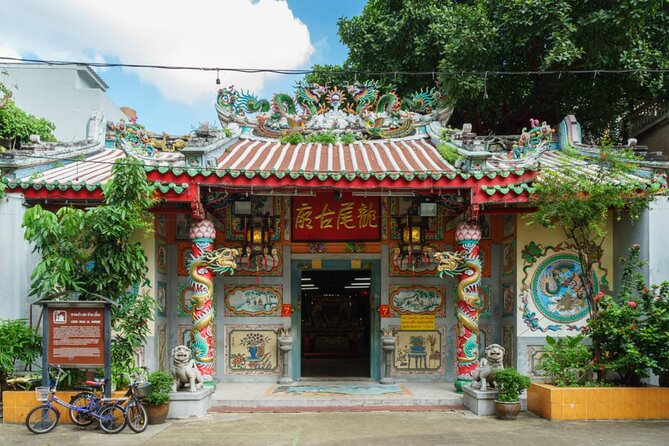
The final temple stop is Wat Mangkon, first opened as Wat Leng Noei Yi in the 1870s. It introduced Mahayana Buddhism to Bangkok and was later renamed by King Chulalongkorn. The temple is decorated with animal, floral, and Chinese dragon motifs, while the ordination hall holds a gold-colored Buddha.
This should be a satisfying finish because it brings together many of the route’s themes: Chinese identity, Buddhism, ornate decoration, and the long relationship between religious sites and Bangkok’s Chinese community. The architecture gives you plenty to examine while solving the final challenge.
I would slow down here rather than treating the temple as a finish line. The animal, flower, and dragon motifs are specifically noted, so look up from the phone and inspect the decoration. The gold-colored Buddha in the ordination hall provides another visual focus, though the route information does not specify access rules or how long you can remain inside.
The listed ending point is at 586 Charoen Krung Road in Pom Prap, and the app is meant to guide you there step by step. Since the start and end addresses are in different parts of the broader Chinatown area, pay attention to the app’s directions throughout rather than assuming the route is a simple loop.
Is $6.99 good value?
At $6.99 per person, the experience is inexpensive for a 90-minute city activity. I see the value in the format: you get a planned route, challenges, location-based stories, and the freedom to play privately without paying for a personal guide.
The group option improves the deal. One person can select the total number of participants and buy access for everyone. Each group member can then play on a smartphone. For a family or a small group of friends, that is more attractive than paying individual admission for a conventional tour.
The price does not cover a guide, food, drinks, transport, or anything you purchase at the shops. You are paying for the digital game and route, not a full-service cultural tour. That distinction is important if you want expert explanations or help with navigation.
The listed score is 4.0 from four ratings, which is too small a sample to settle the question. The clearest warning is the navigation problem described above. At this price, I can accept a little trial and error, but I would not book it for a tightly timed morning before another reservation.
Who should book this Chinatown quest?
I would choose this for independent visitors who like puzzles, walking, and local detail. It suits people who want to set their own pace, stop for a drink, and explore with friends or family rather than follow a guide’s timetable.
It also works well for anyone seeking a low-cost introduction to Chinatown’s mix of Chinese and Thai beliefs, markets, food traditions, old businesses, and temples. The private format may appeal to people who prefer not to join a larger group.
I would hesitate if you dislike phone navigation, become frustrated by unclear directions, or need every stop to operate on a fixed schedule. The reported map inaccuracies are not a minor point. Bring patience, keep the app open, and use visible street signs and landmarks to check your position.
Service animals are allowed, the route is near public transportation, and most people can participate. The activity is listed as private, so only your own group takes part. Free cancellation is available if you cancel at least 24 hours before the start time. Changes or cancellations inside that window are not refunded.
Should you book it?
Book it if you want an affordable, flexible way to connect Bangkok Chinatown’s major temple sights with old shops, shrines, and market lanes. The Golden Buddha, Leng Buai Ia Shrine, Wat Mangkon, Kan Kee Nam Tao Thong, and Eiah-Sae give the route more substance than a string of generic street clues.
Skip it if you want a guide who can answer questions, manage the route, and explain every cultural detail in person. This experience asks you to do the noticing and navigation yourself. For a curious group with charged phones and a relaxed schedule, $6.99 is a fair gamble. For a rushed or easily frustrated visitor, the map problems could outweigh the savings.
FAQ
How long does the Bangkok Chinatown puzzle quest take?
The experience lasts approximately 1 hour and 30 minutes. You can take breaks or pause and resume later, so the total outing may take longer.
Is there a physical tour guide?
No. The experience is self-guided through the Questo app, which provides directions, challenges, and location stories.
Do I need an internet connection while playing?
No. The experience can be played offline while you explore.
Can one person buy access for a group?
Yes. One person can purchase access for the total number of participants, and all group members can play on their own smartphones.
Where does the experience start and end?
The stated starting point is in Rong Muang, Pathum Wan, Bangkok. The listed ending point is 586 Charoen Krung Road in Pom Prap, and the app guides you between locations.
Can I cancel for a full refund?
Yes, if you cancel at least 24 hours before the experience start time. Cancellations or changes made less than 24 hours before the start time are not refunded.
Newly reviewed around Bangkok
- Twilight Firefly Bangkok Bicycle Tour★ 5.0 · 24 reviews
- Wonderful Pearl Cruise with Private Hotel Transfer★ 4.6 · 24 reviews
- Day Tour of Ayutthaya and Bang Pa In★ 5.0 · 3 reviews
- re:leaf spa and massage★ 4.0 · 10 reviews
- Bangkok: Wonderful Pearl Dinner Cruise at River City Pier★ 4.3 · 13 reviews
- Bangkok Half Day Guided Tour: Grand Palace, Wat Arun & Wat Pho★ 5.0 · 4 reviews
- Wonderful Pearl Dinner Cruise★ 3.5 · 27 reviews
- Yoga in the Park Thailand★ 5.0 · 12 reviews
Bangkok Chinatown Tours, compared.
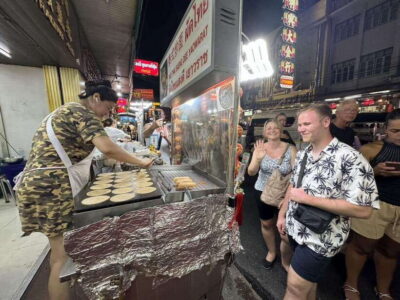
Bangkok Authentic Tasting Thai-Chinatown Walking Food Tour
Read our review →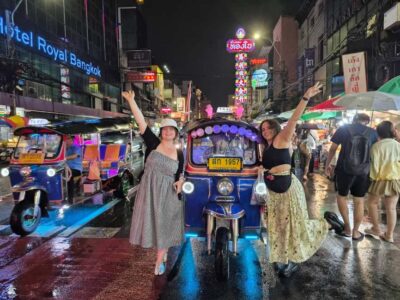
Tuk Tuk Adventure Chinatown Michelin Food & Temples
Read our review →
Bangkok Tuk-Tuk Tour by Night with Chinatown Street Food Meal
Read our review →
Bangkok by Night Food Tour with 10+ Tastings in Chinatown
Read our review →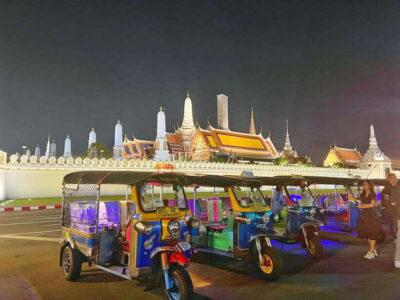
Bangkok Tuk-Tuk by Night with Chinatown Street Food Meal
Read our review →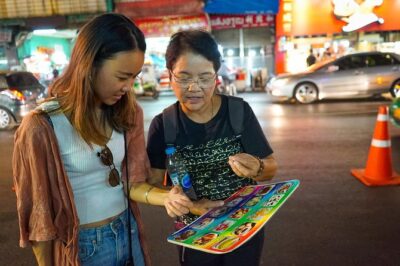
Bangkok Night Michelin Foodie Tour in Chinatown with 15+ tastings
Read our review →
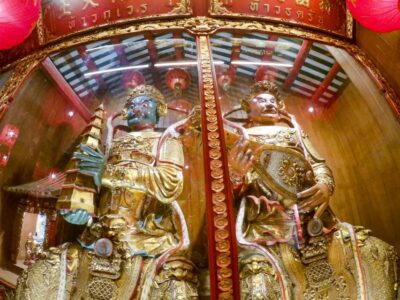
Discover a Taste of Chinatown – 2 Hr Walking Tour
Read our review →Browse the lists this tour appears in