
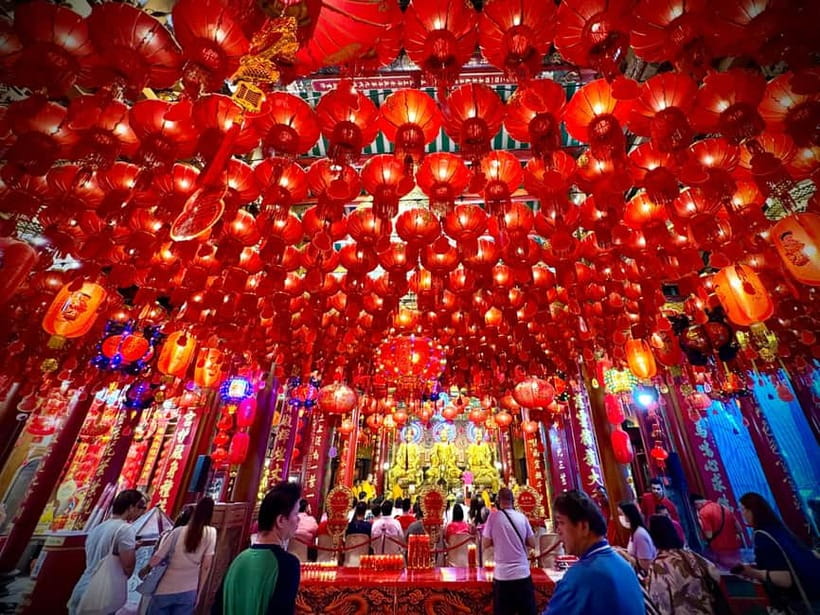
Reviewed · BANGKOK CHINATOWN TOURS
Bangkok: Chinatown & Taladnoi Street Art Guided Walking Tour
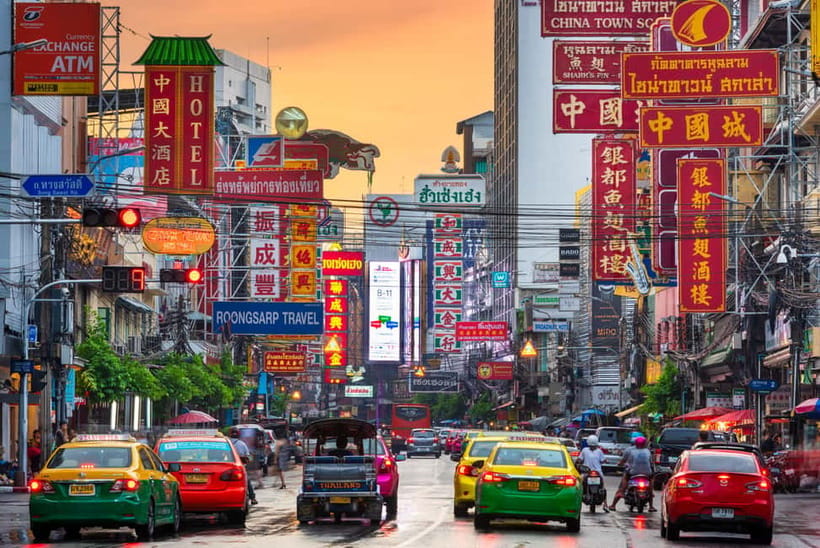
Bangkok’s Chinese quarter is best understood on foot, one temple courtyard, market lane, and old workshop street at a time. This tour takes you from Wat Mangkon Kamalawat through Yaowarat and into Talad Noi, ending beside the Chao Phraya River rather than back at a busy transport stop.
I like the mix of big sights and small discoveries, especially the Tian Fah Foundation Hospital, the Golden Buddha story, and Talad Noi’s old ironworking alleys. I also like the guides’ personal touch. Jenny, Nok, Mai, Jib, Ploy, and Mariyah have all been praised for clear explanations, patience, and flexibility. The drawback is simple: four hours on foot in Bangkok’s heat can be tiring, and the route is not suitable for wheelchair users or pregnant women.
Key points to know before you book
- Start at MRT Wat Mangkon Exit 3: This is a practical meeting point in the heart of Chinatown, with hotel pickup available as an optional paid extra.
- See Bangkok’s Chinese spiritual side: Wat Mangkon Kamalawat and small neighborhood shrines reveal how Thai and Chinese traditions meet.
- Walk through working streets, not only photo stops: Markets, old buildings, ironwork lanes, and local shops give the route its character.
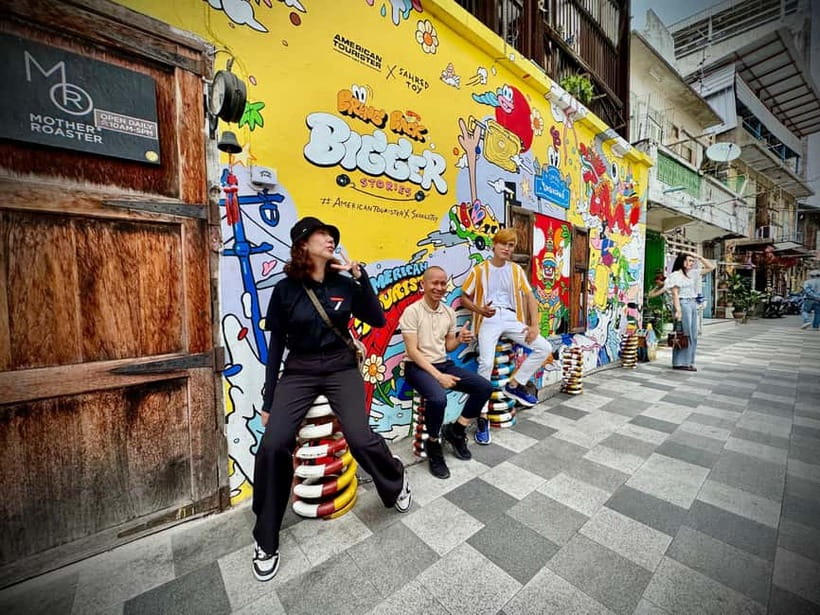
- Talad Noi adds the art and river finish: Street art, the community museum, and old industrial lanes lead to River City Bangkok.
- The guide makes the difference: Jenny, Nok, Mai, Jib, Ploy, and Mariyah have been praised for friendliness, clear English, and adapting the walk to personal interests.
- Good value at $19: You get four hours, an English-speaking guide, and water, but meals and personal purchases are your responsibility.
Starting beneath Wat Mangkon’s red roof
Meet your guide at MRT Wat Mangkon Exit 3. This is a sensible starting place because you arrive directly in the Chinese quarter, without spending time in a hotel transfer or searching for a distant meeting point.
If you choose hotel pickup, be ready in the lobby at least five minutes before the agreed time. Pickup costs extra, and one booking included a clean car and driver before the walking portion began. The meeting point option is the better value if you are comfortable using Bangkok’s MRT.
The tour begins with Wat Mangkon Kamalawat, one of the most important Chinese Buddhist temples in Bangkok. You will see a busy place of worship rather than a quiet monument designed only for sightseeing. Incense, carved details, shrines, and worshippers help explain why this temple remains central to the Chinese community.
Your guide can give the symbols and rituals some context, which matters here. Without explanation, a temple visit can become a quick look at colorful roofs and statues. With a guide, you get a clearer sense of the temple’s role in Chinese spiritual life in Thailand.
Wear clothing suitable for a religious site and bring comfortable shoes. The route includes regular walking through streets and alleys, so this is not the morning for stiff sandals or shoes that need breaking in.
More Chinatown tours in Bangkok:
- Bangkok Authentic Tasting Thai-Chinatown Walking Food Tour
★ 4.9 · 852 reviews - Bangkok: Tuk Tuk Adventure Chinatown Michelin Food & Temples
★ 4.3 · 725 reviews - Bangkok Tuk-Tuk Tour by Night with Chinatown Street Food Meal
★ 5.0 · 635 reviews
Yaowarat market life, incense, and everyday commerce
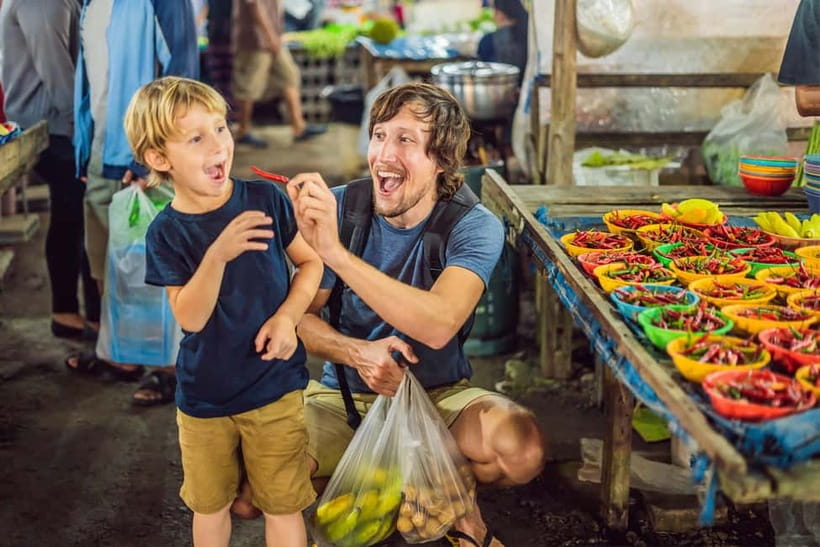
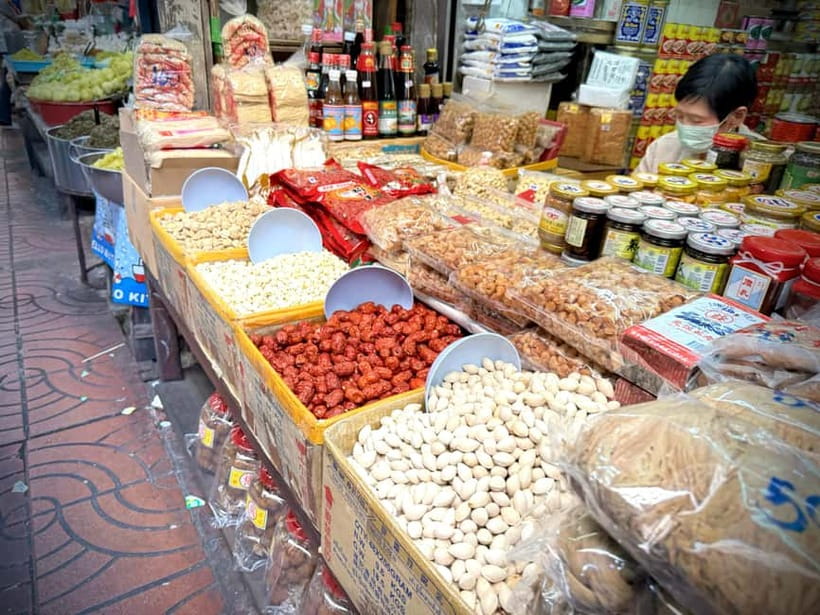
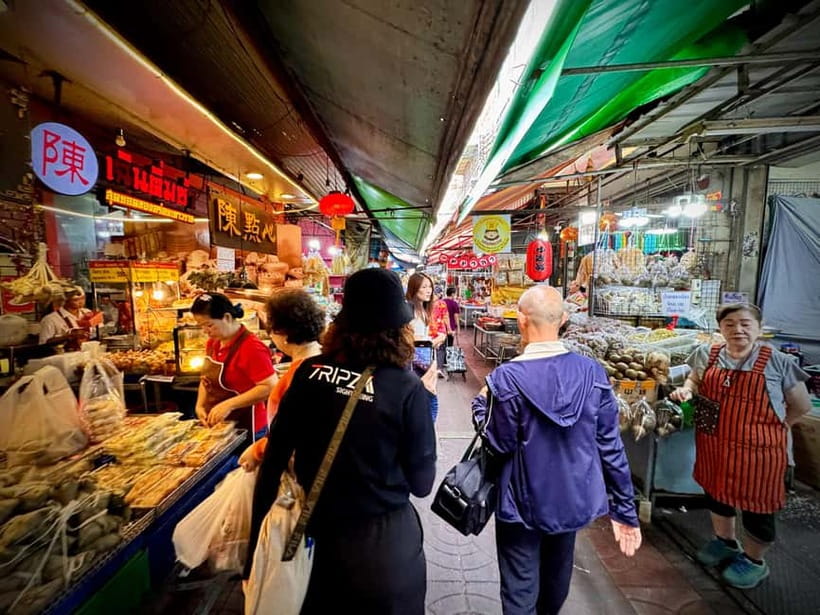
From the temple, the route moves into a morning market. This is where the tour shifts from formal religion to daily life. You will pass food sellers, shops, incense, and the constant movement of Chinatown commerce.
The market is useful for understanding Yaowarat as a working district. It is not simply a food street waiting for an evening crowd. The market shows the practical side of the neighborhood, where people shop, trade, and move goods through narrow streets.
Food is not included, so you should not expect a full tasting tour. You may see plenty of things worth trying, but purchases are your own responsibility. The guide can still help you make sense of what you are seeing, and one guide, Jib, was praised for helping a visitor handle the market with confidence.
That distinction is important when comparing tours. This experience is about stories and access to the area’s character, not a fixed meal or a long list of included tastings. Bring a little cash if you want to buy snacks or small items, though the supplied information does not specify which payment methods individual vendors accept.
Tian Fah Foundation Hospital and the Golden Buddha story
The Tian Fah Foundation Hospital is an unusual stop. It was Thailand’s first Chinese charitable hospital, linking the Chinatown community to a long tradition of public service and mutual support.
This visit adds purpose to the neighborhood. You are not only looking at old buildings. You are learning how Chinese immigrants and their descendants created institutions that supported people in need.
The route also covers the story of the Golden Buddha at Wat Traimit. The statue is one of Bangkok’s best-known sights, but the story behind its discovery gives the visit an extra layer. Your guide explains why the statue became so important and how it fits into Chinatown’s religious and cultural setting.
The tour description does not promise a long interior visit at every temple, so treat this part as guided sightseeing rather than a private temple ceremony or extended museum visit. The value comes from connecting the places together: worship, charity, migration, trade, and the growth of Yaowarat.
Several guides have been praised for this kind of explanation. Jenny has been described as clear and patient, while Nok has been praised for explaining Thai-Chinese culture and the history of trade, commerce, and immigration. Those comments point to the tour’s main strength: the human story behind the buildings.
A quieter pause at Wat Pathum Khongkha
Wat Pathum Khongkha offers a change of pace. After the market noise and busy Chinatown streets, this temple feels more peaceful and connected to Bangkok’s royal past.
The contrast is what makes the stop useful. Bangkok can change mood within a few minutes of walking. One corner is packed with shopfronts and traffic, while the next offers a calmer temple setting. A guide helps you notice that shift instead of treating each stop as an isolated attraction.
You will want to keep your expectations realistic. This is a walking tour, not a private historical lecture at each site. The guide needs to keep the group moving, especially with a route that continues into Talad Noi. Still, this stop gives the four-hour outing breathing room.
More street art walks in Bangkok:
- 2-hour Bangkok Old City Night CHOB TUK TUK + Talat Noi Street Art
★ 5.0 · 16 reviews - Bangkok Heritage & Street Art Private Walking Tour
★ 4.5 · 7 reviews - Bangkok: Street Art e-Scooter Tour of Chinatown
★ 4.8 · 7 reviews
Talad Noi’s ironworking lanes and old Chinese roots
Talad Noi is the part I would most want to explore with a local guide. Its narrow backstreets once held Chinese craftsmen who forged metal tools, and the old industrial character still shapes the area.
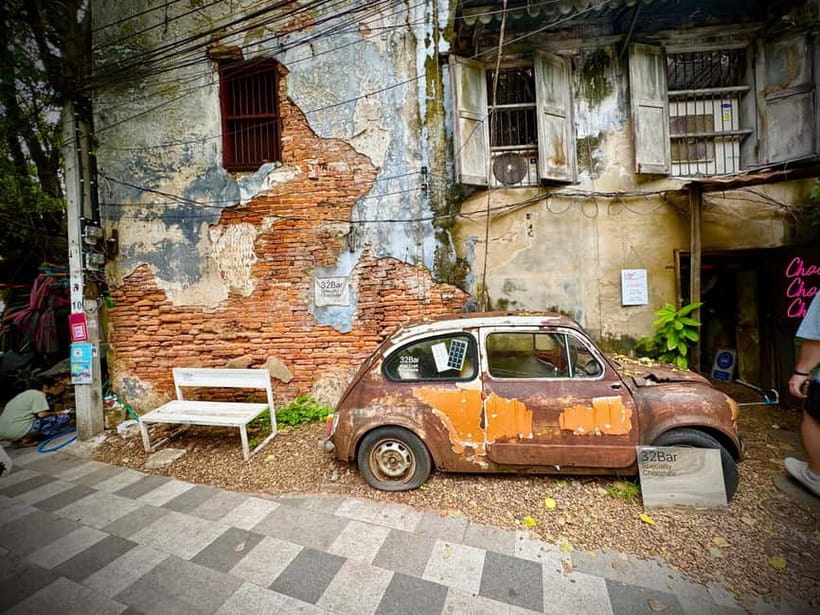
The route takes you away from the best-known Chinatown scenes and into streets where homes, small workshops, shrines, and old commercial buildings sit close together. This is where the tour feels most different from a standard Bangkok temple circuit.
You should expect uneven walking conditions and tight passages. The supplied information does not describe the exact paving or step count, but it does make clear that the route uses alleys and backstreets. That is one reason wheelchair users are not accepted, and it is also a reason to wear shoes with good support.
Talad Noi rewards attention. Look up at old façades, check the corners for small shrines, and watch how the streets blend domestic life with businesses. The guide’s stories about immigration and trade give the area meaning. Without that context, the lanes can seem like a collection of old walls and photo opportunities.
Street art, shrines, and the Talad Noi Community Museum
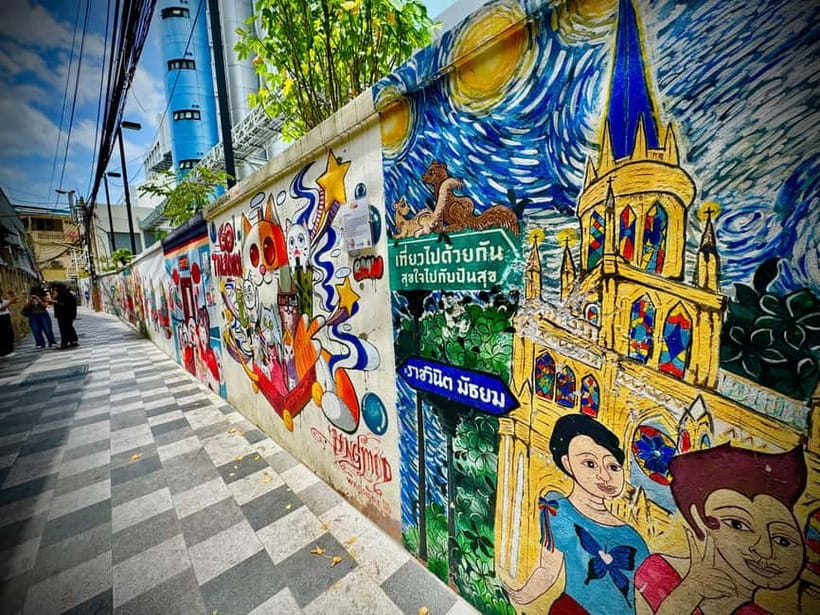
Street art adds color and energy to the Talad Noi section, but it is not the whole point of the visit. The paintings work best as part of the neighborhood, appearing beside old buildings and narrow lanes rather than in a separate gallery.
You will also visit the Talad Noi Community Museum. This gives the walking route a place to pause and organize what you have seen. The museum helps connect local objects and stories to the larger history of Chinese settlement, trade, and neighborhood life.
Small shrines tucked between older buildings are another good reason to have a guide. They can be easy to miss when you are walking alone, and their meaning may not be obvious from the street. The guide can point out details and explain local legends without turning the walk into a dry classroom lesson.
The personal approach seems to be a consistent feature of this experience. Mai has been praised for changing the walk to suit personal interests. Ploy and Mariyah were also praised for being thoughtful and accommodating, including bringing a traditional snack during one private booking. That does not mean every departure will be private or include snacks, but it suggests that the guides are willing to pay attention to the person in front of them.
Ending at River City Bangkok
The walk ends at River City Bangkok, on the Chao Phraya River. This is a strong finish because you are left in a place where you can continue your day without being pushed back toward the starting point.
You might stop for lunch nearby, look around River City, or take a boat ride along the river. The tour does not include lunch or boat tickets, so plan to pay separately. The finish also gives you a chance to rest after several hours on foot.
Ending at the river changes the feel of the experience. The morning starts with temple courtyards and market lanes, moves through old industrial streets, and finishes beside Bangkok’s main waterway. You get a clear sense of how different parts of the city connect.
What the $19 price really gets you
At $19 per person, this is good value if you want context rather than transport alone. The price includes a licensed English-speaking guide and a bottle of water. You are paying for four hours of local interpretation, route planning, and access to places that are easy to pass without understanding.
The cost does not include food, entrance charges that may apply, personal expenses, or the optional hotel pickup. The supplied details do not list separate admission fees, so check the final booking information if you want exact coverage for every stop.
The tour’s value is strongest for a first visit to Chinatown or for anyone who has already seen Bangkok’s major temples and wants a more local route. It is less useful if your main goal is a food crawl, a private car tour, or a short photo stop at only the famous sights.
A 4.7 rating from 36 bookings supports the idea that the service is reliable, but the guide remains important. Jenny, Nok, Mai, Jib, Toto, Ploy, and Mariyah are among the guides praised for friendly service, good English, clear explanations, and flexibility. Guide assignments can change, so book for the route and format rather than expecting one specific person unless the provider confirms that in advance.
How hard is the walking?
The route lasts four hours and covers two main areas, Chinatown and Talad Noi. It includes temple visits, markets, alleys, museum time, street art, and photo stops. The supplied schedule lists roughly two and a half hours for each area, though the total advertised duration is four hours. Treat those figures as approximate rather than a strict minute-by-minute plan.
Bangkok heat is the main challenge. Wear light clothing, a hat, and sunscreen. Bring water even though one bottle is included. You can expect periods of standing and walking, and the market and alley sections may feel crowded or cramped.
This is not suitable for pregnant women or wheelchair users. If you have limited stamina, the optional hotel pickup may make the start easier, but it will not remove the walking portion. Ask the provider directly about your needs before booking.
Who should book this Chinatown walk?
I would recommend it to first-time visitors who want Bangkok’s Chinese quarter explained in plain language. It also suits repeat visitors who have already seen the Grand Palace and Wat Pho and now want markets, community streets, old trade routes, and Talad Noi.
Families can enjoy it if children are comfortable with a long urban walk. One family had a positive experience with Jenny, who explained things clearly, stayed patient, and kept the group engaged. The route includes enough variety to prevent it from feeling like four hours of temple after temple.
It is also a good choice for solo visitors. One booking became a private tour, and the guide could adjust the pace and focus. That is not guaranteed, but the format allows for more conversation than a large coach outing.
You should skip it if you want a relaxed, air-conditioned morning, a dedicated food tour, or a short route with very little standing. You should also think twice if heat and uneven city walking are serious concerns.
Should you book it?
Book this tour if you want Chinatown to make sense, not just look colorful. For $19, you get a well-planned route through temples, charitable institutions, markets, old workshops, shrines, street art, and the riverfront, with a guide who can connect those pieces.
The best reason to choose it is the balance between major sights and ordinary streets. Wat Mangkon and the Golden Buddha story give you familiar landmarks, while Talad Noi provides the more personal side of Bangkok. Just bring proper shoes, protect yourself from the sun, and leave room in your day for lunch or a boat ride at River City.
FAQ
How long does the tour last?
The advertised duration is four hours. The route covers Chinatown and Talad Noi, with the walk ending at River City Bangkok.
Where does the tour start?
The standard meeting point is MRT Wat Mangkon Exit 3.
Where does the tour finish?
The tour finishes at River City Bangkok beside the Chao Phraya River.
Is hotel pickup available?
Yes. Pickup is optional and may cost extra. If you select it, wait in your hotel lobby at least five minutes before the scheduled time. The guide will hold a sign with your name.
What language does the guide speak?
The live tour is conducted in English.
What is included in the price?
The price includes a licensed English-speaking guide and a bottle of water.
Are meals included?
No. Meals and personal expenses are not included.
What should I wear?
Wear comfortable shoes and light clothing. A hat and sunscreen are also recommended because much of the experience takes place outdoors.
Is the tour suitable for wheelchair users?
No. The experience is not suitable for wheelchair users.
Can I cancel the booking?
Yes. You can cancel up to 24 hours in advance for a full refund. You can also reserve now and pay later, according to the booking terms.
More Walking Tours in Bangkok
- Bangkok: City Highlights Temple and Market Walking Tour
★ 4.5 · 3,990 reviews - Bangkok: Grand Palace and Wat Phra Kaew Guided Walking Tour
★ 4.4 · 2,417 reviews - Bangkok: Wat Pho and Wat Arun Guided Walking Tour
★ 4.6 · 1,720 reviews - Bangkok: Discover a Taste of Chinatown – 2 Hr Walking Tour
★ 4.2 · 152 reviews
Newly reviewed around Bangkok
- Twilight Firefly Bangkok Bicycle Tour★ 5.0 · 24 reviews
- Wonderful Pearl Cruise with Private Hotel Transfer★ 4.6 · 24 reviews
- Day Tour of Ayutthaya and Bang Pa In★ 5.0 · 3 reviews
- re:leaf spa and massage★ 4.0 · 10 reviews
- Bangkok: Wonderful Pearl Dinner Cruise at River City Pier★ 4.3 · 13 reviews
- Bangkok Half Day Guided Tour: Grand Palace, Wat Arun & Wat Pho★ 5.0 · 4 reviews
- Wonderful Pearl Dinner Cruise★ 3.5 · 27 reviews
- Yoga in the Park Thailand★ 5.0 · 12 reviews
Bangkok Chinatown Tours, compared.
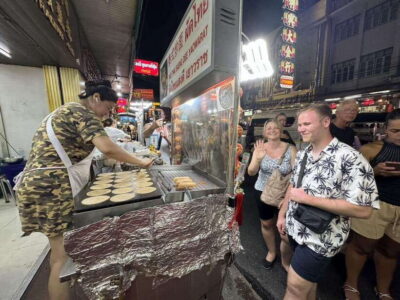
Bangkok Authentic Tasting Thai-Chinatown Walking Food Tour
Read our review →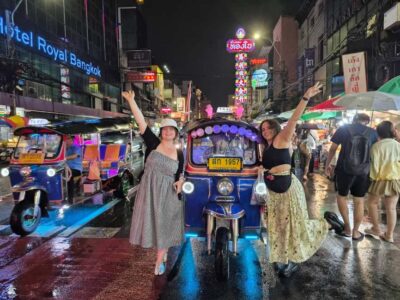
Tuk Tuk Adventure Chinatown Michelin Food & Temples
Read our review →
Bangkok Tuk-Tuk Tour by Night with Chinatown Street Food Meal
Read our review →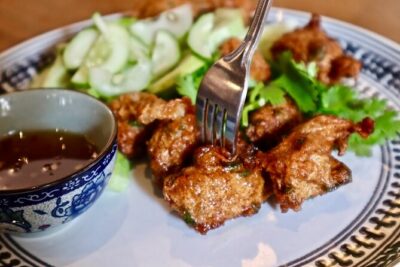
Bangkok by Night Food Tour with 10+ Tastings in Chinatown
Read our review →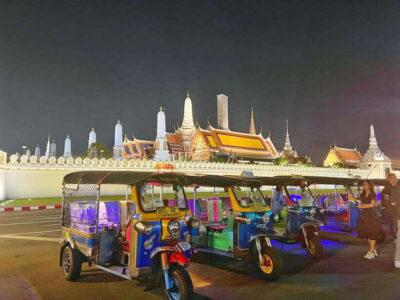
Bangkok Tuk-Tuk by Night with Chinatown Street Food Meal
Read our review →
Bangkok Night Michelin Foodie Tour in Chinatown with 15+ tastings
Read our review →
Discover a Taste of Chinatown – 2 Hr Walking Tour
Read our review →Browse the lists this tour appears in