
Reviewed · BANGKOK CHINATOWN TOURS
Small-Group: Unseen Bangkok’s Chinatown Walking Tour
Bangkok’s Chinatown is far more than Yaowarat Road’s neon signs and food stalls. This tour leads you into Sampeng Market’s tight lanes, old Chinese religious sites, a former red-light district, and local streets where daily life carries on away from the main tourist routes. I like the mix of history and food, especially the chance to sample snacks before sitting down to a proper Thai-Chinese meal.
I also like the small-group format, which is advertised for no more than eight people, with a maximum of 10 noted in the practical information. Guides including Bobby, Aom, Mai, Eng, and Pat have earned praise for clear explanations and personal attention. The main consideration is that this is a walking tour, not a shopping-only outing, and one past participant felt the temple commentary was too light.
Key points at a glance
- Sampeng Market after the crowds begin: Walk narrow wholesale lanes lined with small shops and bargain goods.
- Chinatown beyond the postcard view: See an old Chinese house, local shrines, a former red-light district, and a 150-year-old fresh market.
- Food is part of the route: Try Chinese street snacks, stop at a local coffee shop, and finish with Thai-Chinese dishes.
- Guides shape the experience: Bobby, Aom, Mai, Eng, Pat, Gee, George, and Buoy are named in the feedback, with strong praise for local knowledge and warmth.
- A useful city walk: Local transport costs during the tour are included, but hotel pickup and alcoholic drinks are not.
- Plan for a moderate walk: Comfortable shoes, weather-ready clothing, and a reasonable level of fitness are important.
Why this Chinatown walk feels different
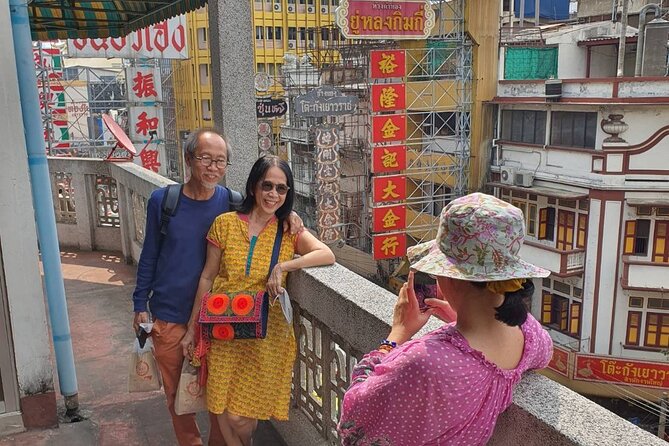
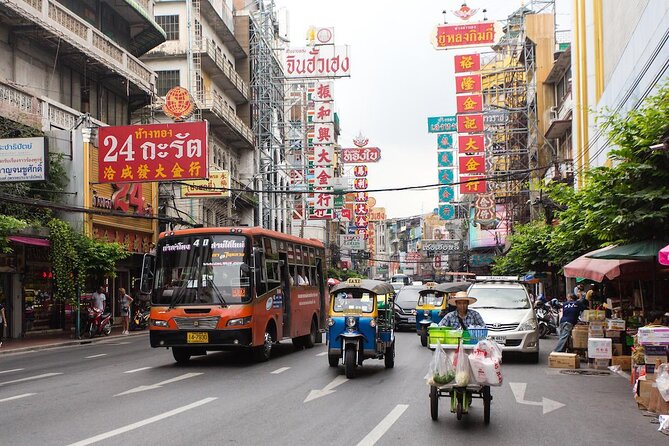
Bangkok’s Chinatown can feel like a wall of noise, traffic, food smoke, and signs in several languages. That is part of its charm, but it can also be hard to read without help. This tour gives you a local guide who explains what you are seeing while taking you through places you could easily miss on your own.
The focus is not simply on the famous food street. You move through smaller roads, market passages, temples, shrines, old buildings, and community spaces. The route also reaches the Talat Noi area, which several guide-led outings connected with the tour have included. That makes this a good choice if you have already seen Yaowarat Road and want a different side of Chinatown.
The experience lasts about three hours, though the full activity may run closer to three to four hours. A small group matters here. Narrow market lanes are awkward with a large crowd, and a compact group makes it easier to hear the guide, pause at a shrine, or ask about a shop and its wares.
More Chinatown tours in Bangkok:
- Bangkok Authentic Tasting Thai-Chinatown Walking Food Tour
★ 4.9 · 852 reviews - Bangkok: Tuk Tuk Adventure Chinatown Michelin Food & Temples
★ 4.3 · 725 reviews - Bangkok Tuk-Tuk Tour by Night with Chinatown Street Food Meal
★ 5.0 · 635 reviews
Starting at Hua Lamphong at 10 a.m.
You meet the guide at 10 a.m. at Better Coffee Building, near MRT Hua Lamphong Station Exit 1, at street level. The meeting point is close to public transportation, which is useful because hotel pickup and drop-off are not included.
Arrive with enough time to find the correct exit and meeting spot. The tour ends back at the meeting point, and local transportation during the activity is included. The information describes the outing as suitable for people with moderate physical fitness, so think of it as a real neighborhood walk rather than a short sightseeing stroll.
The morning start is practical. Bangkok can be hot, and the earlier timing gives you a better chance of walking the market before the day becomes even more intense. Still, the route runs in all weather. Wear light, comfortable clothing and shoes with good support. Bring water, though the coffee stop gives you a chance to pause and buy a drink.
Old Chinese temples, a shrine, and community stories
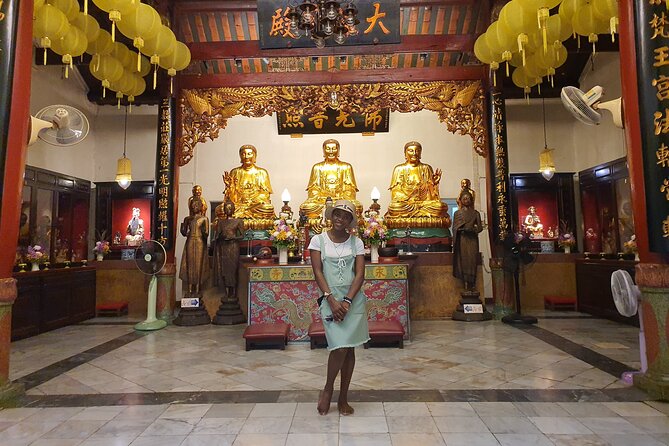
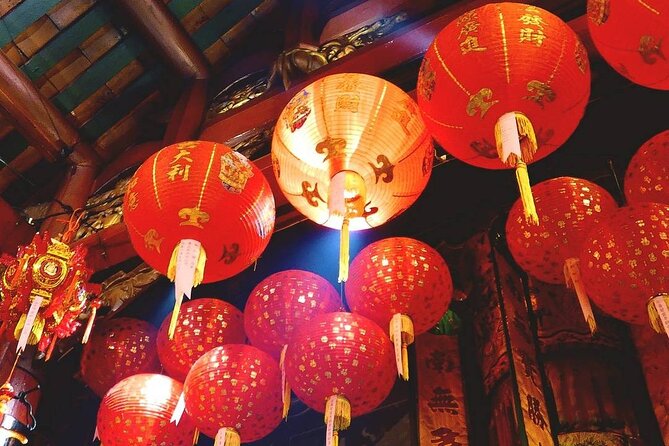
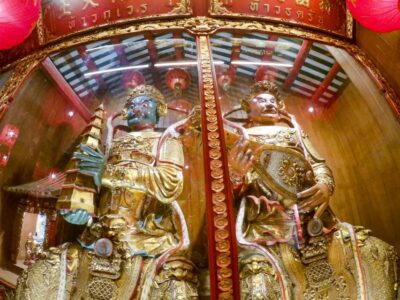
The early section introduces the Chinese religious and community side of Bangkok. You visit ancient Chinese temples and a shrine, hear stories about old buildings, and stop at a local coffee shop. There is also a reference to a hidden school, a detail that gives the route a more personal feel than a standard temple circuit.
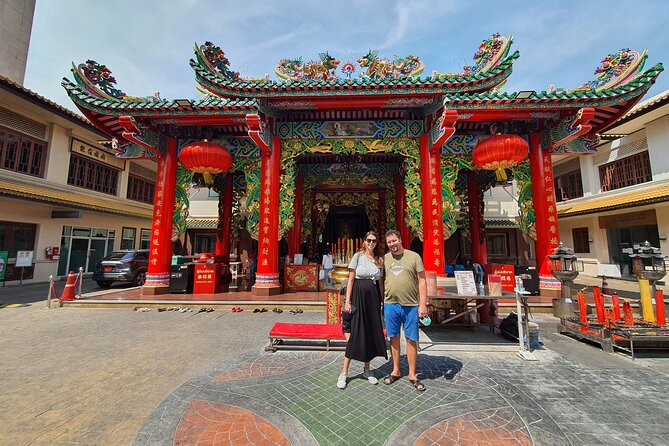
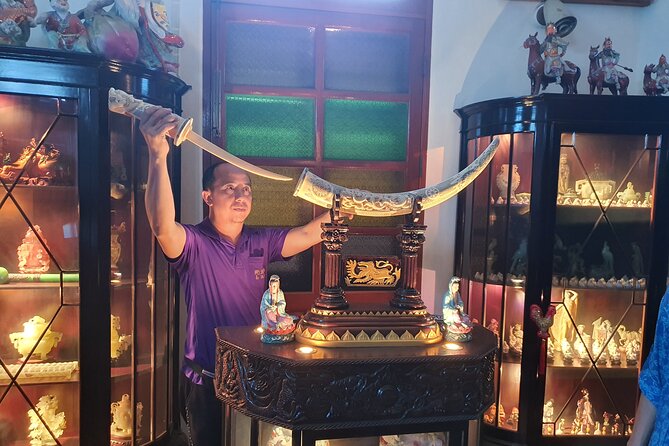
One planned stop includes a Chinese shrine, street art, and one of Bangkok’s oldest Chinese houses. These are the kinds of places that benefit from a guide. A shrine may look small and easy to overlook, while an old house can appear like just another aging building among newer shopfronts. The guide supplies the connection between the site, the Chinese community, and the city around it.
The religious visits are not presented as long formal temple tours. That keeps the day moving, but it also means you should not expect detailed architectural instruction at every stop. One person wanted more explanation at the major temples. If religious art and temple design are your main interest, you may prefer a specialist temple tour. If you want a wider look at neighborhood life, the shorter visits fit the day well.
Guides have made a major difference here. Aom has been praised for keeping a comfortable pace and explaining Thailand as well as Chinatown. Bobby has been singled out for storytelling, local knowledge, and taking photos and videos. Pat’s route included a shrine above a police station, an old school, temples, markets, and a ferry connection on one occasion. The exact path can vary, but these details show the sort of small, easily missed places the walk can include.
Sampeng Market and the art of walking slowly
Sampeng Market is one of the tour’s main draws. Its narrow lanes are packed with wholesale shops and bargain goods. You walk rather than simply pass through by vehicle, which lets you notice how the market works: tiny storefronts, goods stacked close together, and people moving with purpose through limited space.
This is not the best outing if you want a leisurely browse through every shop. The market is a working place, and the lanes can be tight. Instead, expect to follow the guide, stop for explanations, and shop when the pace allows. The guide can help you understand what is worth looking at and where a bargain hunt fits into the route.
The market also helps explain Chinatown as a living business district. It is not a preserved museum quarter. Shops serve local trade, and the narrow lanes are part of the area’s daily rhythm. That makes the walk more useful than a quick photograph along the main road.
A short visit takes you through a 150-year-old fresh market. This adds another layer to the route. Sampeng shows wholesale commerce, while the fresh market gives you a look at food buying and local routines. You might find the smells, close quarters, and wet-market conditions more intense than the polished food halls found elsewhere in Bangkok.
More walking tours in Bangkok:
- Bangkok: City Highlights Temple and Market Walking Tour
★ 4.5 · 3,990 reviews - Bangkok: Grand Palace and Wat Phra Kaew Guided Walking Tour
★ 4.4 · 2,417 reviews - Bangkok: Wat Pho and Wat Arun Guided Walking Tour
★ 4.6 · 1,720 reviews - Bangkok: Discover a Taste of Chinatown – 2 Hr Walking Tour
★ 4.2 · 152 reviews
The former red-light district and Chinatown’s less polished past
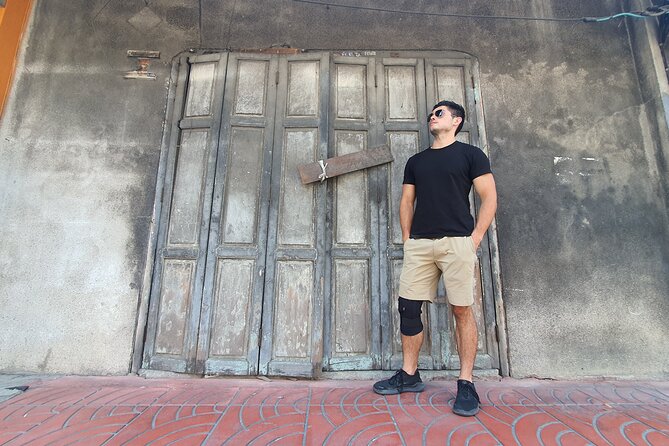
The itinerary includes a 15-minute stop in a former red-light district. This is not treated as a separate nightlife outing. Instead, it forms part of the area’s social and commercial story.
The stop is brief, but it broadens the picture of Chinatown. Bangkok neighborhoods change over time, and streets that once served one purpose may now contain shops, homes, restaurants, and religious sites. Seeing this side of the district keeps the tour from turning Chinatown into a simple tale of temples and noodles.
Do not expect a dramatic attraction with a long visit. The value lies in the guide’s explanation and in seeing how different parts of the neighborhood sit close together. If you want a tour built around nightlife or red-light history, this is not the right product. Here, the former district is one short chapter in a much wider walk.
Street snacks, coffee, and a Thai-Chinese lunch
Food is not an add-on here. During the walk, you receive Chinese-style street snacks and stop at a local coffee shop for a drink. The food can make the route easier and more enjoyable, especially when the market lanes grow hot and crowded.
The coffee stop has received particular praise, including iced tea and coffee. These breaks also give you time to speak with the guide outside the rush of the street. Several guides have been described as friendly and easy to talk with, which helps turn the outing into a conversation rather than a lecture.
The walk ends with lunch at a restaurant that has been open for 30 years. The meal features typical Thai-Chinese dishes, and drinks are available for purchase. Alcohol is not included. The food is a useful part of the value because you are not left to find lunch after three hours of walking.
You should keep your expectations practical. The meal is a local restaurant stop, not a tasting menu or a specially arranged fine-dining experience. Portions, dishes, and snack choices are not specified, so anyone with strict dietary needs should ask the operator before booking. The tour information confirms food and drink samples, but it does not promise a specific menu.
What the guides add to the route
The strongest part of this experience is the human guide. The named guides include Bobby, Aom, Mai, Eng, Pat, Gee, George, and Buoy. Their styles may differ, but the feedback repeatedly points to warm conversation, clear local stories, and a willingness to adjust the pace.
Mai has been praised for explaining the city’s heritage and for making the food and temple stops interesting. Eng is described as both friendly and well informed, with plenty of breaks during a three-hour walk. George has been associated with history, local coffee, iced tea, and noodle soup. Gee has guided visitors into the Talat Noi area and explained local culture and community life.
On one outing, a solo participant received two guides. Another solo booking was adjusted around the individual’s interests, and the guide continued showing food places after the formal tour ended. These are encouraging signs for solo visitors, though you should not assume every booking will receive the same arrangement.
The operator has also used WhatsApp to confirm meeting details before the tour. That can be helpful in a city where station exits and street-level meeting points are easy to mix up.
Is $52.14 a fair price?
At $52.14 per person, this is not the cheapest way to walk through Chinatown. You can visit Yaowarat Road, markets, and many temples without paying for a guide. The price makes more sense when you count the small group, food samples, coffee stop, lunch, guide service, and local transportation during the outing.
I see the best value in the interpretation. A self-guided visit can show you the same lanes, but it may not explain the old Chinese house, the hidden school, the shrine above a police station, or the connection between market streets and community life. The guide also saves you the work of planning a route through confusing back lanes.
The value is weaker if you mainly want shopping time. The market is included, but the tour is built around history, local life, food, and lesser-known sites. One dissatisfied participant expected a more direct Chinatown shopping experience. Read the title and route with care before booking.
Who should book this walk?
I would choose this tour for a first visit to Bangkok if you want a guided introduction that combines culture, food, and ordinary neighborhood scenes. It also suits anyone who has already visited the main Yaowarat strip and wants to see quieter corners.
It is a good match for solo visitors and couples who prefer conversation over a large group. Families with older children may also like the market and snack stops, provided everyone can manage several hours on foot.
I would hesitate if you dislike heat, tight spaces, fresh markets, or unstructured street scenes. I would also choose another activity if your main goal is temple architecture, a formal food tour, or an extended shopping session.
Free cancellation is available up to 24 hours before the 10 a.m. start time. After that point, the amount paid is not refunded, and late changes are not accepted.
Should you book the Unseen Bangkok Chinatown walk?
Book it if you want Chinatown as a working neighborhood rather than a backdrop for dinner photographs. The strongest reasons are the small group, the food stops, the local guides, and the route through places that are easy to miss.
Go in expecting a moderate walk, short temple visits, market lanes, and a Thai-Chinese lunch. Do not book it expecting a shopping-only itinerary or a detailed lecture at every temple. At $52.14, it offers solid value when you want context and company as much as sightseeing.
FAQ
Where does the tour start?
The meeting point is Better Coffee Building, 320 TangHuaPak, near MRT Hua Lamphong Station Exit 1, at street level.
What time does the tour begin?
The tour starts at 10 a.m.
How long does the Chinatown walking tour last?
The tour lasts about three hours, with the full experience described as approximately three to four hours.
Where does the tour end?
The activity ends back at the meeting point.
How large is the group?
The tour is advertised as a small-group experience limited to eight people. The additional information gives a maximum of 10 travelers.
Is lunch included?
Yes. The route ends with lunch at a restaurant that has been open for 30 years, serving typical Thai-Chinese dishes. Drinks are available for purchase.
Are food and drinks included?
Food and drink samples are included, along with the local coffee stop. Alcoholic beverages are not included.
Is hotel pickup included?
No. Hotel pickup and drop-off are not included, but the meeting point is near public transportation and local transportation during the tour is included.
Newly reviewed around Bangkok
- Twilight Firefly Bangkok Bicycle Tour★ 5.0 · 24 reviews
- Wonderful Pearl Cruise with Private Hotel Transfer★ 4.6 · 24 reviews
- Day Tour of Ayutthaya and Bang Pa In★ 5.0 · 3 reviews
- re:leaf spa and massage★ 4.0 · 10 reviews
- Bangkok: Wonderful Pearl Dinner Cruise at River City Pier★ 4.3 · 13 reviews
- Bangkok Half Day Guided Tour: Grand Palace, Wat Arun & Wat Pho★ 5.0 · 4 reviews
- Wonderful Pearl Dinner Cruise★ 3.5 · 27 reviews
- Yoga in the Park Thailand★ 5.0 · 12 reviews
Bangkok Chinatown Tours, compared.
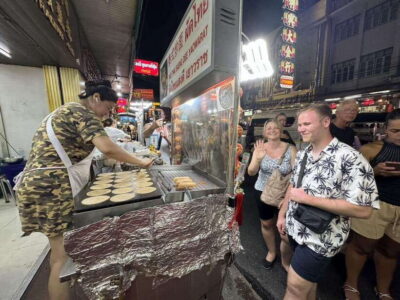
Bangkok Authentic Tasting Thai-Chinatown Walking Food Tour
Read our review →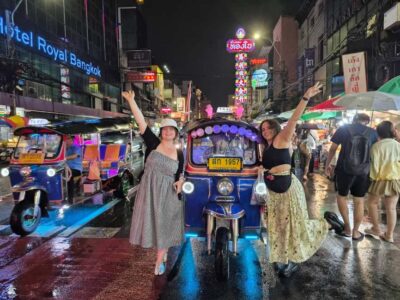
Tuk Tuk Adventure Chinatown Michelin Food & Temples
Read our review →
Bangkok Tuk-Tuk Tour by Night with Chinatown Street Food Meal
Read our review →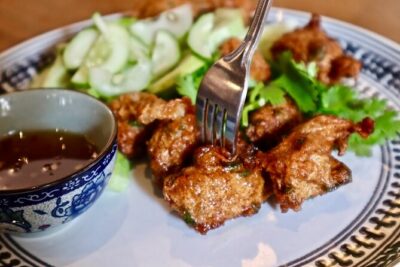
Bangkok by Night Food Tour with 10+ Tastings in Chinatown
Read our review →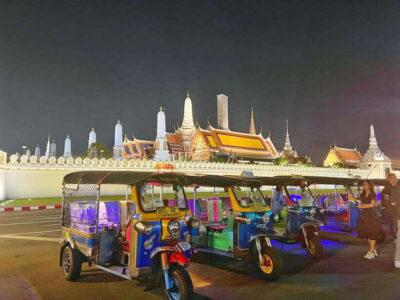
Bangkok Tuk-Tuk by Night with Chinatown Street Food Meal
Read our review →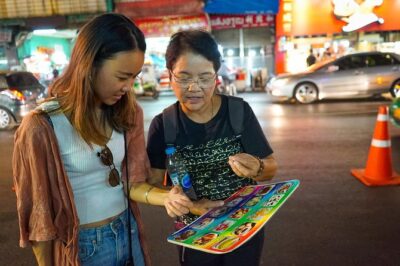
Bangkok Night Michelin Foodie Tour in Chinatown with 15+ tastings
Read our review →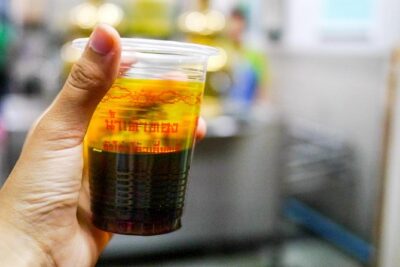
Discover a Taste of Chinatown – 2 Hr Walking Tour
Read our review →Browse the lists this tour appears in